At the second edition of Indian Pharma Post E-Conference, India’s brightest scientific minds outline the innovation, manufacturing and policy priorities needed for India to emerge as a global biologics powerhouse

The global biologics industry, now valued at over USD 500 billion, is entering a new phase of growth, with the biosimilars market expected to expand from nearly USD 40 billion in 2025 to over USD 150 billion by 2033. Meanwhile, more than 100 approved biosimilars, and nearly 60% of global vaccine supplies by volume, India is well positioned to play a larger role in the next wave of biologics innovation and manufacturing.
Yet several critical questions remain. Can India move beyond biosimilars to become a global innovator in novel biologics? Does the country have the research ecosystem, manufacturing capabilities, regulatory agility and risk capital needed to compete with global leaders? How can industry and academia collaborate more effectively?
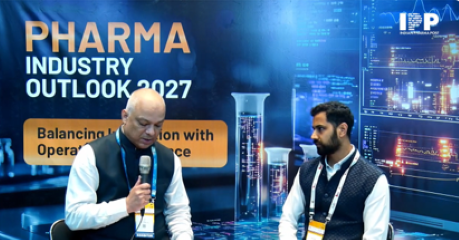
Against this backdrop, leading industry experts came together to discuss the future of India's biologics and biosimilars ecosystem at an e-conference organized by Indian Pharma Post on July 17, 2026.
At the e-conference titled "Biosimilars & Biologics: The Next Growth Frontiers for Indian Pharma,"experts examined global market trends, emerging scientific and technological innovations, regulatory and manufacturing challenges, and the strategic priorities needed to position India as a leading global hub for biologics innovation, development, and manufacturing.
The session was moderated by Rahul Koul, Editor, Indian Pharma Post who set the tone of the discussion. “The future of Indian pharma lies beyond generics. Biosimilars and biologics present a significant opportunity for India to move up the global value chain, driven by scientific innovation, advanced manufacturing, and a robust regulatory ecosystem. Through this discussion, we hope to identify the strategic priorities that can strengthen India's position as a trusted global biopharma partner.,” outlined Koul.
Dr. Cyrus Karkaria, President – Biotech Businesses, Lupin Limited said, “India’s biotech ecosystem is currently fragmented, but the country has built world-class capabilities in developing antibodies and recombinant proteins through its experience with biosimilars. The logical next step is to transition from biosimilars to novel biologics and new biological entities (NBEs). However, India still lacks a robust discovery ecosystem.”
“Small biotech companies can play an important role in discovery research, while larger pharmaceutical companies with established development infrastructure can take promising molecules through clinical development and commercialization. While India's vaccine ecosystem is already strong, cell and gene therapies remain at an early stage. Although CAR-T therapies have shown encouraging progress, antibodies and proteins are expected to remain the primary drivers of growth in the near future,” added Dr. Karkaria.
Dr. Amulya K. Panda, Associate Director, Panacea Biotec Limited & Former Director, NII said, “As biologics evolve from relatively simple molecules such as insulin to recombinant proteins, CAR-T and CAR-NK therapies, manufacturing complexity continues to increase. Regulatory frameworks are also evolving, particularly for advanced therapies. To remain globally competitive, manufacturers must innovate across upstream processing, downstream purification and formulation development.”
“Traditional manufacturing approaches need to give way to innovative biomanufacturing techniques that improve quality while reducing costs. He introduced the concept of "Innofacturing," emphasizing that innovation in manufacturing should become a core strategy for the biologics industry. Technologies such as membrane filtration, improved process design and advanced scale-up methodologies can significantly improve efficiency, compliance and product stability.”
Dr. Kapil Maithal, President – Vaccines & Diagnostics, Zydus Lifesciences, said, “While vaccine manufacturing differs significantly from biologics because of its larger production volumes and lower cost structures, there are several lessons that biologics developers can adopt. India's vaccine ecosystem has demonstrated remarkable strength in rapid research and development, supply chain management and manufacturing excellence. “
“Technologies such as bioconjugation, aseptic processing, cold-chain logistics and single-use bioreactors can be effectively adapted for biologics manufacturing. Experience gained through vaccine development during the COVID-19 pandemic also highlights the importance of rapid-response R&D platforms, advanced analytical screening and streamlined regulatory processes. Strong pharmacovigilance systems developed for vaccines can similarly strengthen safety monitoring for biologics,” Dr Maithal.
Dr. Anil Koul, Group CSO, Mankind Pharma | Bharat Serums & Vaccines said, “India’s biosimilars industry is entering a strong growth phase, supported by significant investments and the availability of experienced scientific talent. Looking ahead, he believes the coming decades will belong to biological sciences, just as medicinal chemistry dominated pharmaceutical innovation during the previous century. The future will be driven by technologies such as in vivo gene editing, in vivo CAR therapies, targeted lipid nanoparticles, programmable viral vectors and AI-driven biologics design.”
“Antibody engineering is also progressing rapidly from monoclonal antibodies to bi-specific, tri-specific and eventually tetra-specific antibodies, offering greater therapeutic effectiveness in oncology. He concluded by emphasizing that India's biggest priority should be nurturing the next generation of biopharma talent through stronger educational and training ecosystems,” added Dr. Koul.
Dr. Puspadhwaja Mall, Head, R&D, Operations and Portfolio Management, Shilpa Biologicals said, “Manufacturing efficiency depends on several factors, including production cost, product quality, consistency and cycle time. The foundation lies in selecting the right host cell line and engineering stable, productive genomes. Modern biologics manufacturing is increasingly adopting single-use technologies, continuous manufacturing, perfusion systems and high-cell-density processes.”
“Process Analytical Technology (PAT), modelling, simulation, digital twins and artificial intelligence are enabling manufacturers to predict process deviations, improve scalability and maintain consistent quality. He noted that Shilpa Biologics has already implemented modelling and simulation tools for large-scale bioreactor scale-up and has successfully used cell-line engineering to improve productivity while reducing unwanted metabolites,” added Dr Mall.
Dr. Sanjib Banerjee, COO (Biopharma), Veeda Lifesciences Limited said, “"As biologics become increasingly complex, the role of CROs is evolving from service providers to strategic development partners. Success will depend on close collaboration with sponsors, academia, technology providers and regulators to accelerate development while ensuring quality and compliance. The future of biologics development demands a science-driven ecosystem. CROs must combine deep scientific expertise with advanced analytical capabilities, digital technologies and a clear understanding of regulatory expectations to help innovators bring therapies to patients faster.”
Today's biologics development is no longer driven solely by large clinical trials. The emphasis has shifted towards comprehensive analytical characterization, advanced process controls and robust scientific evidence. CROs must adapt their capabilities to support this transformation. Beyond technology and infrastructure, the biggest differentiator for CROs will be scientific talent. Expertise in biologics, analytical sciences, chemistry and regulatory strategy will be critical to supporting the next generation of complex biologic therapies."
Dr. Ratnesh Jain, Founder & Director, Mumbai Biocluster said, “India’s challenge is not scientific capability but the translation of research into commercial products. The country has outstanding scientific talent, but much of its innovation remains confined to laboratories. One major issue is that researchers are rewarded primarily for publications rather than technology transfer, licensing or startup creation. Another challenge is the "missing middle" between early-stage research and commercialization, where funding for scale-up, process development and GMP readiness remains inadequate.”
Dr Jain also pointed out the absence of standardized intellectual property, licensing and technology-transfer frameworks, resulting in every collaboration starting from scratch. He advocated greater investment in shared infrastructure, cluster-based innovation models, translational funding, standardized technology-transfer mechanisms and stronger movement of talent between academia and industry.
Dr. Malay Ghosh, Chief Scientific Officer, Zumutor Biologics said, “Today, we are witnessing a new wave of therapeutics in the form of antibody-drug conjugates (ADCs). These are far more complex than conventional antibodies. They not only bind to a specific target but also deliver a highly potent payload. If these payloads were administered without the antibody, they would be extremely toxic and potentially lethal. The beauty of ADCs lies in their ability to deliver these payloads precisely to tumour tissues or tumour cells, thereby maximizing therapeutic benefit while minimizing systemic toxicity. I believe this field will witness tremendous growth over the next decade.”
Dr. Ghosh added, “Another exciting area is bispecific and multispecific antibodies. Traditionally, antibodies were designed to target a single antigen. Today, these molecules can simultaneously engage two different targets. Beyond antibodies, we are also seeing rapid progress in cell and gene therapies for solid tumours. The first commercial product has already been launched from China, demonstrating how quickly the field is evolving. The future will lie at the intersection of biology, chemistry and mathematics. AI-driven drug discovery relies heavily on advanced mathematical modelling, making interdisciplinary collaboration more important than ever.”
Dr. Melvin George, Chief Medical Officer, InoRx said, “One of the biggest challenges begins at the target identification stage. A monoclonal antibody may demonstrate excellent activity against a target in vitro, but that doesn't necessarily translate into similar efficacy in humans. We frequently observe highly promising results in laboratory and animal studies that fail to produce comparable outcomes during clinical development. The attrition rate during preclinical development is therefore extremely high. In many cases, the specific epitope targeted by the biologic may not even exist in conventional animal models, making traditional preclinical models less predictive for biologic therapies.”
“Another major challenge is the growing need to develop biomarkers and companion diagnostics alongside the biologic itself. Today, it is no longer sufficient to develop an effective therapy alone. We must also identify the patients who are most likely to respond to that therapy. This adds another layer of scientific and regulatory complexity to drug development,” added Dr. George.

Subscribe To Our Newsletter & Stay Updated