Company executives outline three-pillar AI strategy, ecosystem-building through 10 centres of excellence, and long-term investment plans as India's shift toward complex biotherapeutics accelerates
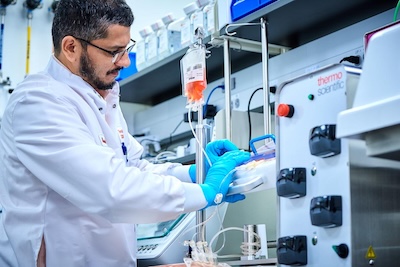
Thermo Fisher Scientific is stepping up its investments and ecosystem-building efforts in India as the country’s pharmaceutical industry increasingly shifts from generics towards biologics, biosimilars and other complex therapeutics.
The company’s senior executives say India has emerged as a high-growth market for the company, with the country’s expanding biopharma ecosystem creating opportunities across drug discovery, development, analytical characterisation and manufacturing.
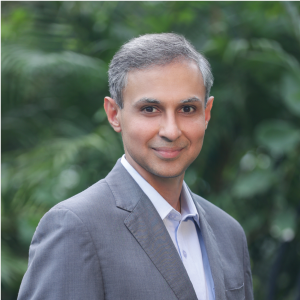
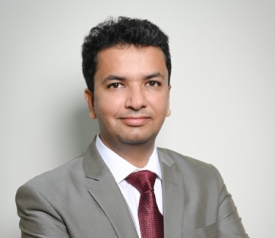
Tony Acciarito, President, Asia Pacific & Middle East, Africa (APMEA), Thermo Fisher Scientific, said the company expects Asia Pacific, including India, to become an increasingly important innovation hub over the next five to 10 years.
“Thermo Fisher’s strategy is focused on supporting biopharma customers across the entire journey, from discovery and pre-discovery through commercialisation,” outlined Acciarito.
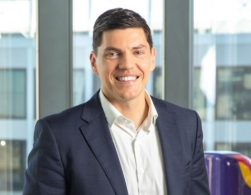
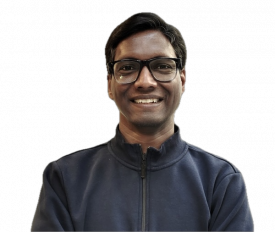
Srinath Venkatesh, Managing Director, India & South Asia, Thermo Fisher Scientific said the shift towards biologics in India was accelerating, driven by government initiatives such as the Biopharma Mission, biotechnology policies and the Promotion of Research and Innovation in Pharma (PRIP) scheme, along with increased startup funding and innovation.
“India has seen around 10 novel therapeutics emerge in recent years, signalling a broader evolution of the domestic pharmaceutical ecosystem from a predominantly generics-focused industry towards innovative and complex therapies,” said Venkatesh.
Building capabilities for India’s biologics transition
Thermo Fisher sees three major requirements for India to sustain this transition: access to advanced technologies, development of specialised talent and improvements in productivity and time to market.
The company said it is positioning itself across the biopharma workflow to address these requirements, providing technologies and services that can support companies working on high-value biologics from discovery through commercialisation.
The company has also established Customer Experience Centres (CEC) and a Bioprocess Design Centre (BDC) in India, allowing customers and partners to access and work with technologies in real-world settings.
Acciarito said these centres are intended to go beyond technology demonstrations by providing training, developing local expertise and creating an ecosystem in which Thermo Fisher, customers and partners can learn from one another.
“Build capability on the ground” is at the core of the company's long-term strategy, Acciarito said, adding that investment in India needs to be sustained over the next five to 10 years as the biopharma market expands.
Ten centres and partnerships across India
Thermo Fisher is also expanding its engagement with academia, startups and government institutions. According to Venkatesh, the company currently has around 10 capability or centre-of-excellence partnerships across the country.
These include collaborations with institutions such as IIT Guwahati, KIIT in Odisha, Atal Incubation Centre in Hyderabad and C-CAMP in Bengaluru, as well as government-linked institutions including the Central Forensic Science Laboratory (CFSL) in Gandhinagar and FSSAI in Ghaziabad.
The objective is to create a broader ecosystem connecting industry, academia and government while developing the skills needed for India's evolving life sciences sector.
Thermo Fisher also highlighted localisation as an important component of its India strategy. Venkatesh cited the company's air quality monitoring systems as an example, noting that the business has achieved Class I supplier status, enabling it to participate in government procurement while bringing advanced technologies to government and industrial customers.
New analytical technologies brought to India
At the Hyderabad Biopharma Summit, Thermo Fisher launched two analytical technologies for the Indian market: the Orbitrap Excedion mass spectrometer and Vanquish Amplify.
The products are aimed at addressing increasingly complex analytical requirements as pharmaceutical companies expand their work in oligonucleotides, peptides, proteins and other large-molecule therapeutics.
Venkatesh said the technologies respond to requirements emerging from both industry and academic research, particularly around the characterisation of complex biological molecules.
Thermo Fisher’s focus, however, extends beyond placing instruments with customers. The company said it will provide training in areas including data interpretation and analysis, with further smaller scientific training programmes planned to help researchers make effective use of the technologies.
The Hyderabad summit itself represents an evolution of Thermo Fisher’s engagement model. Following last year’s Orbitrap Summit in Bengaluru, the company expanded the programme into the Biopharma Summit this year and expects it to become an annual event.
AI emerges as another strategic priority
Artificial intelligence is another major area of focus for Thermo Fisher, with Acciarito outlining a three-pillar strategy for generative AI covering operational excellence, products and services, and customer experience.
Internally, the company is using AI to improve efficiency, reduce administrative workloads and accelerate responses to customers. Acciarito said Thermo Fisher was among the early companies to establish a collaboration with OpenAI, with its approximately 125,000 employees having access to ChatGPT.
The second pillar involves embedding generative AI into products and services. Thermo Fisher has also established an agreement with NVIDIA as it works to incorporate AI capabilities into its R&D and technology platforms.
The objective is to move beyond simply generating raw data towards automatically translating data into actionable insights for researchers and customers.
AI is also being applied to clinical trials, where Acciarito said data collection, interpretation and translation remain significant bottlenecks. By accelerating these processes, AI could help shorten the time required to generate clinical outcomes.
Thermo Fisher is also exploring AI applications in cybersecurity and is encouraging employees to develop and scale use cases that demonstrate measurable customer impact.
Talent remains the biggest challenge
Despite India's strong growth prospects, talent remains one of the key challenges for the country's transition towards complex biologics and advanced therapeutics.
Venkatesh identified talent development and stronger industry-academia collaboration as two of the biggest gaps that need to be addressed.
Acciarito similarly described attracting, developing and retaining skilled talent as the company's biggest challenge globally, not just in Asia Pacific.
Thermo Fisher is therefore placing greater emphasis on partnerships with universities, government institutions and other ecosystem stakeholders to develop specialised capabilities locally.
From technology supplier to strategic partner
Looking ahead, Thermo Fisher said its India strategy will focus on getting closer to customers through investments in service capabilities, warehousing, customer-facing teams, capability centres and talent.
The company also aims to deepen its role beyond being a transactional supplier of laboratory technologies.
“We want to become a trusted advisor and a long-term partner,” Acciarito said, emphasising the company's ambition to work alongside customers, generate insights and help shape the future of the market.
As India’s pharmaceutical industry moves towards biologics, biosimilars and increasingly complex therapeutic modalities, Thermo Fisher believes its combination of global technology capabilities, local infrastructure, talent development and ecosystem partnerships can position it to play a larger role in the country’s next phase of biopharma growth.
For India, the opportunity is equally significant: the convergence of policy support, startup innovation, advanced analytical technologies, AI and a growing talent base could accelerate the country's transition from being primarily a manufacturing powerhouse to becoming a more integrated global hub for biopharma innovation and complex therapeutics.

Subscribe To Our Newsletter & Stay Updated