Bringing a new drug to market is notoriously slow and costly, often taking 10–15 years of research, testing, and regulatory hurdles. Recent data shows that clinical development timelines for innovative drugs have barely budged in the last decade, hovering around a median of eight years.
But Jurek Kozyra, founder and CEO of Nanovery, tells the Disruption Interruption podcast that a breakthrough is on the horizon. On the latest episode, Kozyra explains how DNA nanotechnology combined with AI is ushering in a new class of "oligo therapeutics" designed to attack diseases at their source.
"If you can target mRNA very specifically, that means that in theory, you could potentially cure all diseases," Kozyra says. "That's why this area is so exciting right now."
For centuries, medicine has relied on a "lock and key" approach—searching for molecules to fix defective proteins. But this method leaves many diseases untreatable when no suitable molecule can be found. Traditional diagnostics are also painfully slow; lab tests can take up to two days to return results—a dangerous lag in emergencies like drug overdoses.
"Pharma companies are racing against 20-year patents while drugs take over 10 years to develop," Kozyra explains. "A lot of diseases cannot be cured because we cannot find the right molecule that will fix the protein. But the promise here is that you can actually cure potentially all diseases because all proteins come from mRNA."
The result is staggering: billions in wasted costs and a 90% failure rate for new drugs, keeping life-saving therapies out of reach for many patients.
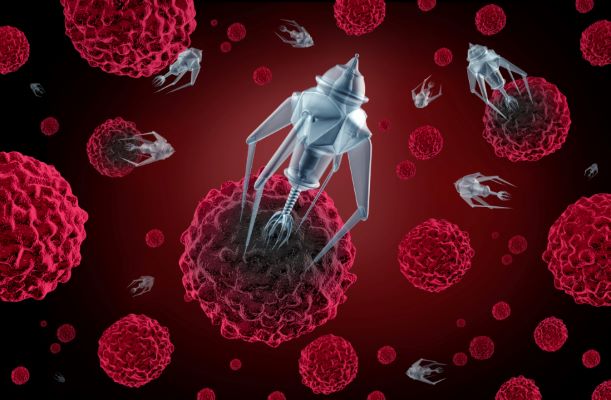
Kozyra’s solution? DNA nanorobots—tiny, self-assembling machines capable of detecting diseases in blood samples within 2–4 hours, a fraction of the time required by conventional tests. These biological nanorobots produce fluorescent signals when they encounter specific DNA or RNA markers, enabling rapid, precise point-of-care diagnostics.
"We are creating nanorobots that self-assemble into structures or dynamic devices," Kozyra says. "You simply add them to the sample, let them find the right markers, and they start producing a signal. If you can detect it, you know exactly what is in your sample."
The technology has already proven its potential in a hospital study involving 170 patient samples. "In a clinical setting, our technology delivered the same or better results than traditional tests in just two hours instead of two days," Kozyra notes. "This is a gamechanger for emergency situations where immediate answers are critical."






.png)