India should explore Sustainability-Linked Incentives (SLI) targeting innovations in the 12 principles of green chemistry
India has long been celebrated as the “pharmacy of the world,” supplying affordable generic drugs globally. The Prime Minister, in his Independence Day speech, emphasised greater innovation in the pharmaceutical sector, including drug development and increased patent filings. Despite these achievements, the sector faces challenges that threaten its global standing: recurrent drug contamination incidents, regulatory gaps, dependence on imported active pharmaceutical ingredients (APIs) and key starting materials (KSMs), environmental pollution, industrial accidents, and persistent shortage of skilled talent. India needs to transition from a high-volume, low-cost model to an innovative ecosystem, in conjunction with reforms in regulation, safety, research and development (R&D), talent, and sustainable manufacturing.
Drug Contamination and Regulatory Gaps
Recent tragedies, such as the deaths of children in Madhya Pradesh from contaminated cough syrups containing diethylene glycol (DEG), highlight vulnerabilities in India’s drug safety. Similar past incidents, including exports to Uzbekistan and African nations, reveal glaring quality issues. Currently, approximately 1,467 drug inspectors oversee nearly 10,500 manufacturing units-an extremely low ratio that limits oversight. Prioritizing volume over quality and relying on outdated processes contribute to compromised drug quality. While India boasts the largest number of FDA-approved manufacturing sites outside the US, domestic drug quality receives comparatively less attention.
Strengthening regulatory infrastructure is critical. Multiple regulatory authorities at the state and central levels lead to uneven and inconsistent enforcement, allowing major quality lapses to slip through the gaps. Standards and enforcement vary across states, such that what is acceptable in one may not be in another. Under the Drugs and Cosmetics Act, 1945, states are responsible for inspection, licensing, and enforcement of manufacturing facilities, while the Central Drugs Standard Control Organization (CDSCO) sets standards and coordinates with the states. However, most regulatory efforts are disproportionately focused on conducting market raids and testing products on pharmacy shelves, rather than proactive oversight of factory floors.
Several structural hurdles persist. For example, Telangana, which accounts for a large share of pharmaceutical production, has only one drug testing laboratory, raising serious concerns about testing capacity and quality assurance. The CDSCO requires adequate funding, staffing, and technical capacity to address these gaps. Regular, unannounced inspections with stringent penalties for non-compliance, combined with statutory recall mechanisms, would ensure that defective drugs are traceable and retrievable through a centralized framework.
India must establish end-to-end traceability for pharmaceuticals from raw materials to factory floors to market shelves along with a statutory recall mechanism to immediately withdraw defective or substandard drug batches through a central law. A key weakness in the present regulatory system is that it is proactive in intent but reactive in outcome, with excessive focus on market surveillance rather than factory-floor oversight. This gap can be addressed only through strict enforcement of Good Manufacturing Practices (GMP), supported by surprise inspections and robust data integrity checks on factories.
Though batchwise testing of APIs and raw materials is mandated under the Drugs Rules, 1945, enforcement often lags behind modern production realities. Robust vendor qualification systems and continuous requalification processes are essential. Innovative approaches aligned with Quality by Design (QbD) and Quality Risk Management (QRM), such as using lower-purity bio-based feedstock for initial testing, can enhance process understanding, reduce costs, and improve yields.
Updating Schedule M to mandate Pharmaceutical Quality Systems (PQS), QRM, and comprehensive pharmacovigilance programs would further strengthen quality assurance. Technology driven solutions including digital traceability, Blockchain, and AI can reinforce compliance and ensure safer drugs. India should also explore national pharmacovigilance portals similar to the UK Yellow Card or Australia’s DAEN, enabling public reporting, faster research, and timely recalls.
Dependence on APIs and Innovation Deficit
Despite its global reputation, India remains heavily dependent on China for critical APIs, KSMs, and intermediates. For essential medicines such as paracetamol, ibuprofen, clavulanic acid, diclofenac sodium, and antibiotics including penicillin G, tetracycline, and amoxicillin, import dependence, especially for KSMs and intermediates, ranges from 50 to 80 percent, depending on the product. This dependence poses strategic risks, including supply disruptions and price volatility, undermining India’s goal of pharmaceutical self-reliance.
Historically, India produced many APIs domestically through companies like IDPL, Hindustan Antibiotics (HAL), and Alembic. However, India fell behind in recent years due to heavy competition from China, becoming import dependent. Shortages of first line antibiotics can force doctors to prescribe broad spectrum alternatives, increasing the risk of antimicrobial resistance (AMR). India also relies on imports for solvents and chemicals such as acetone, acetic acid, isopropanol, formic acid, maleic anhydride, citric acid, and catalysts. A key lesson from China’s success is the importance of building a robust domestic chemical infrastructure.
Addressing these gaps requires a shift from a high volume, generics focused model to an innovation driven approach. Investment in API innovation, R&D, talent development, and strong collaboration among academia, industry, and research institutions is critical. Sustained state support, deliberate planning, and continuous research and innovation are essential to global competitiveness. Research priorities must include optimizing reactions, continuous flow chemistry, minimizing waste, and eliminating toxic effluents.
A major technological gap lies in fermentation, particularly for large-scale antibiotic production-a matter of strategic national interest. Research on engineered microbial strains leveraging initiatives such as BioE3, combined with chemical engineering expertise for low-energy, efficient reactors and optimized processes, can enhance safety and efficiency. Leveraging innovative bio feedstocks and repurposing food waste for production can lower operational costs while supporting sustainable practices.
Greater investment in process innovation, bioreactor design, green chemistry, and solvent-free reactions, along with strong academia industry collaboration, can accelerate technology adoption. Reviving public sector antibiotic manufacturing, akin to IDPL and HAL, is also necessary, as private companies often avoid this strategic space critical for public health.
Industrial Safety and Environmental Impacts
India’s pharmaceutical sector has experienced several serious industrial accidents over the past three years, such as the Sigachi Industries fire in Telangana (over 45 deaths) and explosions at Escientia Advanced Sciences and Akkireddygudem, Andhra Pradesh (2024). Investigations reveal multiple causes, including inadequately trained personnel, poor equipment, weak inspections, and non-adherence to standard operating procedures. Many small and medium enterprises operate close to residential areas, exposing communities to fire hazards, chemical leaks, and toxic emissions. Residents often report foul odors, while Material Safety Data Sheets (MSDS) are frequently unavailable to local authorities, limiting emergency response. Training local residents and care providers in interpreting MSDS is essential for improving community preparedness.
Adopting a Safety by Design (SbD) approach can mitigate risks by embedding safety into every stage of pharmaceutical operations. This includes designing reactors, storage units, and processes with fail-safes, ensuring critical operations are handled by trained personnel, and deploying sensors, alarm systems, phone notifications, and AI monitoring for real-time detection and automatic responses. Community safety measures, such as hazard mapping, information sharing, and emergency training, should be mandated. By integrating safety into plant design, operations, personnel training, and community engagement, the sector can significantly reduce industrial accidents, protect workers and residents, and promote sustainable, responsible manufacturing.
The absence of a centralized national database to track pharmaceutical accidents threatens risk mitigation and prevention of future incidents. A dedicated portal could monitor events, identify root causes, and provide data to prevent recurrence.
Environmental pollution from pharmaceutical manufacturing is equally concerning. Rivers, soils, and air in Telangana, Andhra Pradesh, and Gujarat are contaminated with APIs, Volatile Organic Compounds(VOCs), solvents, heavy metals, and antibiotics. The Patancheru Bollaram region in Telangana is internationally recognized for high antibiotic residues such as ciprofloxacin and antimicrobial resistant bacteria and genes, while aquatic toxicity has been reported across pharmaceutical hubs. Residual pharmaceutical contaminants pose risks to ecosystems, agriculture, livestock, and human health. While Zero Liquid Discharge (ZLD) is mandated for Bulk Drug Parks, it is not required for smaller enterprises and does not eliminate all residues. Stricter regulations and research-driven solutions are urgently needed.
PLI, RLI, and Sustainability-Linked Incentives (SLI)
India’s Production Linked Incentive (PLI) scheme has boosted domestic API and drug intermediate production, creating capacities for 26 critical KSMs/DIs/APIs, generating domestic sales of Rs. 2,315 crore and exports of Rs. 508 crores. While the Research Linked Incentive (RLI) encourages R&D investments in high-value drugs, complex generics, biopharmaceuticals, and novel APIs, its full potential remains unrealized.
To ensure sustainable growth, India should explore Sustainability-Linked Incentives (SLI) targeting innovations in the 12 principles of green chemistry. Companies achieving trackable improvements, such as reduced toxic waste, minimized solvent usage, better atom economy, and adoption of eco-friendly solvents, would receive financial rewards. Integrating SLIs with PLI and RLI ensures that expansion and innovation do not compromise environmental or public health. PLI programs could also extend to basic chemicals, solvents, catalyst manufacturing companies, and domestic manufacturers of reactors, bioreactors, analytical instruments, and other critical equipment, reducing import dependence, stimulating local industry, and supporting automation and green manufacturing.
National Pharmaceutical and Chemical Dashboard
A centralized National Pharmaceutical and Chemical Dashboard could provide real-time insights into supply chains, production status, import dependencies, and environmental compliance. By collecting data from manufacturers, bulk drug parks, and PLI/RLI participants, the dashboard could provide early warning signals for supply disruptions, facilitate strategic stockpiling, strengthen quality control, and enable rapid drug recalls.
Talent Shortages and Collaborative Frameworks
India faces a critical shortage of skilled professionals in pharmaceutical, chemical engineering, and life sciences, including pharmacy, organic chemistry, biochemistry, virology, immunology, and OMICs. International best practices such as China’s Thousand Talents Program could help address this gap. While research and industrial careers once attracted top talent, many students now lean towards IT and AI, leaving the pharmaceutical sector understaffed. In some units, critical operations are handled by personnel with limited technical training, increasing operational risks.
Addressing this requires strengthening academic and research institutions to produce industry-ready talent while nurturing future regulators, policymakers, and academicians. Private industry brings expertise in large-scale manufacturing, chemical processes, reactor design, and regulatory compliance; universities contribute knowledge in drug discovery, synthesis, process optimization, and green chemistry; hospitals and clinical research centers specialize in clinical trials, pharmacovigilance, and translational research. Collaborative spin-offs and start-ups originating from research institutes and pharmaceutical companies are well suited for deep scientific innovation, complex process development, and regulatory compliant manufacturing. India needs to create some me-too drugs to build domestic capabilities to strategically prepare ourselves for the future innovations in drug discovery.
Multidisciplinary collaboration with economics, sociology, and public health experts is essential to understand the industry’s dynamics and give it a human face. Employing BSc-qualified personnel for routine operations and engineers for critical processes, supported by continuous training in GMP, safety protocols, and advanced manufacturing, can improve productivity, safety, and innovation outcomes.
Way Forward
While India’s generic drug manufacturing legacy is impressive, it is no longer sufficient for global leadership. The claim of having the largest number of FDA-approved sites outside the US serves more as a point of pride than competitiveness. India must move from low-cost generics to innovation while promoting self-sufficiency in essential drugs.
Achieving the goals of Viksit Bharat requires nurturing research, innovation, and a strong foundation in basic sciences and technology. With the right policies, investments, and multidisciplinary collaboration, India can transform its pharmaceutical sector into a globally competitive, innovation-driven, safe, and sustainable powerhouse.
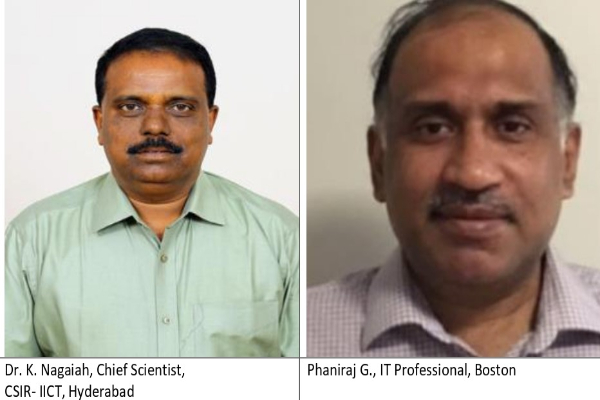
By Dr. K. Nagaiah, Chief Scientist, CSIR-IICT, Hyderabad and Phaniraj G., IT Professional, Boston, USA.

Subscribe To Our Newsletter & Stay Updated