The study found that 75 tuberculosis survivors (7%) developed recurrent TB, while 30 household contacts (1%) were newly diagnosed with the disease
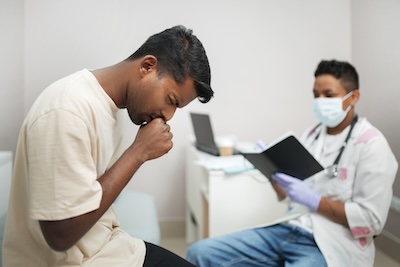
A landmark study involving researchers from Dr. D. Y. Patil Medical College, Hospital & Research Centre, Pune, Johns Hopkins University and India’s National Tuberculosis Elimination Programme (NTEP) has found that people who successfully complete tuberculosis (TB) treatment remain at significant risk of recurrent TB, highlighting the need for structured post-treatment surveillance.
Published in The Lancet Global Health, the TB Aftermath (TBAM) study followed 1,076 TB survivors and 3,309 household contacts for 18 months after treatment completion across six government TB clinics in Pune, Maharashtra.
The study found that 75 TB survivors (7%) developed recurrent TB, while 30 household contacts (1%) were newly diagnosed with TB. Notably, the median time to diagnosis was less than six months after treatment completion, identifying the early post-treatment period as a critical window for surveillance.
Researchers compared telephone-based and home-based screening to determine which approach could be effectively integrated into routine TB programmes. Phone-based screening was found to be non-inferior to home-based screening for detecting TB among survivors and household contacts combined.
However, among TB survivors specifically, home-based screening detected significantly more recurrent TB cases, suggesting that in-person follow-up may be particularly important for high-risk survivors in high-burden settings such as India.
The study also incorporated portable spirometry at participants’ homes to assess lung health, demonstrating that post-TB care can extend beyond recurrence detection to monitoring long-term pulmonary damage without requiring survivors to travel to healthcare facilities.
Dr. M. S. Barthwal, India Site Investigator and Professor of Respiratory Medicine at Dr. D. Y. Patil Medical College, said successful completion of treatment should not mark the end of clinical follow-up. He emphasized that early detection of recurrence could help reduce transmission and long-term morbidity.
Dr. Vidya Mave, India Principal Investigator, highlighted the contribution of previous extrapulmonary TB among participants with altered lung function who subsequently developed recurrence, reinforcing the importance of monitoring survivors regardless of their initial TB presentation.
Dr. Jonathan E. Golub, Principal Investigator from Johns Hopkins University, said the findings demonstrate that TB survivors in high-incidence settings such as India represent a high-risk population that could benefit from recurrence screening.
The study suggests that telephone-based follow-up could offer a scalable and resource-efficient approach for large public health programmes, while targeted home-based screening may provide additional value for TB survivors at higher risk of recurrence.
Prof. A. L. Kakrani, Director, Academic Collaborations at Dr. D. Y. Patil Medical College, said structured telephone follow-up can help identify cases that might otherwise remain undetected, while the higher detection achieved through home-based screening underscores the importance of targeted in-person surveillance.

Subscribe To Our Newsletter & Stay Updated