Artificial intelligence is poised for a major expansion across India’s healthcare sector, but hospitals must overcome gaps in data readiness, regulation and clinical trust before AI can move from pilots to widespread deployment, according to a new report by Bain & Company and HealthQuad.
The joint report, ‘AI in Indian Healthcare Delivery’, finds that rapid advances in AI capabilities, coupled with India’s expanding digital healthcare infrastructure, are creating stronger conditions for adoption than during earlier waves of healthcare technology.
Government initiatives, rising electronic medical record (EMR) penetration, private capital, a thriving start-up ecosystem and growing clinician acceptance are strengthening the foundations for AI adoption. Yet implementation across hospitals remains nascent and uneven.
Most healthcare providers are still experimenting with AI through controlled pilots. Meaningful scale is largely limited to operational and workflow applications, while only a small number of providers are moving into more advanced clinical use cases.
The report argues that the widening gap between AI’s technological capabilities and current healthcare adoption could create significant room for growth.
Newer generative and agentic AI systems can increasingly execute multi-step workflows with limited supervision. The amount of expert-level work AI can complete autonomously has also been doubling every six to nine months since 2023, the report says.
For healthcare providers, this could translate into a major opportunity to reduce the administrative workload on doctors, nurses and other healthcare professionals, freeing them to spend more time on patient care and higher-value clinical work.
“AI adoption in Indian healthcare is still early, but the conditions for it to scale are strengthening quickly. The technology itself has advanced significantly; the harder question now is how providers redesign workflows, manage change and build trust among doctors and nurses. This is increasingly a business transformation challenge, not simply a technology challenge.
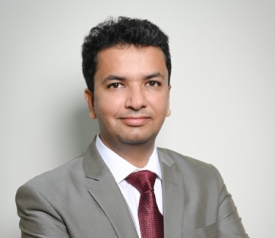
'Providers will need to focus on the highest-value use cases, build the data and organisational capabilities to scale them, and embed AI into clinical workflows with the right governance and human oversight. The next phase of adoption will be shaped by providers’ ability to bring value, deployability and trust together—not simply by access to more advanced AI models,” said Dhruv Sukhrani, Head of Bain & Company’s Healthcare & Life Sciences practice in India.
The report highlights a sharp step-change in AI’s technological capabilities, particularly in healthcare. Frontier models now match or outperform pre-licensed medical professionals in some controlled clinical reasoning tests, while the cost of frontier AI models has fallen by approximately 92% since 2023.
India, meanwhile, is making progress on the digital foundations needed to harness these capabilities.
However, three factors are likely to determine how quickly those foundations translate into AI deployment at scale: data readiness, regulatory clarity and locally applied talent.
EMR adoption in India stands at around 35%, significantly below levels in the US and UK, and remains concentrated among larger urban hospital chains. Small and mid-sized hospitals continue to depend heavily on paper-based records, limiting the availability of high-quality digital data needed to deploy AI effectively.
Regulation is another challenge. India’s framework governing adaptive and autonomous clinical AI is still evolving, particularly on questions of accountability, data governance and clinical validation.
At the same time, while India has deep AI talent, much of it is focused on global markets. The report points to an opportunity for more locally applied AI capabilities as Indian healthcare providers and start-ups seek solutions tailored to domestic workflows and patient needs.
Indian start-ups are already developing AI applications across the patient journey, from pre-visit access and diagnostics to inpatient treatment and post-discharge care.
“The winners are likely to be those that go beyond the AI model itself: solving for clinical validation, workflow integration, local data and clinician trust,” the report says.
For HealthQuad, the opportunity extends beyond improving efficiency. AI could help address one of Indian healthcare’s most persistent challenges: the shortage and uneven distribution of clinicians.
“Healthcare in India has always been constrained by scarcity of clinicians leading to enormous variation in access and outcomes. AI can potentially change that equation by being not just an efficiency lever, but a capacity multiplier. AI capabilities are advancing exponentially, with performance increasingly matching or exceeding medical experts across selected tasks.
"The report brings a clinician-first lens across the patient journey, which is closely aligned with the investment thesis of HealthQuad’s Fund III, which is focused on backing healthcare innovators using technology and AI to address critical gaps across care delivery. The fund's recent investment in LifeSigns, an AI-powered remote patient monitoring platform, is an example of this thesis in action. Our role is to back founders solving problems across the complex patient journey and help take those solutions from a point of value to a meaningful platform," said Namit Chugh, Director, HealthQuad.
The next phase of AI adoption could see healthcare providers move beyond administrative and operational gains towards more connected, patient-centric care.
The report identifies several areas with significant headroom, including remote patient monitoring, operating theatre and ICU optimisation, and post-discharge chronic disease management.
As AI moves deeper into clinical workflows, however, integration, data readiness and trust become increasingly important constraints. Human oversight is also expected to remain central to clinical adoption of the technology.
"For hospitals, capturing value from AI means treating it as a business transformation, not an IT project. This requires anchoring AI to clinically owned outcomes, sequencing adoption carefully, building both specialist AI capability and broad organizational fluency, and governing clinical AI on an ongoing basis rather than through a one-time sign-off," the report says.