Pharma sector must lead in R&D, new molecules, biosimilars and biotech
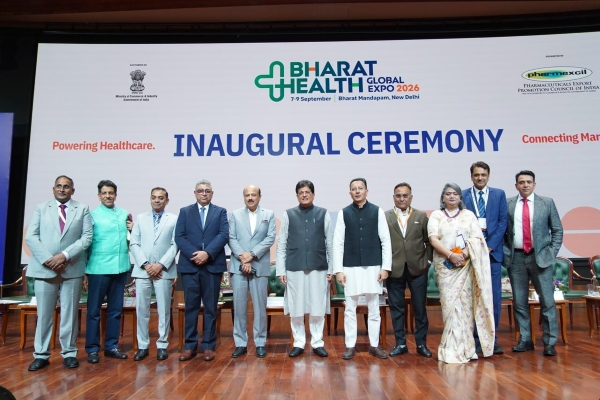
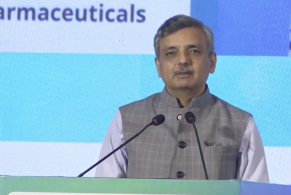
India must build resilient, globally integrated healthcare supply chains, strengthen its position as a trusted healthcare partner of the world and move beyond its success in generics towards greater research, development and innovation, said Union Minister of Commerce & Industry Piyush Goyal at the Bharat Health Global Expo 2026 in New Delhi today.
The Minister attended the Expo along with Minister of State for Commerce and Industry and Electronics and Information Technology Jitin Prasada and Commerce Secretary Rajesh Agarwal.
Goyal said that India’s pharmaceutical sector has a significant opportunity to showcase its capabilities to the world and that the country, known as the “pharmacy of the world”, must aim for a much bigger and better future. He said that the coming together of the healthcare community through Bharat Health Global Expo marks only the beginning and has significant potential, with the entire value chain being brought together on a single platform to encourage greater international participation.
The Minister said that at a later stage, the platform could also be opened for country pavilions and partner countries, allowing foreign companies to showcase their products alongside Indian companies. He said this would enable India to demonstrate its capabilities with confidence and compete with the best globally.
Highlighting the importance of resilience in supply chains, Goyal said that the world is increasingly looking for resilient supply chains and is not comfortable with excessive geographical dependence on one or two locations or with supply chains that could potentially be weaponised. He noted that India had earlier lost ground in Active Pharmaceutical Ingredients (APIs) and Key Starting Materials (KSMs) for a variety of reasons and said that it was now time to restore resilience in the pharmaceutical supply chain.
He clarified that resilience should not mean an inward-looking approach. He said that India does not need to indigenise everything and that imports would continue to be necessary where required. However, products should be available from multiple geographies and companies so that no one or two countries or companies can hold businesses to ransom and threaten the continuity of the industry.
Goyal said that pooling India’s demand would identify several products currently imported where there is potential for indigenous production. He added that countries across the world are now competing to attract investment and build resilience in their supply chains.
He noted that the competition for investment is no longer limited to developing countries, with the United States, Canada, Mexico, Japan, Korea, Singapore, Europe and other developed economies also seeking to attract investments to their geographies. He said that India is therefore competing not only in goods and services but also with developed countries in attracting investment, making the task of strengthening India’s investment proposition even more important.
At the same time, Goyal said that India must recognise that other countries are also seeking resilience and therefore the pharmaceutical sector would need to adopt a global and outward-looking approach. He said there may be countries where Indian pharmaceutical companies need to invest for last-mile delivery, local value addition and job creation, including in African countries. He emphasised that the sector would need to adopt a global outlook in the years ahead.
On research and development and innovation, Goyal said India must promote greater R&D, develop and patent its own products, and make use of programmes launched to support R&D and innovation. He added that the pharmaceutical sector should be at the forefront of R&D and leverage initiatives such as the Research and Development Innovation Fund (RDIF). He called for Indian companies, engineers and talent to focus on new molecules, biosimilars and biotechnology, which he said should become the next frontier for the sector.
Goyal said India would also have to offer the world a regulatory mechanism that makes R&D and innovation attractive in the country. He called for an open and inviting approach towards investment in clinical trials, patenting products, conducting R&D and introducing new products in India.
He said that Indian regulators should examine regulations in more developed countries and take cues from global developments to move towards greater regulatory convergence with the developed world. He stressed that unless India’s mindset and approach align with the developed world, the country cannot aim to become a developed country by 2047. He said that India must listen to investors willing to come to the country and to the demands of governments globally, and together craft a new pathway for the success of the industry.
Goyal said that the last 40 years have been a defining period for the pharmaceutical industry but the sector should not be content with where it stands today. He called upon the industry to “aim for the skies” and work towards a much bigger and better future.
On infrastructure, Goyal said that the Government has been working to develop bulk drug parks, with projects coming up in Andhra Pradesh, Gujarat and Himachal Pradesh, including both old and new parks. He said that 100 new industrial parks are coming up where dedicated areas can be provided for the pharma and healthcare sector, if required.
On medical devices, Goyal said that while there have been efforts in the sector, India still has a long way to go. He called for a shift from assemblies towards domestic and indigenous production of components and the entire medical devices ecosystem, noting that there remains significant scope for growth in medical devices.
He said that doctors, nurses, technicians and hospitals would have to become more conscious about the availability of better and superior products in India. Greater domestic market share would also support exports, as the large Indian market can provide economies of scale. He said MSMEs can support the indigenisation of components and equipment, while larger companies can create scale.
The Minister said India too must have the courage of conviction that it can compete with the best. He said competition would ultimately be determined by quality, timely delivery and good customer service. He said India has the opportunity and the capability, particularly in the health sector, to showcase the best to the world.
On international market access, Goyal said FTAs were opening up global markets for Indian industry and that almost two-thirds of the global market is already open for preferential market access for India. He said India is negotiating another 8 to 10 multilateral or bilateral FTAs or PTAs, which would provide access to almost 75 per cent of global trade.
He said that, until 2014, India’s FTAs collectively provided access to markets with a combined GDP of US$ 10 trillion. In contrast, the nine FTAs referred to by Jitin Prasada and covered in the accompanying book cover 38 developed countries and open access to a combined GDP of US$ 60 trillion, six times more than what was open until 2014. He noted that many of these FTAs had remained stuck for 25 years.
Goyal said Indian industry is competitive and best in class, with strong talent, and that what is needed now is greater ambition, higher goals and the ability to connect the dots. He said an organisation such as Bharat Health is attempting to do precisely this by bringing different organisations together, getting everyone on the same page and encouraging collaboration and cooperation.
He said healthy competition is necessary and good, but the sector must also collaborate. He called upon the industry to aim big, adopt a modern outlook, go global, make quality its top priority, build resilience and scale, invest in R&D and innovation, leverage Indian capabilities and talent, and make full use of the opportunities being opened through India’s trade partnerships.
Goyal called upon the industry to earn greater trust, goodwill and market share across the world and work towards making India the “health stack for the globe”. He said no human being, economy or country can be successful or happy without high-quality healthcare.
The Minister said that Viksit Bharat 2047 rests on the shoulders of the healthcare sector, which has the responsibility of providing a healthy India, ensuring good health facilities and quality medicines, and delivering both preventive wellness and curative healthcare to 1.4 billion people. He said this would be the mainstay of Viksit Bharat 2047.

Subscribe To Our Newsletter & Stay Updated