The pharmaceutical polymer-based hydrogel for 3D printing using extrusion-based method has the potential to be used for skin tissue engineering and customised drug delivery
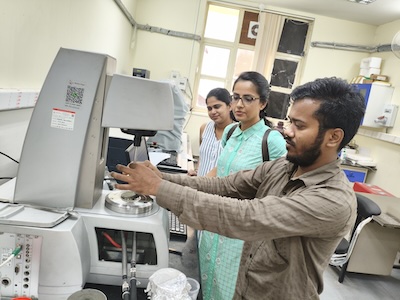
Researchers at the Birla Institute of Technology and Science (BITS) Pilani, K.K. Birla Goa Campus, have developed a pharmaceutical polymer-based hydrogel for extrusion-based 3D printing that could potentially be used in skin tissue engineering and customised drug delivery.
The study, published in the Journal of Biological Engineering, explores the use of pharmaceutical-grade polymers including starch, maltodextrin and sodium alginate to formulate hydrogels with properties suitable for extrusion-based 3D printing.
The approach could help address some of the challenges associated with conventional bioinks, including material variability, safety concerns, cost and regulatory complexity.
The research was led by Prof. Anasuya Ganguly along with researchers from the Departments of Biological Sciences and Chemical Engineering at BITS Pilani's Goa campus.
The team designed the hydrogel to provide the flow and recovery characteristics required for 3D printing. It demonstrated shear-thinning behaviour, allowing it to flow during extrusion and regain its structure after deposition.
The researchers reported 87% thixotropic recovery, indicating its ability to retain the shape and structural integrity of printed constructs.
The hydrogel was also evaluated for biological compatibility using L929 and HaCaT cells, which are relevant to skin tissue engineering. The formulation demonstrated more than 70% cell viability in the tested cell models, while blood-compatibility testing showed 5% haemolysis. Confocal microscopy also indicated cell growth on the crosslinked hydrogel.
“This study demonstrates that pharmaceutical-grade polymers can be formulated into hydrogels with properties suitable for 3D bioprinting,” said Prof. Anasuya Ganguly, Department of Biological Sciences, BITS Pilani. She said the findings provide a foundation for exploring a single platform for applications ranging from skin tissue engineering to customised drug delivery.
The researchers also demonstrated the potential of the platform in drug delivery by incorporating glimepiride into the hydrogel and producing 3D-printed customised chewable tablets.
The tablets showed 100.4% content uniformity and a sustained drug-release profile over four hours. According to the researchers, the findings demonstrate how 3D printing could provide greater flexibility in designing oral dosage forms and potentially allow formulations to be tailored to individual therapeutic requirements.
Prof. Asima Shaukat, Assistant Professor, Department of Chemical Engineering, BITS Pilani, said the work explores how established pharmaceutical polymers could be used to extend 3D bioprinting into both tissue engineering and drug delivery, while combining material safety, printability and practical applications.
The researchers said the work builds on earlier studies investigating pharmaceutical polymers as potential bioinks for soft-tissue engineering and clean bioprinting.
However, the technology remains at the research and proof-of-concept stage. The findings do not represent a clinically approved treatment or a commercially available 3D-printed medical product, and further preclinical and clinical studies would be required before potential therapeutic applications could be evaluated.

Subscribe To Our Newsletter & Stay Updated