The ruling comes against the backdrop of a mounting trauma burden in India, where nearly 4.67 lakh accidental deaths occur annually
In a landmark ruling with far-reaching implications for public health and emergency medical access, the Supreme Court of India has declared that the Right to Trauma Care is an integral part of the Right to Life guaranteed under Article 21 of the Constitution.
The judgment, delivered in SaveLIFE Foundation & Anr. v. Union of India & Ors. [WP(C) No. 726 of 2024], creates for the first time a nationwide, enforceable framework for trauma care across all 36 States and Union Territories.
The directions cover the entire chain of survival — from emergency response at the site of injury to definitive hospital treatment — and apply to all forms of traumatic injury, including road crashes, burns, falls, drowning, industrial accidents, explosions, fires, violence, and disasters.
The Court has directed all States and Union Territories to implement a series of time-bound reforms across nine critical areas of trauma care and submit Action Taken Reports before the Supreme Court within prescribed timelines. The matter is expected to return before the Court in four months for further monitoring and compliance review.
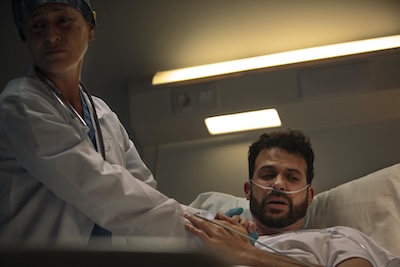
The ruling comes against the backdrop of a mounting trauma burden in India, where nearly 4.67 lakh accidental deaths occur annually. Road crashes alone account for around 1.77 lakh deaths every year.
Citing the Law Commission of India and the NITI Aayog-AIIMS Emergency and Injury Care Report, the petition highlighted that thousands of lives could be saved annually through timely emergency medical intervention.
Reacting to the verdict, Piyush Tewari, Founder and CEO of SaveLIFE Foundation, described the judgment as a defining moment for public health and constitutional rights in India.
The matter was heard by a bench comprising Justice J.K. Maheshwari and Justice Atul S. Chandurkar, which also recognised the assistance of Attorney General R. Venkataramani, Senior Advocate Sidharth Luthra, and Advocate Malvika Kapila in the proceedings.
The Court observed that India’s trauma care ecosystem remained fragmented and inconsistent, with gaps in ambulance standards, emergency helpline integration, trauma registries, paramedic training, and hospital preparedness. The petition seeking systemic reform was filed by SaveLIFE Foundation in October 2024.
Among the most significant directions issued by the Court is the mandatory integration of all emergency helplines — including 100, 101, 102, 108, 1033, and 1091 — into the national emergency number 112 within three months.
The ruling significantly expands the scope of Article 21 by recognising trauma care as a constitutional entitlement, reinforcing the State’s obligation to ensure timely emergency medical treatment irrespective of a person’s financial condition or location.

Subscribe To Our Newsletter & Stay Updated