Indians are stepping into innovator roles that enable local GCCs to feature centers of excellence for drug discovery, R&D, clinical trialling, and more

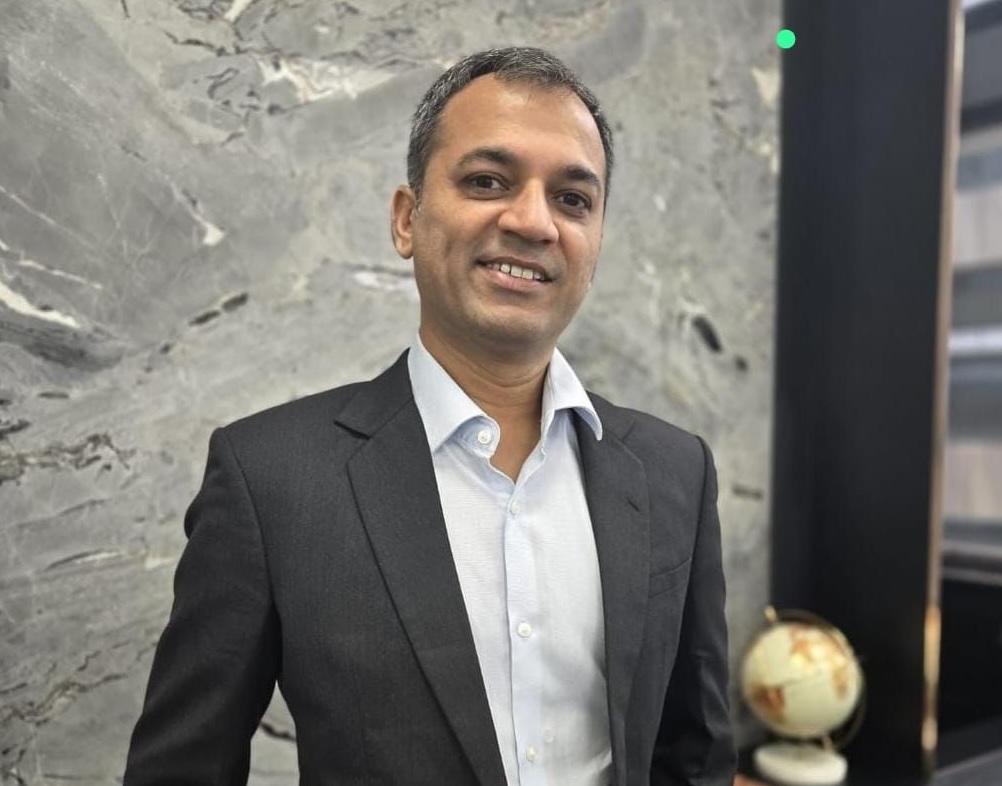
Vijayam Sirikonda, Senior Vice President – Business Development, Straive
As home to the lion’s share of Global Capability Centers (GCCs), India is fast establishing itself as a hub of AI-driven innovation on the world stage in the pharmaceutical arena. Some of the world’s leading pharmaceutical firms—AstraZeneca, Pfizer, Novartis, to name but a few—have their largest GCCs established in India, with plans to expand these centers.
Now, India’s GCCs are rewriting the entire economic model behind innovation in pharmaceuticals, one with shorter timelines, lower costs, and greater scalability. Crucially, with an estimated $230 billion in blockbuster drug sales at risk from patent expirations between now and 2030, pharmaceutical firms’ investments in GCCs are more than an innovation exercise. They’re also looking to GCCs because the traditional cost structure of drug development cannot sustain the pipeline replacement needed.
Here’s how, and what GCCs mean for the future of pharmaceuticals.
The Operational DNA is Changing
GCCs are not new, but their role has almost entirely changed in recent years from ‘back-office’ support operators to end-to-end process owners. In pharmaceuticals, we’re seeing GCCs stepping up as accelerators in the value chain, propelling early-stage drug discovery, clinical data analytics, regulatory intelligence, pharmacovigilance, and commercial insights. India’s abundance of specialized STEM talent and network of over 2,100 GCCs that employ 2.36 million people and generate more than $100 billion in revenue are the driving force behind this.
It’s important to consider the wider market shifts happening in India’s employment market to further contextualize how and why GCCs’ operations are quickly changing. The subcontinent’s healthcare and pharmaceutical sector is moving into a “capability-led growth phase,” set to create 2.5 million new jobs in the next few years. GCCs, as innovation hubs, are the ideal setting to gather, hone, and leverage the vast array of STEM and pharmaceutical talent so widely available.
Indians are stepping into innovator roles that enable local GCCs to feature centers of excellence for drug discovery, R&D, clinical trialling, and more. Historically, GCCs were offshore service providers for administrative tasks and basic IT support functions. The leading pharmaceutical firms can no longer ignore the talent and technological advancements India has to offer.
Moreover, India is now firmly ranked as a top investor and adopter of AI—in fact, it recently ranked fourth globally in generative AI adoption. This, coupled with the country’s commitment to innovating AI technologies, has funnelled back to GCCs in the form of advanced technical and technological capabilities.
Against this backdrop, end-to-end process ownership and the very operational nature of GCCs has transformed. Now, Indian teams are overseeing, configuring, training and refining AI models while taking over end-to-end process ownership for raw clinical data ingestion through to analysis and submission-ready outputs.
Where AI Lands in Pharma Workflows
AI has undoubtedly played a massive role in redefining India’s GCCs on the global pharmaceutical innovation stage. In fact, AI tools are slashing between two to five years from end-to-end drug development cycles. But where and how exactly does AI fit in as an enabler and accelerator?
There are multiple ways AI is transforming pharmaceuticals, not only drastically reducing timelines but also helping firms navigate some of the world’s strictest regulations while maximizing cost efficiency.
One of its most prolific impact areas is through machine learning (ML) in drug discovery and design, as well as drug target identification. Next is one of the highest-volume, highest-stakes functions in pharmaceuticals: adverse event monitoring and pharmacovigilance. Natural language processing (NLP), genAI, and ML are now processing unstructured safety reports, massive amounts of clinical data, literature, and patient narratives at an unprecedented speed. Meanwhile, these models are able to flag potential signs for clinical review more consistently, too.
Perhaps less renowned, but just as vital, is AI’s ability in a valuably strategic application: predictive regulatory analysis. AI models trained on historical submission outcomes and regulatory feedback patterns are helping regulatory teams anticipate what the FDA or EMA is likely to push back on before a submission is filed. For pharmaceuticals, where a few weeks’ delay because of regulatory stalls can ramp up millions of dollars in added costs, that proactiveness makes all the difference.
Ensuring Regulatory Readiness
The regulatory demands of pharmaceuticals require AI use that is auditable. Why? Because even a model that performs well but isn’t explainable is potentially a huge liability that no firm can risk.
In fact, the main regulatory requirement is explainability. Considering the FDA's guidance on AI- and ML-based software as a medical device and the EMA's emerging AI frameworks, the rationale becomes clear. If an AI system influences a clinical or compliance workflow or decision, the reasoning behind that output must be reconstructable and defensible. The teams overseeing these tools must be prepared to justify and explain why and how they produced an insight, output, or recommendation.
So, how can pharmaceutical companies ensure their AI systems are explainable and regulatory-ready?
The first step is to embed audit trails. This is a must. Every input, every output, every data source and destination, every model, every escalation rule, and every permission must be logged and provable.
Here’s where Indian GCCs have an advantage. They have decades of experience in building compliance-ready infrastructures—the blueprint for scalable governance, quality assurance, and system checks and balances is already there. Now, it’s just a matter of adapting that blueprint to an AI-ready operationalization.
India’s vast number of GCCs present a new opportunity for accelerated, compliant innovation in pharmaceuticals. What began as transactional support and cost arbitrage is now emerging as technology and operational ownership, with AI as a key catalyst.
About Author: Vijayam Sirikonda has over 20 years of experience across business development, sales, banking, insurance, and pharma. He brings a well-rounded commercial perspective shaped by leadership roles in regional sales and deep experience in the GCC market. He is responsible for expanding strategic accounts, developing new opportunities, and strengthening long-term client partnerships.
*The author’s views are his own and do not necessarily represent those of the publisher.

Subscribe To Our Newsletter & Stay Updated