One of the most important lessons healthcare leaders have learned in recent years is that no single stakeholder can transform healthcare independently

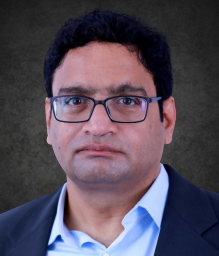
Nitin Thakur, Business Head, Meril Lifesciences
Healthcare in India has evolved from being product-driven to institution-led, data-enabled, and outcome-focused, reshaping the MedTech industry and redefining leadership within it. My own journey, across organizations such as Johnson & Johnson, Dozee, and Meril Lifesciences, has evolved alongside this transformation.
From field sales to enterprise leadership, every stage reinforced one enduring lesson: in healthcare, credibility compounds slowly, but its impact is long-lasting.
I began my career in field sales, where success depended not just on products but on building trust with healthcare professionals, hospital stakeholders, and distributors. The experience offered firsthand insight into how hospital ecosystems function and how deeply healthcare decisions are rooted in relationships, clinical confidence, and reliability.
At Johnson & Johnson MedTech, the focus evolved from transactional selling to building long-term institutional, clinical, and academic partnerships. The role demanded a broader understanding of healthcare delivery, stakeholder alignment, and value creation beyond the device itself. It also highlighted an important reality: the future of healthcare will increasingly be defined not by standalone products, but by integrated solutions that improve clinical outcomes, operational efficiency, and patient experience simultaneously.
During the COVID-19 pandemic, leading operations across South India and Nepal became a defining phase of my career. The crisis reinforced that healthcare leadership is ultimately about resilience, continuity of care, and dependable execution during moments that matter most. It shifted the focus from short-term growth metrics to long-term trust, operational agility, and institutional accountability.
Later, my experience in digital health at Dozee highlighted how healthcare is becoming increasingly interconnected through devices, data, and real-time clinical decision-making. Technology was no longer operating merely as an enabler; it was actively shaping clinical workflows, patient monitoring, predictive care, and healthcare outcomes.
Today, at Meril Lifesciences, the emphasis is on building scalable systems, strengthening academic and institutional collaborations, and driving sustainable, institution-focused growth. Across every role, one constant has remained clear: meaningful progress in healthcare comes from continuous learning, deep clinical engagement, and long-term partnerships with healthcare institutions.
Global healthcare is evolving at an unprecedented pace. Rapid technological innovation, changing patient expectations, rising healthcare costs, workforce shortages, and evolving regulatory frameworks are collectively reshaping healthcare delivery worldwide. Healthcare systems are increasingly moving toward value-based care models that prioritize patient outcomes, preventive healthcare, and operational sustainability over transactional care delivery.
Across the Asia-Pacific region, governments and healthcare organizations are accelerating investments in digital infrastructure, healthcare accessibility, AI-enabled care delivery, and localized manufacturing capabilities. Countries are increasingly recognizing that future healthcare resilience will depend on their ability to integrate technology, infrastructure, policy, and clinical excellence into a unified healthcare ecosystem.
Artificial intelligence is expected to play a transformational role in healthcare delivery globally, particularly in diagnostics, predictive analytics, claims management, remote monitoring, and workflow optimization. India is also increasingly recognizing AI as a strategic opportunity to strengthen healthcare accessibility, improve efficiency, and support data-driven clinical decision-making.
Healthcare at transformational turning point
India is emerging as one of the world’s most dynamic healthcare markets. The country is not only adapting to global healthcare shifts but is increasingly positioning itself as a strategic hub for healthcare innovation, digital health, MedTech manufacturing, and healthcare investments.
The Indian healthcare sector has witnessed significant policy and regulatory momentum focused on accessibility, affordability, digital transformation, and domestic manufacturing. Government-led initiatives such as the Ayushman Bharat Digital Mission (ABDM) are accelerating the creation of interoperable digital healthcare infrastructure across the country.
India’s digital healthcare ecosystem is also scaling rapidly. Industry estimates suggest that the digital health market is expected to witness exponential growth over the coming decade, driven by telemedicine, AI-enabled diagnostics, digital health records, and remote patient monitoring.
The scale of digital adoption is already visible. Hundreds of millions of digital health IDs and linked health records have been created under ABDM, significantly strengthening the foundation for connected healthcare delivery in India.
India’s healthcare sector also continues to attract strong institutional and private equity investments across hospitals, diagnostics, MedTech, pharmaceuticals, and healthtech platforms. Healthcare infrastructure expansion, specialty care development, and digital integration are increasingly becoming strategic priorities for both public and private healthcare providers.
However, India’s healthcare challenge today is no longer limited to expanding access alone. The larger challenge is delivering consistent quality, operational efficiency, affordability, and patient outcomes at scale across highly fragmented healthcare systems.
In many regions, healthcare accessibility remains uneven between urban and semi-urban markets, while out-of-pocket healthcare expenditure continues to place significant financial pressure on families. The next phase of India’s healthcare transformation must therefore focus not only on scale, but also on standardization, workforce development, patient outcomes, and sustainable execution.
Technology and innovation reshaping delivery
Technology is playing a central role in redefining healthcare delivery in India. Artificial intelligence, telemedicine, predictive analytics, connected healthcare systems, robotics, and digital diagnostics are transforming how healthcare is delivered, monitored, and managed.
Healthcare organizations are increasingly leveraging technology to improve workflow efficiency; enhance clinical decision-making; reduce operational costs; strengthen preventive healthcare, improve patient engagement and experience; and enable data-driven healthcare delivery.
The healthcare industry is also witnessing a strategic shift from reactive treatment models toward predictive and preventive care. As chronic diseases continue to rise across India, healthcare systems will increasingly need to focus on early diagnosis, remote monitoring, and longitudinal patient management.
India’s startup ecosystem is contributing significantly to this transformation. Healthtech and MedTech startups are introducing scalable innovations across diagnostics, AI-enabled monitoring, patient engagement, home healthcare, and digital therapeutics.
At the same time, India has a significant opportunity to emerge as a global MedTech and healthcare manufacturing hub. Strengthening indigenous manufacturing capabilities, research collaborations, regulatory modernization, and innovation ecosystems will be critical for reducing import dependency and improving global competitiveness.
Future belongs to collaborative ecosystems
One of the most important lessons healthcare leaders have learned in recent years is that no single stakeholder can transform healthcare independently. The future of healthcare will depend on stronger collaboration between healthcare providers, clinicians, policymakers, technology companies, academia, investors, and industry leaders.
Healthcare organizations that succeed in the next decade will likely be those capable of integrating clinical excellence; technology adoption; operational scalability; patient-centricity; data-driven decision-making; and institutional trust.
Equally important will be leadership adaptability. The healthcare industry is evolving faster than ever before, and leaders will increasingly need to balance innovation with empathy, growth with governance, and scale with sustainability.
As India advances toward becoming a global healthcare leader, the conversation must move beyond growth alone. The real opportunity lies in building healthcare systems that are trusted, digitally connected, clinically effective, financially sustainable, and accessible across every segment of society.
India’s healthcare future will ultimately be defined not only by technological innovation or capital investments, but by the industry’s ability to build trusted, scalable, and patient-centric healthcare ecosystems capable of delivering equitable outcomes at national scale.
About Author: Nitin Thakur is a healthcare business leader with over two decades of experience driving commercial excellence, business transformation, and market expansion across the MedTech and digital health sectors. In his current role, he leads strategic growth initiatives focused on advancing patient care through innovation and institutional partnerships.
*The author’s views are his own and do not necessarily represent those of the publisher.

Subscribe To Our Newsletter & Stay Updated