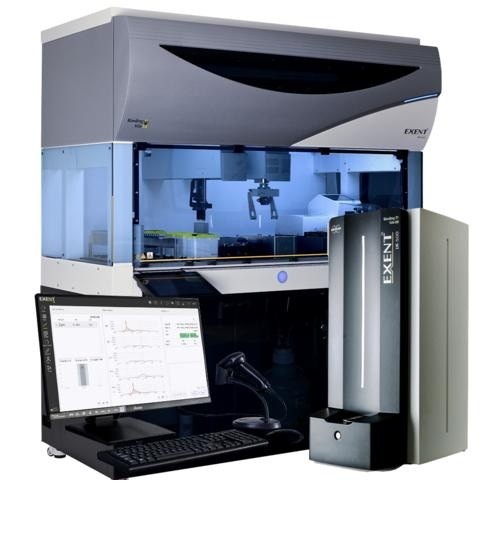
Thermo Fisher Scientific has secured expanded US Food and Drug Administration (FDA) clearance for its EXENT system, marking a significant advance in the monitoring of multiple myeloma and Waldenström's macroglobulinaemia.
The expanded clearance allows clinical laboratories to use the company's mass spectrometry-based Immunoglobulin Isotypes (GAM) Assay not only to aid in diagnosis but also to monitor disease status and assess patients' response to treatment.
The development addresses a major challenge in managing these complex blood cancers: accurately tracking disease-related proteins over time while distinguishing them from therapeutic antibodies that can interfere with conventional testing.
The EXENT system is designed to detect and track monoclonal proteins (M-proteins), including at low concentrations, giving clinicians additional insights into whether a patient's disease is progressing, responding to treatment or potentially relapsing.
The expanded regulatory claim extends the technology's role across the patient journey, from initial diagnosis to long-term disease monitoring, through a single laboratory platform.
Over the past three years, the EXENT system has been used to test thousands of patients across 13 countries, expanding access to mass spectrometry-based diagnostic technology.
"For patients living with multiple myeloma or Waldenström's macroglobulinemia, understanding how their disease is responding to treatment is critical," said Stephen Harding, vice president and general manager, protein diagnostics, Thermo Fisher Scientific.
"This expanded clearance brings the precision of mass spectrometry beyond diagnosis and into ongoing monitoring, giving clinicians greater insight into disease status and treatment response. It reflects our commitment to bringing innovative diagnostics into clinical practice to help physicians make more informed decisions and give patients greater confidence in their care."
Multiple myeloma and Waldenström’s macroglobulinemia are blood cancers classified as monoclonal gammopathies. Both require frequent monitoring of M-protein levels to assess disease activity, evaluate treatment effectiveness and identify potential relapse.
For patients, monitoring is often a lifelong requirement following diagnosis.
The National Cancer Institute estimates that approximately 36,000 new cases of multiple myeloma occurred in the United States in 2026, highlighting the continuing need for more sensitive and reliable monitoring tools.
However, conventional testing methods can struggle to detect very low concentrations of M-proteins. They can also face interference from therapeutic antibodies, making it difficult to distinguish treatment-related signals from proteins produced by the disease itself.
These limitations can complicate the assessment of treatment response and disease progression.
Thermo Fisher's EXENT system uses mass spectrometry-based detection to help overcome these challenges by identifying and tracking M-proteins over time. It is also designed to help clinicians distinguish disease-related proteins from certain known therapeutic antibodies.
The technology can provide insights as the disease evolves, including during periods when a patient's immune system is recovering following treatment.
A key feature of the EXENT system is its design for routine clinical laboratory use, without requiring laboratories to have prior mass spectrometry expertise.
Laboratories already using the platform for diagnostic testing can extend the same workflow to ongoing patient monitoring.
With enhanced sensitivity, objectivity and reproducibility, the system aims to provide clinicians with more reliable information to support treatment decisions and long-term patient management.
The expanded FDA clearance strengthens Thermo Fisher's position in the evolving field of advanced diagnostics, taking mass spectrometry-based monoclonal protein testing beyond initial diagnosis and into the continuing management of patients with complex blood cancers.