Procedures surge close to five-fold: Experts
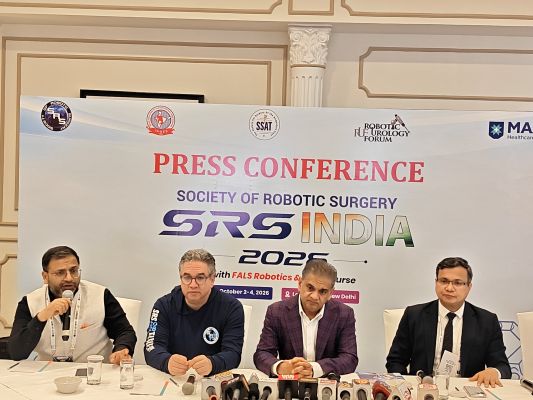
India is rapidly emerging as a global centre for robotic surgery, with Delhi-NCR leading the country in both robotic-system installations and surgical volumes, experts have said at the Society of Robotic Surgery (SRS) India 2026 international conference in New Delhi.
The conference marks a significant milestone for the Society of Robotic Surger, one of the leading global organisations dedicated to advancing surgical robotics. For the first time, the society has brought its international meeting to Asia, with New Delhi hosting the event.
Delhi-NCR now has 39 hospitals equipped with robotic systems, while 11 hospitals have more than one system, making the region the country's leading hub for robotic-surgery infrastructure.
The region's robotic-assisted procedures have also surged sharply — from 2,257 in 2021 to 10,937 in 2025, an almost five-fold increase in just four years.
The rise has been recorded across multiple surgical specialities. In 2025, around 33% of robotic procedures in Delhi-NCR were general surgery–benign procedures, followed by urology at 30.2%, gynaecology at 22.1% and general surgery–malignant procedures at 10%. Robotic procedures are also being performed in head and neck, thoracic and cardiac surgery.
Addressing the conference through a video message, Union Minister for Health and Family Welfare J.P. Nadda said, “Today India stands at an exciting juncture in the healthcare innovation, with our strength in technology, Artificial Intelligence, digital health and a rapidly expanding ecosystem of surgical robotics, we have opportunity, not nearly to adopt the technology of the future but innovate, develop and lead.
"India is increasingly becoming an important global destination for healthcare innovation and advance surgical technology. I congratulate organizers for bringing this important international conference to India."
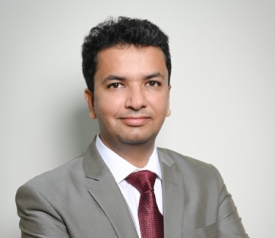
Vivek Bindal, Organising Chairman, SRS India and Principal Director & Head, Department of Minimal Access, Bariatric & Robotic Surgery, Max Hospital, New Delhi, said: “Delhi NCR has emerged as a leading force in India’s robotic surgery journey, with the highest concentration of robotic-system installations in the country and a rapidly expanding volume of procedures.
"The presence of robotic systems across 39 hospitals, including 11 hospitals with multiple systems, reflects the depth of expertise and institutional adoption that has developed in the region. Delhi has reached this position because of the combined efforts of pioneering surgeons, high-volume hospitals and multidisciplinary teams that have steadily integrated robotic technology into complex surgical care.
"What we are witnessing is not simply an increase in machines or procedures, but the emergence of Delhi as a centre that is helping shape the future of robotic surgery in India.”
India’s robotic surgery numbers surge
Delhi's growth mirrors a much broader national expansion.
Across India, robotic-assisted procedures increased from 8,912 in 2021 to 44,857 in 2025, underlining the rapid adoption of robotic technology and the expansion of clinical expertise beyond the country's traditional medical centres.
Prof Anup Kumar, Organising Chairman (Urology) and HOD, Department of Urology, Robotic and Renal Transplant, Safdarjung Hospital, New Delhi, said, “India is now at a defining moment in robotic surgery. The rapid rise in robotic procedures—from 8,912 nationally in 2021 to 44,857 in 2025—shows how quickly the technology is being adopted and how clinical expertise is expanding across the country.
"India is moving beyond being a technology adopter and is developing the experience, infrastructure and surgical capabilities required to become a global force in robotic surgery. If this momentum continues, India has the potential to emerge as a global leader by 2030 and compete with, and potentially surpass, established leaders such as the US. This is a proud moment for Indian healthcare and a significant opportunity to place India at the forefront of the next generation of surgery.”
Telesurgery emerges as the next frontier
With robotic surgery gaining scale, India's focus is now shifting towards the next frontier — robotic telesurgery, which could allow specialist surgeons to operate remotely across geographical boundaries.
A major milestone was recently achieved when Prof Anup Kumar, Professor & Head, Department of Urology, Robotics & Renal Transplant, VMMC & Safdarjung Hospital, New Delhi, successfully performed what was described as India's first robotic telesurgery by a government-institution surgeon in urology.
The complex reconstructive procedure was conducted remotely from Gurugram to Preeti Kidney & Urology Hospital in Hyderabad, covering more than 1,600 kilometres. The procedure was completed successfully with imperceptible latency. The achievement was also appreciated by JP Nadda through his official platform, highlighting the growing national focus on technology-enabled surgical care.
India's telesurgery capabilities were also demonstrated in a cross-border procedure involving China.
Vivek Bindal, Organising Chairman, SRS India and Principal Director & Head, Department of Minimal Access, Bariatric & Robotic Surgery, Max Hospital, New Delhi, led a live cross-border robotic tele-surgery demonstration between India and China in partnership with BORNS Robotics.
Surgeons at Max Super Speciality Hospital, Vaishali, remotely operated a robotic console nearly 5,000 kilometres away in Chengdu, China, carrying out complex pre-clinical procedures with real-time precision.
The demonstration highlighted the potential of robotic telesurgery to overcome geographical barriers and extend specialist surgical expertise beyond major metropolitan centres. It could also open avenues for remote surgical training, tele-mentoring and cross-border clinical collaboration.
From adoption to global ambition
The emerging technology could potentially decentralise access to advanced surgical expertise by connecting specialist teams in major medical centres with hospitals and patients in other regions.
The SRS India 2026 conference is also focusing on the clinical and operational challenges surrounding remote robotic-assisted surgery. International consensus recommendations published in the World Journal of Surgery in 2026 address requirements including connectivity, cybersecurity, training, credentialing, emergency preparedness and regulatory considerations.
With 10,937 robotic-assisted procedures in Delhi-NCR in 2025 and the country's largest concentration of robotic systems, Delhi has established itself as a major centre in India's robotic-surgery journey.
The national numbers are equally striking, with robotic-assisted procedures reaching 44,857 in 2025.
The numbers point to a broader shift: India is moving from the early adoption of robotic surgery towards a mature ecosystem built around surgical expertise, institutional capacity, clinical experience and technological innovation.
As SRS India 2026 brings robotic-surgery experts from around the world to New Delhi, the focus is no longer simply on how many robotic systems India can install. The bigger question is whether the country's growing clinical expertise and technological capabilities can translate into global leadership — particularly in the emerging field of robotic telesurgery.

Subscribe To Our Newsletter & Stay Updated