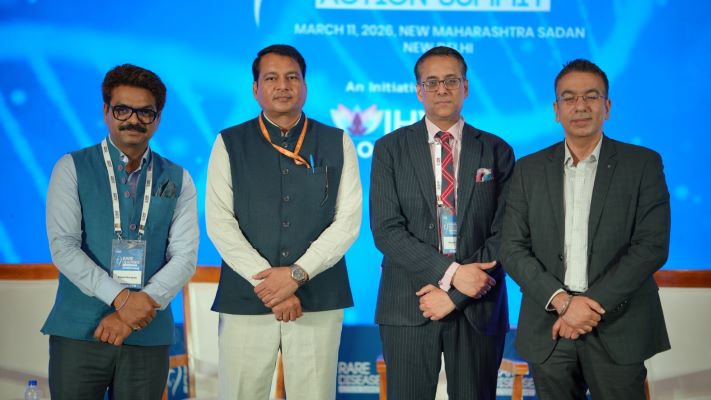
India’s rare disease landscape took centre stage at the recent Rare Diseases Action Summit 2026 in New Delhi, organized by the IHW Council, drawing policymakers, healthcare leaders, patient advocates, researchers, and industry experts to chart solutions for diagnosis, treatment access, funding, and long-term care.
Union Minister of State for Social Justice and Empowerment Ramdas Athawale, delivering the keynote, called for stronger collaboration across government, healthcare providers, industry, and patient communities.
“Rare diseases often place an immense emotional, medical and financial burden on families, and many patients struggle for years to find the right diagnosis and care. Ensuring that individuals living with rare conditions receive timely support is an important part of building a more inclusive healthcare system.
"The Government remains committed to strengthening institutional support, expanding access to treatment assistance, and working with medical experts, research institutions and patient groups so that those affected by rare diseases are not left behind in the healthcare system. Every patient deserves dignity, care and the opportunity to lead a better quality of life,” said Athawale.
The summit opened with a welcome address from Kamal Narayan Omer, Founder and CEO of IHW Council, who stressed the urgency of collective action and the need for policy alignment, early diagnosis, and sustainable funding to improve patient outcomes.
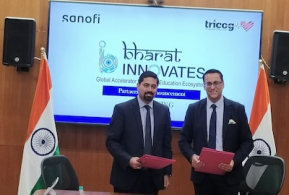
Industry leaders, including Deepak Arora, Managing Director of Sanofi India, and Sandeep Arora, Country Medical Director of AstraZeneca India, highlighted the pharmaceutical sector’s role in advancing research, innovation, early screening, and multi-stakeholder collaboration.
A special address by Bhagwan Singh Charan, Additional Director General, Ministry of Health and Family Welfare, emphasized strengthening institutional mechanisms for rare disease diagnosis, treatment support, and patient registries.
The summit’s focused sessions tackled critical topics, from “Sustainable Funding for Rare Diseases: Bridging CSR and Government Initiatives” to “Rare Diseases with Curative Options: Advances Toward a Cure,” including conditions such as Spinal Muscular Atrophy (SMA).
The session on Neurofibromatosis Type 1 (NF1) featured Anil Sukhdevrao Bonde, Member of Parliament and Chairperson of the Indian Medical Parliamentarians Forum, who underlined the government’s policy progress.
“Under the leadership of Hon’ble Prime Minister Shri Narendra Modi, India has taken significant policy steps to address the challenges associated with rare diseases. The National Policy for Rare Diseases and the development of Centres of Excellence represent important milestones in strengthening the country’s capacity to diagnose and treat these complex conditions.
"At the same time, conditions such as Neurofibromatosis Type 1 highlight the importance of strengthening early detection, improving access to specialised care, and ensuring long-term clinical and social support for patients and their families. Policymakers, healthcare institutions, researchers and patient groups must continue working together to expand treatment access and build stronger care pathways for individuals living with rare diseases,” said Bonde.
Charan added, “Strengthening the rare disease ecosystem requires building robust institutional frameworks that support early diagnosis, expand access to genetic testing and specialised care, and ensure that patients are connected to the right treatment pathways at the right time.
"Strengthening national registries, improving referral networks, and enhancing collaboration between research institutions, clinicians and public health systems will be essential to ensure that patients with rare diseases are identified earlier and are able to access appropriate care and support.”
Leading experts in neurology, oncology, and diagnostics emphasized early diagnosis, improved treatment access, and long-term psychosocial and rehabilitation support.
Omer reflected on the broader implications, saying, “Rare diseases may be individually uncommon, but collectively they represent a significant public health responsibility affecting millions of families. Rare diseases are often described through the word ‘rare,’ but when we look at their collective impact, the picture changes dramatically.
"Globally, more than 7,000 rare diseases have been identified, and in India alone it is estimated that 70 to 96 million people may be living with a rare disease. At that scale, rarity is no longer rare, it becomes a significant public health responsibility. Many patients, particularly children, often face a long and difficult diagnostic journey before receiving the right care.
"The Government of India has taken important steps through initiatives such as the National Policy for Rare Diseases, financial assistance for eligible patients, and the establishment of Centres of Excellence, and these efforts deserve recognition. At the same time, addressing rare diseases requires deeper collaboration across policy, science, healthcare systems, industry and patient communities.
"Strengthening early diagnosis, expanding access to specialised diagnostics and innovative therapies, and exploring collaborative financing models will be critical to ensuring that patients and families affected by rare diseases receive timely care and support.”
Sessions also examined challenges in treating conditions like atypical Hemolytic Uremic Syndrome (aHUS) and Fabry disease, highlighting gaps in genetic diagnostic infrastructure, referral pathways, and financing mechanisms. Experts emphasized the need for specialized Centres of Excellence.
The summit concluded with a networking session connecting government, academia, healthcare institutions, pharmaceutical companies, and patient organizations, reinforcing collaboration to strengthen India’s rare disease ecosystem.
With participation from top medical experts, research institutions, patient advocates, and policymakers, the Rare Diseases Action Summit 2026 emerged as a critical platform to accelerate progress and improve the lives of millions affected by rare diseases in India.