By prioritising absolute compliance, leveraging the power of digital tools, and aligning with government policies, the sector is locking in its future leadership
For decades, global markets have relied on India to stock their medicine cabinets. The nation earned the title "Pharmacy of the World" by churning out life-saving generics at a fraction of what they cost elsewhere. But the ground rules of global healthcare are changing rapidly. Supply chains are being completely redrawn. Regulatory expectations are becoming more aligned and globally benchmarked. It is no longer just about affordability; today’s market is placing greater emphasis on precision, consistency, and the ability to deliver increasingly complex therapeutics at scale.
With industry projections suggesting pharmaceutical exports from India could hit a staggering $350 billion by 2047, the sector faces a hard truth: cost arbitrage will not drive the next phase of growth. The absolute bedrock of future expansion is compliance-first manufacturing. The single most important mandate for the industry today is to transition from being seen merely as a cost-efficient producer to an audit-ready, premium global supply partner.
Rethinking Global Credibility
Historically, the nation's primary competitive edge was always cost. While manufacturing expenses in India remain significantly lower than in Western markets, multinational buyers and regulatory watchdogs no longer base their decisions solely on a favourable deal. They want supply chain resilience. They want absolute assurance that a facility is ready for a surprise inspection on any given Tuesday. They want unimpeachable quality.
Today, a spotless track record with top-tier agencies like the USFDA, EMA, and WHO-GMP is the only currency that truly matters internationally. And the domestic pharma sector has actively stepped up to meet this standard. Look at the numbers: Indian drug makers now operate over 750 FDA-approved sites and upwards of 2,000 WHO GMP-certified facilities. Indian facilities have even surpassed US manufacturers in terms of generic site volume. At the same time, the volume of "Official Action Indicated" (OAI) notices has dropped sharply over the past ten years. This sends a very clear message. The domestic manufacturing network is not just expansive; it has become highly sophisticated, quality-obsessed, and entirely capable of managing the world's most critical supply lines.
The Digital Footprint and Data Integrity
Building that kind of global trust requires pouring serious capital into operational infrastructure. Quality has become the absolute backbone of the entire pharmaceutical system. Manufacturers can no longer react to compliance issues after the fact; they must predict and manage them through technology.
Global clients expect total transparency. They want to see exactly how a batch was produced, from start to finish, with no gaps in the timeline. This is precisely where robust digital records and ALCOA+ principles (Attributable, Legible, Contemporaneous, Original, and Accurate) come into play. It is a non-negotiable requirement. Currently, the industry is aggressively tearing down old manual processes and replacing them with immutable digital footprints. Implementing electronic batch records, automated audit trails, and advanced laboratory information management systems (LIMS) is how modern plants future-proof their operations. These are not merely compliance hurdles to clear; they act as massive efficiency multipliers while guaranteeing zero tolerance for data integrity lapses.
What is particularly fascinating about this shift is who is driving it. Indigenous tech companies are building the software architecture. They are creating hyper-compliant digital solutions specifically tailored for domestic manufacturing floors. By replacing paper logs with reliable, native digital systems, facilities drastically cut down on the risk of human error. The end result is an ecosystem of plants that are audit-ready twenty-four hours a day.
Breaking into High-Value Therapeutics
Operating a strictly compliance-led facility is about much more than avoiding warning letters. It is the only realistic way to climb the pharmaceutical value chain. Simple small-molecule generics established the foundation, but the real margin growth lies in far more complex territories.
The entire industry is pivoting. There is a massive rush to manufacture biologics, peptides, complex injectables, and highly sought-after GLP-1 therapies, alongside a growing focus on research-driven nutraceuticals and advancements in effervescent delivery technologies. Standard facilities simply cannot produce these products. They demand a completely different level of precision, sterility, and regulatory rigour. Only plants built from the ground up for compliance are positioned to handle them. For India to lead in biosimilars and advanced drug delivery systems, strict manufacturing compliance is the mandatory entry ticket. Capital expenditure is naturally shifting toward high-end ecosystems, heavily equipping facilities with advanced isolator technology and specialised containment zones for highly potent active pharmaceutical ingredients (HPAPIs).
This dynamic is incredibly obvious in the contract development and manufacturing organisation (CDMO) space. Multinational pharmaceutical giants are outsourcing increasingly complex drug development and clinical trial manufacturing to Indian partners. To win these high-stakes contracts, proving inspection readiness and showcasing flawless documentation systems are absolute prerequisites.
The Bigger Picture
A premium global brand cannot be built in a vacuum. It takes a coordinated ecosystem. Recognising these factors, the Indian government has initiated a proactive push for quality across the board. The recent revisions to Schedule M of the Drugs and Cosmetics Act represent a massive turning point. By actively bringing domestic Good Manufacturing Practices (GMP) in line with stringent WHO standards, the government is forcing much-needed modernisation. Even mid-tier manufacturers are now required to upgrade their facilities, effectively raising the baseline quality standard for the entire country.
At the same time, the global definition of a "reliable partner" has broadened significantly. It is no longer just about the efficacy of the drug; it is about how the business itself is run. Environmental, Social, and Governance (ESG) frameworks, along with a strong focus on Safety, Health, and Environment (SHE), now sit right alongside GMP compliance in importance. International buyers are placing increasing emphasis on sustainable processes, energy efficiency, zero-liquid-discharge systems, responsible waste management, and robust workplace safety standards as part of their global evaluations.
Ultimately, however, top-tier infrastructure and cutting-edge software mean very little without the right workforce. Quality cannot be inspected into a product at the end of the line; it must be baked into an organisation's DNA. The most successful pharmaceutical enterprises treat quality as an internal culture. It translates to continuous, rigorous training programmes. It means creating an environment focused on constant innovation within daily systems. When a quality-first mindset is culturally embedded, the business results naturally follow: regulatory approvals happen faster, rejection rates in both domestic and export markets plummet, and the industry builds unshakeable, long-term relationships with global clients.
The Indian pharmaceutical sector stands at a defining crossroads. The drive to capture a more lucrative slice of the global market is happening in real-time, backed by unprecedented investments in infrastructure. By prioritising absolute compliance, leveraging the power of digital tools, and aligning with proactive government policies, the sector is locking in its future leadership. This unyielding commitment to quality and ethical operations is exactly what will transform the nation's reputation—ensuring it remains not just the world's pharmacy but also its most trusted and advanced healthcare partner.
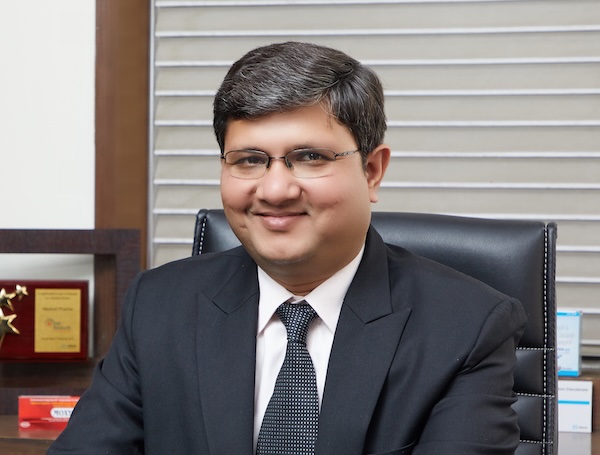
About Author: Vijay Kumar Aggarwal is the Managing Director of Medicef Pharma.

Subscribe To Our Newsletter & Stay Updated