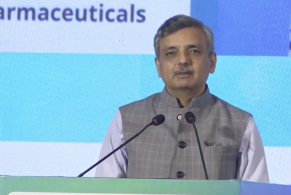
Dr. Rajeev Singh Raghuvanshi outlined next phase of India’s drug regulatory reforms and also revealed plans to create 1,500 new positions to strengthen CDSCO's internal scientific capabilities
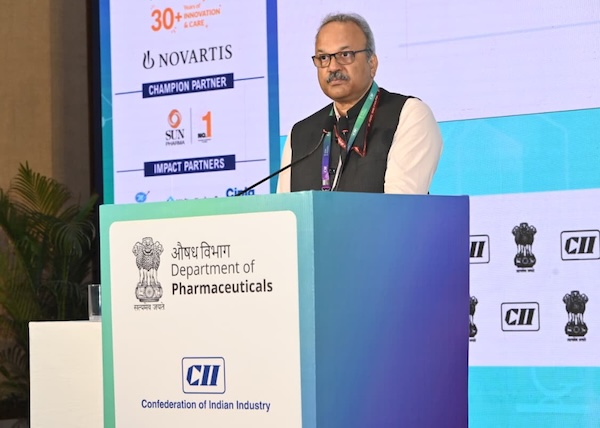
Dr. Rajeev Singh Raghuvanshi, Drugs Controller General of India (DCGI). Image Credits: Confederation of Indian Industries (CII).
India’s drug regulatory system is moving towards a more digital, predictable and innovation-oriented framework, with Dr. Rajeev Singh Raghuvanshi, Drugs Controller General of India (DCGI), outlining a series of reforms aimed at strengthening pharmaceutical R&D, clinical research and regulatory preparedness for emerging technologies.
Speaking at the 8th CII Pharma & Lifesciences Summit in New Delhi, Dr. Raghuvanshi said the government’s broader objective is to shift the pharmaceutical ecosystem from volume to value, with innovation emerging as a central focus of regulatory and policy interventions.
"One of the key regulatory changes has been to reduce permissions required for certain research activities. He said research in specified areas has been freed from the earlier requirement of obtaining regulatory permission, with notification to participants allowing the work to proceed, except in critical sectors," said Dr. Raghuvanshi.
Dr. Raghuvanshi also highlighted changes affecting bioequivalence studies, particularly those conducted in India for overseas clients, which he said are intended to improve predictability in research timelines.
The move is significant for India's contract research ecosystem, where regulatory uncertainty over timelines has been cited as a factor affecting decisions on conducting studies in the country. Dr. Raghuvanshi said greater predictability should help India attract more global clinical research and CRO activity.
A major element of the next phase of reform is the proposed digital regulatory system, which Dr. Raghuvanshi described as an ambitious transformation of India's drug regulatory framework.
"12 companies had bid for the project and technical presentations had been completed. The platform is expected to introduce greater use of AI, simplified processes and data analytics in regulatory operations," he informed.
The proposed system is intended to move beyond simply replacing paper processes with digital workflows. According to DCGI, AI and analytics could help the regulator determine where regulatory intervention is required and where it may not be necessary.
Dr. Raghuvanshi also highlighted plans to strengthen CDSCO's internal scientific capabilities. He said a proposal for 1,500 new positions had been agreed, with the objective of building greater in-house expertise for scientific reviews, applications, audits and inspections.
"The move is intended to strengthen the regulator's ability to independently undertake scientific assessments and reduce gaps associated with the existing review structure."
Global clinical trials gain momentum
"The number had increased from around 120-130 previously to approximately 160," said Dr. Raghuvanshi attributing the trend partly to increasing confidence in India's ability to conduct clinical studies according to global standards.
In another reform aimed at accelerating clinical research, CDSCO in May 2026 allowed sponsors to submit clinical trial protocols and related documents simultaneously to CDSCO and the concerned Ethics Committee, rather than waiting for the central regulator's clearance before approaching the Ethics Committee.
One of the more complex areas identified by Dr. Raghuvanshi is AI-enabled healthcare.
Dr. Raghuvanshi pointed to a fundamental difference between conventional pharmaceutical regulation and AI-based healthcare technologies. Drug regulators generally assess whether a product remains within defined specifications throughout its lifecycle, whereas AI systems can change and evolve continuously.
"An expert committee comprising AI specialists has been created to advise CDSCO on how AI-based healthcare technologies should be evaluated, approved and regulated," he revealed.
Dr. Raghuvanshi also highlighted a quality-surveillance initiative under which CDSCO is developing a database containing information on products identified through its regulatory surveillance mechanisms. He said around 200 products are added each month and that the database covers information accumulated over several years.
The regulator is also seeking to provide procurement agencies and government bodies with access to the database so that quality-related information can be considered when evaluating products for procurement.

Subscribe To Our Newsletter & Stay Updated