FTIR and machine learning-based technology enables real-time, cost-effective quantification of food adulterants
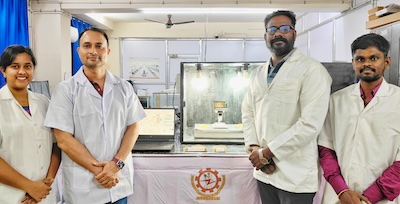
National Institute of Technology Rourkela has secured a patent for a system capable of rapidly detecting and measuring adulteration in spices and other food products, marking a significant step forward in addressing food safety challenges.
The developed technology combines Fourier Transform Infrared Spectroscopy (FTIR) with advanced machine learning models to deliver accurate and fast results. In the Indian context, food and spice adulteration continues to pose serious health and economic risks, often driven by cost-cutting practices and gaps in food safety enforcement.
Conventional detection methods such as chromatography and molecular techniques are typically resource-intensive and time-consuming, limiting their suitability for routine testing.
To overcome these challenges, the NIT Rourkela system offers a rapid, non-destructive and cost-effective alternative that can be deployed in real time across quality control laboratories and industrial processing units. The system works by analysing infrared absorption patterns of food samples and processing them through machine learning models that can detect complex, non-linear abnormalities.
Unlike traditional approaches that only indicate the presence of adulteration, the new system can quantify the level of adulteration within seconds—an important capability for ensuring regulatory compliance and maintaining product quality.
The research, published in the journal Food Chemistry, was carried out by Prof. Sushil Kumar Singh, Late Prof. Poonam Singha, and M.Tech graduate Rishabh Goyal from the Department of Food Process Engineering. The team has also secured a patent titled “Method and System for Detecting and Quantifying Adulteration in Food Stuff” (Patent No. 581403; Application No. 202431050538).
Speaking about the research, Prof. Sushil Kumar Singh said, “Our invention focuses on addressing a long-standing challenge in food industry, which is absence of a fast and reliable spice adulteration detection system. We have combined existing rapid detection equipment with novel machine learning approaches to develop an integrated system with effective decision-making capability. This innovation will not only ensure food safety and regulatory compliance but also strengthen consumer trust across the supply chain. I believe this invention holds great potential for the food industry, particularly in the Indian market."

Subscribe To Our Newsletter & Stay Updated