The knowledge paper points to fragmented health data, limited clinical evidence and the absence of predictable lifecycle-based regulation for adaptive AI as key barriers to wider adoption
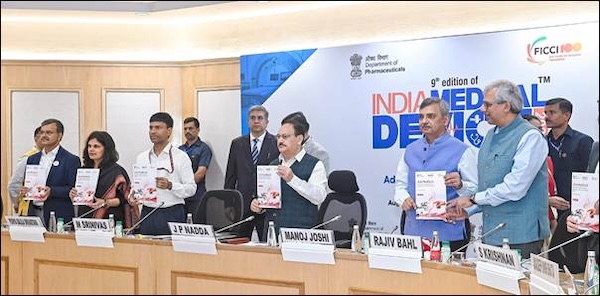
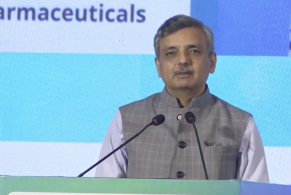
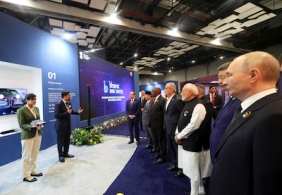
Union Minister of Chemicals & Fertilizers and Health & Family Welfare J. P. Nadda today released a knowledge paper titled “AI in MedTech: Revolutionizing Healthcare Through Artificial Intelligence” at the 9th edition of India Medical Device 2026, organized by the Department of Pharmaceuticals in association with FICCI at Vigyan Bhawan, New Delhi.
Jointly developed by Praxis Global Alliance in association with FICCI, the knowledge paper examines India’s evolving AI-enabled MedTech landscape and outlines strategic measures required to accelerate responsible adoption of artificial intelligence across healthcare.
The report highlights the growing role of AI in diagnostics, clinical decision support, operational efficiency and medical device innovation. It also identifies regulatory, policy and ecosystem interventions that will be necessary to enable AI-enabled medical technologies to move from successful pilots to large-scale clinical adoption.
According to the report, India has already established important foundations for AI-led healthcare transformation through initiatives such as the Ayushman Bharat Digital Mission (ABDM), IndiaAI Mission, SAHI, BODH and the National Medical Devices Policy, 2023. However, the transition from promising AI pilots to routine clinical use remains a major challenge.
The knowledge paper points to fragmented health data, limited clinical evidence and the absence of predictable lifecycle-based regulation for adaptive AI as key barriers to wider adoption. It also highlights the need for supportive reimbursement and procurement mechanisms that can recognize the value delivered by AI-enabled healthcare technologies.
The report states that India is uniquely positioned to emerge as a global leader in the responsible development, manufacturing and deployment of AI-enabled medical technologies, leveraging its software capabilities, digital public infrastructure, clinical diversity and expanding MedTech manufacturing base.
The paper identifies MedTech as one of India’s most immediate and scalable opportunities for AI adoption, with the potential to embed specialist expertise directly into medical devices and expand access to quality healthcare. While the country has made significant progress in digital infrastructure, innovation and clinician acceptance, the report notes that fragmented data, evolving regulations and limited reimbursement pathways continue to constrain AI adoption at scale.
AI-enabled diagnostics are expected to emerge as one of the first major applications of the technology, particularly by extending specialist expertise to primary and secondary healthcare settings. Such applications could improve clinical productivity while helping reduce disparities in access to specialized healthcare.
The report emphasizes that India must address three critical ecosystem gaps to move beyond pilot projects and achieve routine clinical adoption: the availability of AI-ready data and evidence, predictable lifecycle-based regulation, and procurement and reimbursement frameworks that recognize the value of AI-enabled technologies.
The knowledge paper further calls for coordinated action among government agencies, regulators, healthcare providers, payers, industry and academia to create an enabling ecosystem for responsible AI adoption. Such collaboration, it says, will be critical for positioning India as a global leader in AI-enabled MedTech.
Manoj Joshi, Secretary, Department of Pharmaceuticals; Dr. M. Srinivas, Member, NITI Aayog; Dr. Rajiv Bahl, Secretary, Department of Health Research and Director General, ICMR; Punya Salila Srivastava, Secretary, Department of Health and Family Welfare; Amardeep Singh Bhatia, Secretary, Department for Promotion of Industry and Internal Trade (DPIIT); Sunil Kumar Barnwal, CEO, National Health Authority; Anant Swarup, Secretary General, FICCI; along with senior government officials, industry leaders and other MedTech sector stakeholders were present at the occasion.

Subscribe To Our Newsletter & Stay Updated