The consultation brought together parliamentarians from both states across party lines and focused on strengthening political leadership, community participation and last-mile delivery of TB services
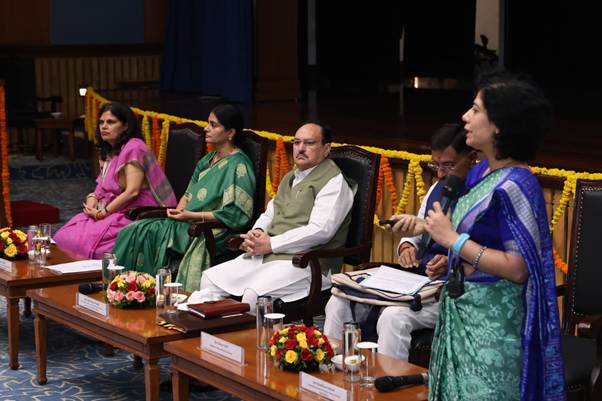
Union Health and Family Welfare Minister Jagat Prakash Nadda has called for sustained political and administrative engagement to accelerate India’s efforts towards achieving a TB Mukt Bharat, urging Members of Parliament to take an active role in strengthening tuberculosis prevention, diagnosis and treatment across their constituencies.
Nadda made the remarks while interacting with Lok Sabha and Rajya Sabha MPs from Jharkhand and Odisha on the sidelines of the Monsoon Session of Parliament.
The consultation brought together parliamentarians from both states across party lines and focused on strengthening political leadership, community participation and last-mile delivery of TB services. It also reviewed the progress of the recently concluded 100-Day TB Mukt Bharat Abhiyaan, whose second phase was launched on March 24, 2026 and covered nearly 1.58 lakh high-risk villages and urban wards across the country before concluding in July.
During the campaign, more than 2.2 crore vulnerable individuals were screened, resulting in the detection of over 7 lakh new TB cases. Importantly, 1.97 lakh asymptomatic TB cases were identified, highlighting the value of proactive screening among vulnerable and high-risk populations that might otherwise remain undiagnosed.
According to the WHO Global TB Report 2025, India recorded a 21% decline in TB incidence between 2015 and 2024, nearly twice the global rate of decline, while achieving a 92% treatment success rate. The government has been placing increasing emphasis on early detection, rapid treatment initiation and comprehensive patient support to maintain this momentum.
Jharkhand and Odisha have emerged as important focus states because of the multiple risk factors associated with TB in their populations. These include mining and industrial activities, occupational exposure to dust, migrant and tribal populations, malnutrition, urban slums, comorbidities, tobacco and alcohol consumption, and informal and labour settlements.
The 100-Day campaign resulted in 16,754 TB notifications in Jharkhand, including 4,574 asymptomatic cases, while Odisha reported 15,268 TB patients, including 3,514 asymptomatic cases.
Both states adopted targeted approaches to take screening and treatment services closer to vulnerable communities through initiatives such as Ayushman Arogya Shivirs in urban slums, construction sites, migrant clusters and mining areas.
Technology has also become an increasingly important component of India's TB elimination strategy. Molecular testing capacity has expanded from a few hundred machines a decade ago to more than 9,000 machines, while nearly 3,000 AI-enabled handheld X-ray units are being deployed to support active case finding in the field.
Union Minister of State for Health and Family Welfare and Chemicals and Fertilizers Anupriya Patel and Union Minister of State for Defence Sanjay Seth also participated in the interaction, held under the theme “Parliamentarians Championing a TB Mukt Bharat.”
The participating MPs from Jharkhand and Odisha committed to strengthening awareness and stigma-reduction campaigns, promoting Ni-kshay Shivirs for early detection among vulnerable populations and supporting supervision of TB services at district and block levels.

Subscribe To Our Newsletter & Stay Updated