The convergence of photonics, AI, microfluidics and live-cell analytics could offer researchers a new way to study disease biology, not merely as a series of static snapshots, but as processes unfolding in real time
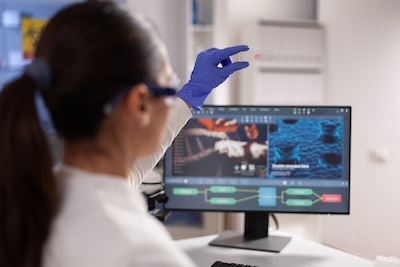
Cancer researchers are increasingly exploring technologies that can capture the dynamic behaviour of living cells in real time, potentially addressing a major limitation in conventional drug discovery and oncology research.
India recorded an estimated 1.4 million new cancer cases in 2022, according to the International Agency for Research on Cancer (IARC), while the country's cancer burden is expected to rise further in the coming years.
Despite advances in genomics, artificial intelligence and precision medicine, much of biomedical research still relies on analysing cells after they have been fixed, stained or destroyed, providing only a static view of complex biological processes.
Against this backdrop, Parmita Mishra, Founder and CEO of San Francisco-based biotech startup Precigenetics, is developing a technology platform designed to continuously observe living cells without dyes, labels or destructive sample preparation. The approach combines Raman spectroscopy, photonics, microfluidics and computational biology to generate real-time biochemical information from living cells, which the company describes as “live-cell cinema.”
Unlike conventional techniques that often depend on end-point measurements, the platform aims to monitor cellular behaviour over time, potentially enabling researchers to better understand how cancer cells evolve, respond to therapies and develop drug resistance.
“Biology is constantly moving, yet for decades we have largely studied it through static snapshots. If we want to understand why cancer cells change, adapt or resist therapy, we need technologies that allow us to observe living biology continuously rather than after the fact. Our mission is to give researchers that capability,” said Parmita Mishra, Founder and CEO, Precigenetics.
Cancer drug development remains challenging, with a large proportion of oncology candidates failing during clinical development. Researchers have increasingly highlighted the limitations of laboratory models in replicating the complexity and dynamic behaviour of living cells.
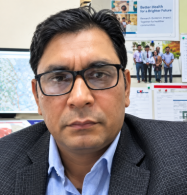
Dr. Shyam Aggarwal, Chairperson, Department of Medical Oncology, Sir Ganga Ram Hospital, New Delhi, said real-time observation technologies could help researchers better understand cellular responses to candidate drugs and identify biochemical changes earlier in preclinical research.
“Real-time observation technologies could help researchers better understand how cells respond to candidate drugs, monitor subtle biochemical changes earlier, and potentially identify promising therapies more efficiently during preclinical research. Understanding precision oncology with CGP comprehensive genome profiling and MRD minimal residual disease detection will help physicians improve targeted personalised medicine for cancer patients. While such technologies are not themselves treatments, they may strengthen the scientific foundation on which future therapies are developed,” he said.
Mishra's work also extends to other applications of deep-tech biology. Her team has developed a non-invasive sensor capable of detecting haemoglobinopathies such as sickle cell disease as a by-product of its core research, although the technology has not been commercialised.
The company has also developed a microfluidic “organoid-on-chip” system designed to maintain living cells in a controlled environment over extended periods. Developed with photonics engineers, the technology has resulted in a provisional patent application and could contribute to the development of more representative laboratory models.
“We are not trying to replace scientists or physicians—we are trying to give them a better window into living biology,” Mishra said. “When researchers can continuously measure how cells behave instead of relying on biological ‘autopsies,’ they may uncover insights that were previously impossible to observe. That has implications far beyond cancer, extending into immunology, neuroscience, rare diseases and regenerative medicine.”
She added, “For decades, we've been studying life after it has stopped. The future of biomedical research lies in understanding life while it is still unfolding.”
Dr. Rahul Bhargava, Principal Director of Hematology and Bone Marrow Transplant, Fortis Memorial Research Institute, Gurugram, said, “Cancer is an extraordinarily dynamic disease, and researchers around the world are exploring technologies that can better capture how living cells change over time.”
“Innovations that enable continuous, non-invasive observation of cellular behavior could become valuable research tools for improving disease models and accelerating drug discovery. While clinical validation remains essential, this represents an exciting direction for biomedical science,” he added.

Subscribe To Our Newsletter & Stay Updated