In a major push to strengthen UK-India collaboration in healthcare, biotechnology and life sciences, the University of Liverpool Bengaluru Campus and Biocon Academy have brought together senior leaders from academia, industry, healthcare and clinical research to explore new partnerships in education, scientific research, innovation and workforce development.
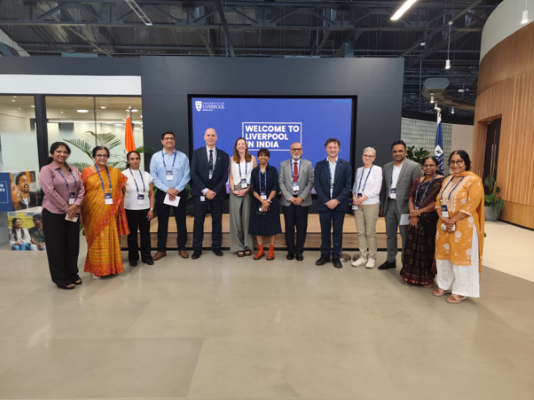
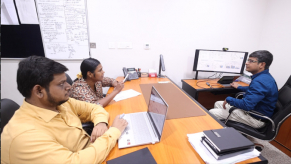
The high-level roundtable, hosted by Professor Richard Grose, Provost of the University of Liverpool Bengaluru Campus, focused on unlocking opportunities for closer industry-academia collaboration and building a globally connected life sciences ecosystem.
Chaired by Professor Shakila Thangaratinam, Dean of ILCAMS and University Strategic Adviser for Global Engagement and Partnership, the meeting saw participation from representatives of Biocon Academy, Syngene, Teva Pharmaceuticals India Pvt. Ltd., All India Co-ordinating Committee, Royal College of Obstetricians and Gynaecologists, SRM Institutions and the University of Liverpool.
The programme featured keynote contributions from Professor Peter McCormick, Associate Pro-Vice-Chancellor for Postgraduate Affairs and International Partnerships at the University of Liverpool, and Bindu Ajit, Head of Biocon Academy. Their presentations highlighted the growing importance of international academic partnerships, industry-led education, talent development and cross-border collaboration in healthcare and life sciences.
A key focus of the discussions was how the University of Liverpool's expertise in drug discovery, women's health, Artificial Intelligence and clinical trials could complement India's strengths in biotechnology and pharmaceutical manufacturing. Participants explored ways to accelerate research, strengthen healthcare innovation, expand clinical research capabilities and develop a skilled workforce equipped to meet the demands of a rapidly evolving sector.
The roundtable followed a strategic leadership meeting between Kiran Mazumdar-Shaw, Executive Chairperson of Biocon Group, and the University of Liverpool delegation, underscoring the growing momentum behind UK-India engagement in life sciences.
Professor Shakila Thangaratinam, Dean ILCAMS, University of Liverpool , said: "The future of healthcare innovation will be shaped by partnerships that transcend traditional boundaries between disciplines, sectors and countries. That belief was the driving force behind the University of Liverpool bringing together leaders from industry, healthcare and academia for this programme.
"The energy and commitment demonstrated throughout today's discussions reinforce the enormous potential to create a globally connected life sciences ecosystem that delivers benefits for patients, researchers, students and industry alike."
Professor Richard Grose, Provost, University of Liverpool Bengaluru, said: "Our focus at the University of Liverpool Bengaluru Campus is on providing students in India with access to a world-class education that equips them with the skills, knowledge and global perspective needed to succeed in rapidly evolving sectors such as healthcare and life sciences.
"Bringing together leaders from academia, industry and healthcare is an important way of ensuring our programmes remain connected to real-world challenges and opportunities, helping to develop graduates who are ready to make an impact both in India and internationally."
Professor Peter McCormick, Associate Pro-Vice-Chancellor for Postgraduate Affairs and International Partnerships, University of Liverpool, said: "International partnerships are increasingly important in addressing complex global challenges and advancing scientific discovery.
"The strength of the UK-India relationship lies in the complementary expertise, ambition and innovation that both countries bring. The University of Liverpool is committed to building long-term collaborations that create opportunities for students, researchers and industry partners, while contributing to the growth of a globally connected life sciences sector."
Bindu Ajit, Head of Biocon Academy, said: "The future of life sciences depends on our ability to develop globally minded talent with the skills to work across disciplines, technologies and international markets. Collaborations between academia and industry are key to achieving this goal.
"We were delighted to work with colleagues from the University of Liverpool and the University of Liverpool Bengaluru Campus to explore opportunities for partnership in education, workforce development and innovation. Together, we have an opportunity to create meaningful pathways for the next generation of scientists."
Beyond the boardroom discussions, the initiative also placed the spotlight on the next generation of life sciences professionals. More than 60 students from the inaugural BSc Biomedical Sciences cohort at the University of Liverpool Bengaluru Campus participated in an extended networking session with the visiting delegates.
The interaction gave students an opportunity to engage directly with senior leaders from academia, healthcare and industry, gaining valuable insights into emerging career opportunities, research pathways and the changing landscape of the life sciences sector.
The event concluded with a shared commitment to pursuing collaborative initiatives in biomedical sciences education, clinical research training, Artificial Intelligence applications in life sciences, healthcare professional development and innovation-driven entrepreneurship.
The discussions reinforced the potential of a stronger UK-India partnership to bridge academic and industry expertise, accelerate scientific progress and build the skilled talent pipeline needed to shape the future of global healthcare and life sciences.