The technologies combine machine learning, deep learning and 3D imaging to support clinicians in identifying chronic kidney disease (CKD), analysing kidney abnormalities and assessing tumour burden

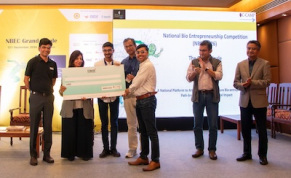
(L-R) Ms. Jennifer Delighta, Prof. Santosh Varughese and Prof G L Samuel.
Researchers from the Indian Institute of Technology Madras (IIT Madras) and Christian Medical College (CMC), Vellore, have developed three AI-based technologies aimed at improving the early detection, diagnosis and assessment of kidney diseases.
The technologies combine machine learning, deep learning and 3D imaging to support clinicians in identifying chronic kidney disease (CKD), analysing kidney abnormalities and assessing tumour burden.
The first technology is a machine learning model that uses clinical and laboratory data to predict an individual’s risk of CKD. The second is a deep learning-based CT image classifier trained on more than 12,000 images, capable of categorising scans into normal kidney, cyst, stone and tumour.
The third is a 3D imaging platform that reconstructs kidneys from CT scans and enables patient-specific assessment of tumour volume and the percentage of kidney affected.
Kidney diseases can remain asymptomatic during their early stages, often resulting in diagnosis only after significant damage has occurred. The researchers said the AI tools could assist physicians by providing faster and more consistent assessments, potentially enabling earlier intervention and helping reduce the burden of advanced disease and costly treatments such as dialysis.
The research was led by Prof. G.L. Samuel, Department of Mechanical Engineering, IIT Madras, and Jennifer Delighta, Research Scholar, IIT Madras, in collaboration with Prof. Santosh Varughese, Department of Nephrology, CMC Vellore.
Explaining the research, Prof. Samuel said the objective was to develop intelligent systems that could help clinicians make quicker and more informed decisions by combining machine learning with clinical knowledge.
The 3D imaging framework uses open-source software, providing a relatively inexpensive and repeatable approach to measuring tumour burden. The CKD prediction model has also been developed as a user-friendly prototype to facilitate potential clinical translation.
The researchers said the technologies represent a step towards developing a “kidney Digital Twin”—a patient-specific virtual representation that could eventually integrate AI-based imaging analysis with 3D anatomical models to support personalised monitoring, disease forecasting and treatment planning.
The team plans to validate the models using larger and more diverse patient datasets and establish partnerships with healthcare institutions for real-world deployment.
Researchers are also exploring integration with wearable sensing technologies and Digital Twin platforms for personalised, long-term kidney health monitoring.
The research received institutional support from IIT Madras and the SPARC (Scheme for Promotion of Academic and Research Collaboration) project.

Subscribe To Our Newsletter & Stay Updated