For a patient suffering a major heart attack in a small Indian town, minutes can mean the difference between survival and death. A seven-state government programme using Tricog Health's digital cardiac network is now cutting those critical delays, with new data showing faster treatment and higher survival across hundreds of millions of people.
Since 2019, STEMI programmes in Goa, Telangana, Maharashtra, Odisha, Karnataka, Bihar and Manipur have connected more than 3,000 health centres across 167 districts, covering a population of over 305 million.
The model is straightforward: a patient gets a digital ECG at the first point of care, a cardiac doctor reads it within minutes—around the clock—and the patient is moved rapidly onto an agreed treatment pathway. The goal is to restore blood flow before irreversible damage is done.
The results are most striking where treatment times have fallen sharply.
In Karnataka, the time between a patient's arrival at hospital and opening the blocked artery dropped from 170 minutes in March 2023 to 65 minutes in May this year. The time to clot-busting treatment fell from 34.5 minutes to 14.2 minutes.
The programme has diagnosed more than 11,000 heart attacks and reports more than 9,600 lives saved—more than nine a day. NITI Aayog has subsequently described the Karnataka programme as an AI-powered cardiac lifeline.
Across the seven states, one factor repeatedly separates survival from death: whether patients receive reperfusion—the treatment that restores blood flow—in time.
In Maharashtra, in-hospital mortality was 3.9 per cent among patients who received timely treatment, compared with 19.7 per cent among those who did not.
The challenge, therefore, is less about inventing a new treatment than getting existing treatment to patients fast enough.
Maharashtra now covers all 34 districts down to the community and primary health centre level. More than 22,000 health workers have been trained, while nearly five million ECGs have been read. Overall STEMI mortality in the state has fallen from 20 per cent to 15.5 per cent.
In Odisha, survival among enrolled patients increased from 79 per cent in August 2025 to nearly 88 per cent by March 2026. The programme estimates that it is now saving around 12 lives a day.
Goa, where the programme began in 2019, provides another benchmark. A review commissioned by the Union health ministry and conducted through the Population Research Centre in Dharwad found that treatment was being delivered in about 15 minutes—well inside the 90-minute benchmark used by the assessors for timely care.
The review concluded that a STEMI programme built around existing staff and primary healthcare infrastructure could provide a model for expanding reperfusion care in a resource-constrained country.
The Goa programme has since logged more than 460,000 diagnoses and identified over 22,000 major heart attacks, detecting a critical case on average every three minutes.
But the data also exposes where the system continues to struggle.
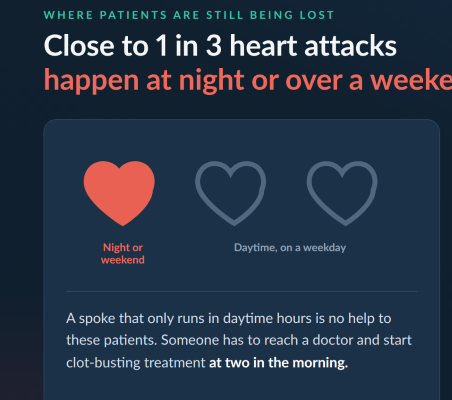
Many patients who die still reach treatment too late. Nearly a third of heart attacks occur at night or over weekends, making round-the-clock access critical. A patient suffering at 2 a.m. needs the same access to a cardiac doctor and emergency treatment as someone arriving during office hours.
Operational gaps also remain. Referral forms can be missed. Ambulances are not always integrated into the referral chain. Patient phone numbers are sometimes absent from records, making follow-up impossible. The programme's own review noted that deploying machines is faster than changing the systems and habits around them.
That implementation challenge was also central to discussions at the National CVD Summit. India's challenge, speakers noted, is not simply knowing what effective cardiovascular care looks like, but delivering it consistently across the country. Awareness campaigns alone cannot close that gap.
The seven-state STEMI programme is designed around that delivery problem. Governments run the treatment pathway from the first ECG at a spoke centre through referral and treatment. AI provides the initial ECG analysis, while a Tricog cardiac doctor signs off on every case. The system also tracks patient outcomes, allowing programme managers to identify where patients are still being lost along the way.
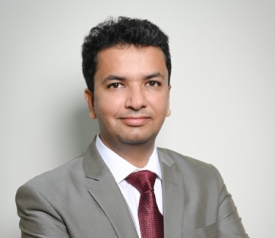
“A heart attack in a district town should not carry a worse sentence than one in a city,” said Charit Bhograj, Founder and CEO of Tricog Health. “What these seven states have shown is that when the government owns the pathway, and the first ECG is read by a doctor within minutes, survival changes. The technology is ready. The work now is making sure no patient reaches us too late,” he added.
Cardiovascular disease remains India's biggest killer, while ischaemic heart disease accounts for an estimated 40 to 60 per cent of acute coronary cases and carries a higher in-hospital mortality rate than other heart attacks.
The experience across these seven states suggests that building reliable STEMI systems—especially at the district and primary-care level—can bring potentially life-saving cardiac treatment much closer to where patients first seek help.