Union Minister calls for accelerating research translation, strengthening industry partnerships and attracting global scientific talent
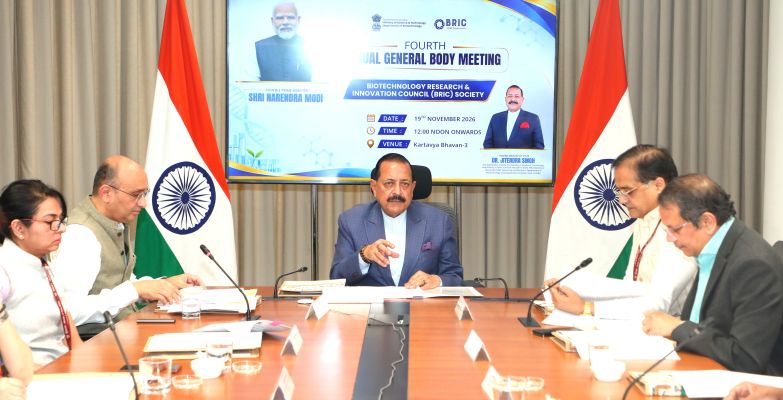
Union Minister Dr. Jitendra Singh stated that the Biotechnology Research and Innovation Council (BRIC) targets a US$ 300 billion bioeconomy in India by 2030 and a US$ 1 trillion bioeconomy by 2047.
Singh noted that uniting biotechnology research institutions under BRIC was among the first initiatives of its kind in the Government of India, setting a pioneering integration model that has since inspired similar efforts across other organizations.
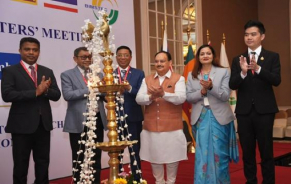
Speaking at the Fourth Annual General Meeting of the BRIC Society, Dr. Jitendra Singh noted that the initiative unites institutions through shared resources, collaborative science, and integrated governance while preserving their individual scientific strengths. He added that India’s bioeconomy has surged from roughly USD 10 billion to more than US$ 195 billion, driving national development and underscoring the growing impact of science, technology, and innovation on economic growth.
The meeting reviewed BRIC’s institutional growth, scientific milestones, governance updates, research partnerships, and future goals. DBT Secretary and BRIC Director General Dr. Rajesh S. Gokhale presented a detailed overview of the Council’s work and activities. Society members—including remote participants—then shared their inputs and held discussions.
Singh stated that BRIC pioneers collaborative, multidisciplinary research in India by pooling institutional capabilities while preserving individual strengths. Praising its consistent excellence—ranking first in health sciences and second in biological sciences among Indian government institutions for a second straight year per the Nature Index—he urged that research move beyond publications and patents to create tangible technologies and solutions for the public.
Highlighting BRIC’s breakthroughs in therapeutics, diagnostics, climate-resilient agriculture, and sustainable biomaterials, the Minister emphasized aligning research priorities with national and societal needs to directly benefit patients, farmers, industries, and communities.
Singh urged scientists, entrepreneurs, investors, and industry leaders to collaborate early in technology development so that moving discoveries from the lab to the market becomes seamless. Emphasizing that research translation needs capital, mentorship, and market understanding, he encouraged young innovators and BRIC institutions to look beyond patents toward commercialization and startups. He also welcomed initiatives like the Entrepreneur-in-Residence programme, noting that India’s growing network of over 11,000 biotech startups reflects rising confidence in the nation's scientific capabilities.
Society members highlighted opportunities in AI and biology, technology development, and bringing back Indian researchers from abroad through platforms like Vaibhav Connect to join BRIC institutions. They also recommended closer ties with social sciences and industry to speed up innovation.
Dr. Jitendra Singh noted that the D.E.S.I.G.N. for BioE3 Challenge drew over 6,000 proposals from students and citizens, boosting youth interest in biotech. He urged BRIC to attract strong researchers, support interdisciplinary work, and share scientific findings in accessible ways to show their value to society.
Singh welcomed the strengthening of BRIC’s governance and research capacity through its newly operational Secretariat and revived scientific recruitment. Emphasising that institutional integration and shared infrastructure must boost India’s scientific talent, he also launched the BRIC Handbook of MoA, Rules, Regulations and Bye-laws. During the AGM, members reviewed strategic initiatives, including plans to merge constituent autonomous societies into BRIC.
Looking ahead, the Minister noted that achieving India’s US$ 300 billion bioeconomy target by 2030—and US$ 1 trillion by 2047—requires scaled-up innovation, industry participation, and translational research, urging BRIC to deliver biotechnology benefits directly to farmers, patients, and industries nationwide.

Subscribe To Our Newsletter & Stay Updated