With breast cancer continuing to pose a major health challenge for Indian women, Vedanta Group’s BALCO Medical Centre (BMC) in Chhattisgarh has announced two strategic partnerships to strengthen early detection, improve access to screening and advance technology-led breast health initiatives.
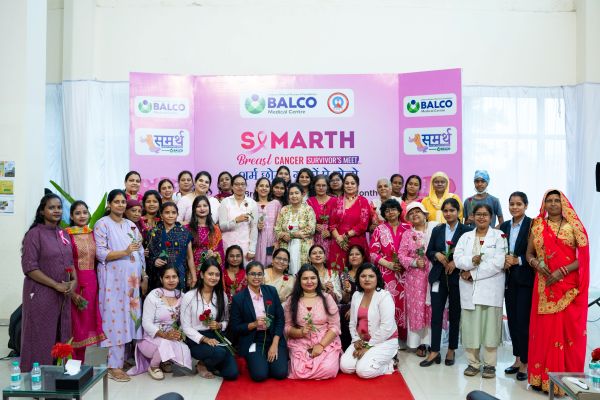
Marking Breast Cancer Awareness Month, the 170-bed cancer care facility in Naya Raipur has signed Memorandums of Understanding (MoUs) with The DEAR Foundation, a Switzerland-based non-profit, and the Translational AI for Networked Universal Healthcare (TANUH) Foundation to promote breast health awareness and develop innovative screening solutions.
The partnerships will focus on helping women recognise early warning signs, assess their risk and access timely diagnosis and treatment—at a time when more than 60% of breast cancer cases in India are reportedly detected at Stage III or IV.
Under its partnership with The DEAR Foundation, BMC will promote breast self-awareness among women in resource-constrained communities through Dear You, a free mobile application that provides step-by-step guidance on breast self-examination in 11 languages, including Hindi. The app also offers reminders to encourage regular self-checks.
In a parallel initiative, BMC will work with the TANUH Foundation at IISc Bengaluru to develop an artificial intelligence-enabled screening tool designed to assess breast cancer risk and identify women who may need further evaluation through mammography.
TANUH is an AI Centre of Excellence in Healthcare established by the Ministry of Education. Under the collaboration, BMC will contribute clinical and mammography data while maintaining patient confidentiality. The goal is to develop a screening model tailored to Indian women, potentially making early risk assessment more accessible and affordable.
Together, the initiatives aim to bridge critical gaps in breast cancer awareness and screening by combining accessible digital tools with data-driven healthcare technology.
Beyond the new collaborations, BALCO Medical Centre is expanding access to specialised breast cancer care through its Comprehensive Breast Health Clinic. Led by an all-women multidisciplinary team, the clinic supports patients throughout their treatment journeys—from early detection and diagnosis to treatment, rehabilitation and recovery.
The centre’s approach is reflected in the experiences of patients such as 39-year-old Deepika Kannoje from Raipur. After discovering a lump in her breast, she underwent chemotherapy, surgery, radiation and rehabilitation at BMC. She also received a specialised LYMPHA procedure designed to reduce the risk of lymphoedema following lymph node surgery.
Another patient, Rajeshwari Jaiswal, was diagnosed with breast cancer at the age of 22 while pursuing her LLB degree. Following chemotherapy, targeted therapy, surgery and radiation at BMC, she completed her degree and went on to practise as an advocate at the High Court in Bilaspur. She continues to attend regular follow-up appointments.
Their journeys underscore the importance of timely medical intervention and comprehensive support in helping patients navigate cancer treatment and resume their lives.
A flagship initiative of the Vedanta Medical Research Foundation, BALCO Medical Centre is a state-of-the-art tertiary care oncology facility with 170 beds. It provides services across medical, surgical and radiation oncology, haematology, bone marrow transplantation and palliative care.
The centre has recorded more than five lakh outpatient department (OPD) visits and treated over 76,000 patients. Its certifications and accreditations include NABH, LEED, FSSAI, NABL, Nursing Excellence and CAHO.
With breast cancer remaining the most commonly diagnosed cancer among Indian women, the focus on awareness, screening and timely treatment is critical. Through its partnerships with The DEAR Foundation and TANUH Foundation, BMC aims to bring together technology, clinical expertise and community awareness to help more women identify potential health concerns early and access appropriate care.
The larger challenge remains clear: improving outcomes depends not only on advances in treatment, but also on ensuring that women recognise the warning signs and reach the right care at the right time.