Highlights potential for at-home heart attack risk assessment, offering a new approach to reducing treatment delays
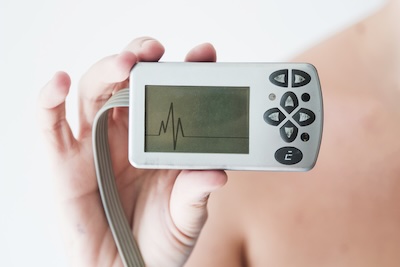
HeartBeam, a medical technology company, has published peer-reviewed study in JACC: Advances, a journal of the American College of Cardiology, demonstrating that a risk prediction algorithm incorporating its credit card-sized ECG device can accurately identify patients at elevated risk of a heart attack.
The study, titled “Acute Coronary Syndrome Risk Prediction Using Portable Cable-Free ECG Device Combined With Clinical Risk Assessment,” was led by Dr. Alexei Shvilkin, MD, PhD, Clinical Cardiac Electrophysiologist at Beth Israel Deaconess Medical Center, Boston.
The study evaluated whether ECG data generated by the HeartBeam device could be combined with patient symptoms and cardiovascular risk factors to create a clinically meaningful assessment of acute coronary syndrome (ACS) risk.
The findings indicate that portable ECG technology, when integrated with clinical risk assessment, could bring hospital-grade cardiac screening closer to patients' homes.
Among 184 patients included in the final analysis, the system achieved an area under the curve (AUC) of 86.5% when combining a single ECG reading from the HeartBeam device with patient risk factors and symptom assessment.
When a personal symptom-free baseline ECG recorded earlier on the same device was available for comparison, predictive performance improved further, reaching an AUC of 92.9%.
Robert Eno, Chief Executive Officer of HeartBeam, said: "The results demonstrate that a clinical-grade ECG provided by our device, combined with a patient's clinical history and symptoms, can deliver risk assessment comparable to physician evaluation with a traditional 12-lead ECG. In practical terms, a patient experiencing chest pain could use the HeartBeam System at home.”

Subscribe To Our Newsletter & Stay Updated