Evotec has secured a fresh $2.9 million grant from the Gates Foundation to advance its human stem cell-based technology for identifying potential risks to fetal development in experimental drug candidates.
The three-year funding extension builds on a collaboration launched in 2023 and will ensure researchers working on global health programmes continue to have access to Evotec's New Approach Methodologies (NAMs) — technologies designed to assess potential drug safety risks earlier in the development process.
The initiative focuses on identifying compounds that could pose risks to prenatal development, using human stem cell-based models rather than relying solely on traditional animal testing.
Joanna Holbrook, Chief Scientific Officer of Evotec, said: "Identifying potential safety risks early in the drug development process is essential to the efficient advancement of better medicines for global health priorities.
"Our platform allows researchers to investigate potential effects on prenatal development based on the behavior of human cells, helping them make better-informed decisions about which drug candidates to pursue and minimizing the risk of costly and time-consuming changes in course later in the process.
"The continued funding support of the Gates Foundation is an important recognition of the potential value of this approach, and we are pleased to extend access to this technology for global health research."
Evotec's platform combines human induced pluripotent stem cell (hiPSC) models with industrial-scale screening capabilities to replicate aspects of human development and flag compounds that may carry developmental safety risks.
The technology has already delivered results. During the initial three-year collaboration, researchers screened more than 5,000 compounds across nine grantee programmes, demonstrating the platform's potential to generate human-relevant safety data at scale.
Details of the platform's development and validation have also been outlined in a recent bioRxiv preprint.
The latest grant strengthens Evotec's broader push to advance New Approach Methodologies that could reduce dependence on animal testing while making drug discovery more efficient and predictive.
Evotec is building a portfolio of human-relevant technologies to transform drug discovery and development. Its capabilities include more than 25 hiPSC-derived cellular models, advanced three-dimensional organoid systems, AI-supported disease modelling and industrial-scale screening platforms.
Together, these technologies are designed to generate high-quality data for assessing both drug efficacy and safety, improve the relevance of research findings to humans and support more informed decisions throughout drug development.
At the centre of the Gates Foundation-backed project is Evotec's human iPSC-based teratogenicity hazard identification platform, an in vitro, high-throughput system designed to identify potential developmental safety risks in experimental drug candidates.
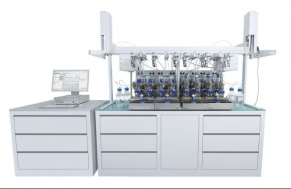
By combining human stem cell-derived models with automation and high-content imaging, the platform enables researchers to screen compounds at scale and generate data relevant to human prenatal development.
The technology is part of Evotec's wider NAMs portfolio, which integrates machine learning, high-throughput experimentation, high-content imaging and interpretable genome-scale molecular data to predict toxicological effects across organs.
By identifying potential safety liabilities earlier, Evotec aims to help researchers make better decisions, avoid costly setbacks and advance safer, more human-relevant drug candidates.
The additional $2.9 million in funding will extend access to this technology for another three years, reinforcing the role of human-based testing approaches in the search for better medicines addressing global health priorities.