Health Ministry reviews progress, highlights targeted interventions in high-burden states, and calls for stronger surveillance and stigma reduction to achieve a leprosy-free India
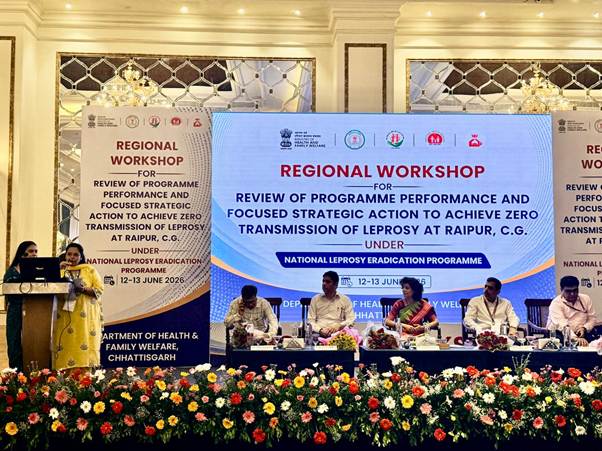
In a significant step toward achieving the vision of a Leprosy-Free India, the Ministry of Health and Family Welfare organized a two-day Regional Workshop on Review of Programme Performance and Focused Strategic Action for Achieving Zero Transmission of Leprosy in Nava Raipur, Chhattisgarh.
During the workshop, participating states presented detailed reviews of programme performance, covering trends in new case detection, treatment completion, contact tracing and follow-up, disability prevention and rehabilitation services, and IEC activities.
Representatives from the five high-priority states—Chhattisgarh, Maharashtra, Madhya Pradesh, Jharkhand, and Odisha—also participated and shared field-level experiences and best practices.
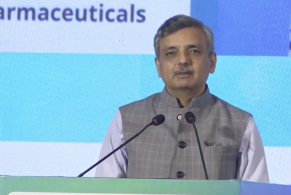
Addressing the gathering, Aradhana Patnaik, Additional Secretary and Mission Director (National Health Mission), Ministry of Health and Family Welfare, Government of India, said, "India had attained elimination as a public health problem at the national level in 2005. However, transmission persists in several endemic districts and hotspot areas, necessitating intensified and targeted interventions to interrupt transmission completely."
Patnaik called for regular Leprosy Case Detection Campaigns in endemic areas. She also stressed the need to strengthen contact tracing and expand the use of Post-Exposure Prophylaxis (PEP) through Single-Dose Rifampicin (SDR) among eligible contacts of index cases, particularly in vulnerable and hard-to-reach populations.
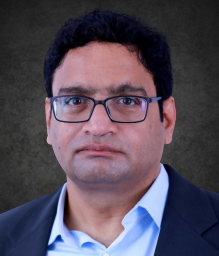
Dr. Sunil V. Gitte, Deputy Director General (Leprosy), Ministry of Health and Family Welfare, Government of India, said, "91,783 new leprosy cases were detected in India during 2025–26, with a prevalence rate of 0.56 per 10,000 population. Of these, 4.18 percent were children, while 2.12 percent had Grade-2 Disability at the time of diagnosis.”
Highlighting ongoing efforts in disability prevention and rehabilitation, Dr. Gitte said that 1,591 reconstructive surgeries had been performed for people affected by leprosy. In addition, more than 1.03 lakh Micro Cellular Rubber (MCR) footwear and over 1.25 lakh self-care kits were distributed to support disability prevention and improve quality of life.
The workshop concluded with the development of state-specific action plans and a renewed commitment from participating states to intensify interventions in high-endemic districts.
Participants expressed confidence that coordinated efforts involving the Government of India, state governments, technical institutions, development partners, and communities would accelerate progress toward a leprosy-free, disability-free, and transmission-free India.

Subscribe To Our Newsletter & Stay Updated