India’s biotechnology sector is entering what many see as a decisive growth phase—and with it comes a high-stakes question: can it move beyond incremental progress to deliver globally transformative therapies?
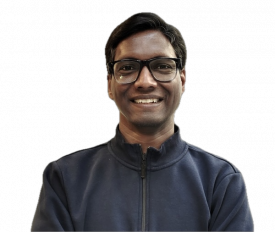
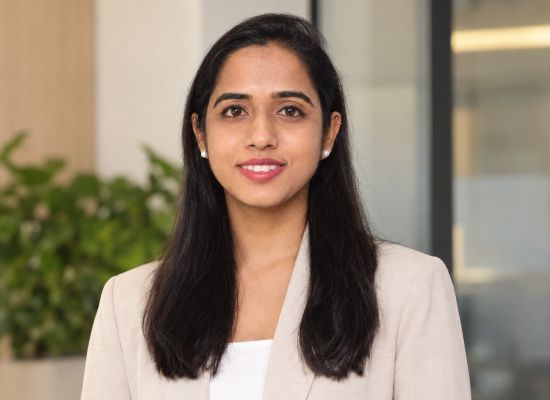
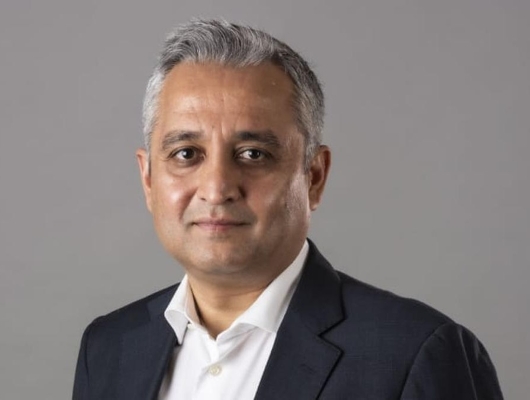
In the latest episode of the “What India Needs!” podcast, host Shutapa Paul spoke with Dr Jogin Desai, Founder and CEO of Eyestem, about the industry’s inflection point as India’s biotech ecosystem pushes toward global competitiveness in advanced medical innovation.
Framing Eyestem’s ambition, Paul said, “Eyestem is among a handful of companies globally working on therapies that could potentially reverse blindness caused by dry age-related macular degeneration (AMD). If successful, this would not just be a scientific milestone, but also a life-changing breakthrough for millions.”
Dr Desai argued that the sector is undergoing a structural acceleration in how quickly science turns into treatments. “Our goal is to bring a new therapy for an incurable disease every two to three years once we reach commercialisation. Historically, new treatments have taken decades, but that cycle is now compressing dramatically.”
Eyestem is building a pipeline across multiple hard-to-treat conditions. “One is retinitis pigmentosa, which primarily affects younger populations, with animal studies expected to begin next year. The second is idiopathic pulmonary fibrosis, where studies are set to commence next month in collaboration with partners in Singapore. The third is Parkinson’s disease, for which we are currently in the process of identifying the most suitable cell-based approach.”
For Dr Desai, the shift is not incremental—it is philosophical. “We are not in the business of slowing diseases; we are working towards reversing them. There is credible science, along with active trials and a clear pathway emerging,” he said.
The discussion comes as India steps up its biotech ambitions, including the Union Budget 2026–27’s Biopharma SHAKTI programme, a Rs. 10,000 crore push aimed at strengthening biologics manufacturing, clinical research infrastructure, and regulatory systems.
Dr Desai said the timing is critical. “India is investing at a time when parts of the West are pulling back on research funding, creating a rare window of opportunity to build long-term leadership in deeptech and biotechnology,” he said.
But he warned that funding structures remain a constraint. “In developed economies, private capital plays a far larger role in driving innovation. In India, the structure is still heavily government-led, and that limits the pace at which breakthrough science can scale,” he explained.
He pointed out a stark imbalance: while 60–70 per cent of R&D in developed markets is driven by private capital, India still sees close to 70 per cent government-led funding.
Paul also flagged India’s broader investment gap. “This gap raises important questions about long-term competitiveness, especially in sectors like biotechnology that rely heavily on sustained research investment,” she noted.
India’s overall R&D spending remains around 0.6–0.7 per cent of GDP—well below levels in the US, China, and Israel.
Beyond funding, Dr Desai highlighted regulatory delays as a key drag on innovation. “If you raise capital for 18 months and spend six to nine months waiting for approvals, that is a significant portion of time lost. In markets like the US and China, decisions are often made in close to 30 days. Greater predictability in India would significantly improve innovation velocity and investor confidence,” he said.
Still, he pointed to growing momentum in India’s deep science ecosystem, with institutions like C-CAMP helping drive early-stage innovation.
With India’s bio-economy projected to hit $300 billion by 2030, Dr Desai said ambition must rise sharply. “At a minimum, India should aim to create multiple blockbuster drugs for the world over the next decade. That is the level of ambition required if we want to move from being a manufacturing hub to an innovation leader.”
Eyestem’s flagship work focuses on regenerative therapies for dry AMD, a major cause of blindness worldwide. “If successful, this will be among 2-3 therapies in the world that reverses vision loss rather than just slowing it,” Dr Desai said.
The global pricing gap, he added, is enormous. “Globally, similar therapies are priced anywhere from $500,000 to over $2 million. Our goal is to bring this down to below $15,000, and potentially even lower, so that it is accessible at scale,” he added.
Paul said such breakthroughs could reshape perceptions of India’s innovation capacity, noting that deeptech advances often remain underreported due to their complexity and long timelines.
Looking ahead, Dr Desai identified the convergence of artificial intelligence and biology as a defining force in the sector. “The combination of AI and biology can unlock new pathways in this sector, and at the same time, it will bring new risks, requiring strong guardrails from both companies and governments,” he said.
As India positions itself for a $300 billion bio-economy, the message from both host and guest was clear: the next decade will not be about catching up—but about deciding whether India can lead.





.png)