India already has talent, digital infrastructure, entrepreneurial energy, clinical expertise, and policy momentum. The next phase demands coordinated execution and building institutions that can hold the ecosystem together over time

India's healthcare system has arrived at a moment that demands a clear-eyed response. The Ayushman Bharat Digital Mission has laid a digital spine across the country. Artificial intelligence is entering clinical workflows in ways that would have seemed ambitious five years ago. A post-pandemic generation of entrepreneurs is building solutions to gaps the system spent decades working around. The raw materials for genuine transformation are present. What determines whether that transformation takes hold now is the quality of collaboration between the people and institutions that hold different pieces of the puzzle.
This is worth stating plainly because the conversation around Indian healthtech tends to get captured by the excitement of individual innovations. A promising diagnostic tool here, a telemedicine platform there. What gets less attention is the question of how these pieces connect, and whether the ecosystem around them is strong enough to take them from pilot to population scale.
The Wake-Up Call That Changed the Calculus
The second wave of COVID-19 was, among other things, a forensic examination of India's healthcare infrastructure. The findings were uncomfortable. Testing capacity buckled. Hospitals ran out of beds, oxygen, and critical equipment. Supply chains for medical devices, many of them import-dependent, seized up at precisely the moment demand was at its peak. The workforce was stretched beyond its limits. Doctor consultations became difficult to access for millions of people outside major urban centres.
What the pandemic also did, however, was accelerate a decade's worth of digital adoption into eighteen months. Rural digital penetration grew by an estimated 300 percent during this period. Patients who had never used a smartphone for healthcare began consulting doctors via video. Hospitals that had resisted digitising their operations moved quickly when they had no alternative. The crisis created, despite everything, an opening.
Into that opening came a wave of healthtech startups. India now has over 3,000 of them, working across diagnostics, remote monitoring, hospital operations, insurance, mental health, and chronic disease management. The energy is real. The ambition is genuine. The funding interest, both domestic and international, has grown consistently.
Why Startups Cannot Do This Alone
The scale problem, however, remains stubborn. A significant majority of healthtech startups in India stay small. They run pilots, secure early customers, and then find themselves unable to cross the threshold into sustainable growth. The barriers are structural and well understood by those working in the space.
Regulatory pathways for digital health products remain unclear in many categories. Hospital procurement systems were built for physical supplies, and they struggle to evaluate or integrate software-based solutions. Clinical validation, the process by which a tool proves it works safely and accurately in Indian conditions on Indian patients, is expensive, slow, and poorly supported. Many solutions being deployed in India were designed for other healthcare contexts entirely, with different disease profiles, different resource constraints, and different patient behaviours.
Hospitals and established healthcare institutions are not obstacles to innovation. They are, in fact, the infrastructure that innovation requires. They carry clinical credibility. They have patient relationships built over years. They understand implementation in ways that no startup can replicate from outside. The most effective healthtech deployments in India have involved hospitals as active co-developers, not passive buyers. When a hospital works alongside a startup to design a remote monitoring protocol or an AI-assisted triage workflow, the result is a product shaped by real clinical constraints rather than assumptions about them.
Doctors must remain at the centre of this process. Technology functions well as an assistive layer, helping interpret data, flag anomalies, reduce documentation burden, and extend reach. What it cannot do is substitute for clinical judgement, the kind that comes from a patient's full history, a physical examination, and years of pattern recognition in conditions specific to this country. India-specific validation is not a regulatory formality. It is the difference between a tool that works and one that merely appears to.
The Policy Architecture That Makes Scale Possible
Digital public infrastructure has already done significant work. The Ayushman Bharat Digital Mission, PM-JAY, and the push toward consent-based interoperability have created a foundation that most countries building digital health systems would envy. Health IDs, linked records, and standardised data exchange protocols mean that in principle, a patient's information can follow them across providers, enabling continuity of care that was previously impossible for most Indians.
Realising that potential requires regulation that moves at a pace commensurate with the innovation it is governing. The absence of clear standards for AI validation in healthcare, the unresolved questions around data governance, and the inconsistent enforcement of patient safety frameworks represent genuine risks. When patients turn to AI tools for first-line medical consultation, as is increasingly happening, and those tools produce confident responses drawn from unverified sources, the consequences fall on real people.
Regulation in this context is not a constraint on innovation. It is the condition that makes innovation trustworthy, and therefore investable. Investors and global partners watch how a country handles the hard questions around safety standards, data privacy, and accountability. Predictable, well-executed policy is as much a competitive asset as engineering talent or market size.
A Global Opportunity Anchored in Domestic Strength
India's position in global MedTech and healthtech is changing. The pandemic made visible the risks of concentrated supply chains for medical devices, and companies across the US, Europe, and Asia are actively looking for alternatives. India has received business enquiries from over 86 countries seeking partnerships, investment, and manufacturing collaboration in health and pharma. That is not a minor signal.
The domestic market is also expanding in ways that reward comprehensive solutions. Rising incomes, wider insurance coverage, medical tourism, and the digitisation of healthcare access in Tier 2 and Tier 3 cities are creating demand that did not exist at this scale five years ago. Ayush product exports have grown dramatically. The appetite for wellness, preventive care, and technology-enabled health management is broadening.
Moving from component manufacturing and mid-technology equipment to higher-value segments, implantables, advanced diagnostics, precision instruments, and AI-enabled platforms, requires investment in research, product design, embedded software, and specialised talent. Startups in medtech are attracting investor attention, but they need testing infrastructure, faster approvals, and access to clinical expertise that only established institutions can provide.
The Architecture of Collaboration
What is being described here is an ecosystem question, and ecosystems require architecture. Startups, hospitals, policymakers, academic institutions, insurance companies, investors, and industry bodies each hold a piece of what is needed. Faster pilots require hospitals willing to open their environments to co-development. Clinical validation requires academia with the infrastructure and incentives to conduct it rigorously. Scaling requires insurers who understand how to evaluate and reimburse digital health interventions. Investment requires policy environments that offer predictability.
Skilling is a thread that runs through all of it. The workforce needed to build, deploy, and maintain health technology at the scale India requires does not yet exist in sufficient numbers. Training clinicians to work effectively with AI tools, training engineers to understand healthcare constraints, and training administrators to procure and govern technology responsibly are all part of the same challenge.
India already has the talent, the digital infrastructure, the entrepreneurial energy, the clinical expertise, and the policy momentum. Now the next phase demands is coordinated execution and the patient work of building institutions that can hold the ecosystem together over time.
The HealthTech future will be defined by partnerships grounded in trust, built around patient outcomes, and tested against the actual conditions of Indian healthcare. Technology is the medium. Collaboration is the method.
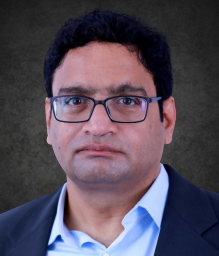
About Author: Dr. Sabine Kapasi is a seasoned healthcare professional renowned for her expertise in finance, data science, and the global healthcare industry. She has served as UN Strategy Lead on the COVID-19 Task Force, offering guidance to 11 state governments across 197 countries and the Office of the PS Health GOI.

Subscribe To Our Newsletter & Stay Updated