At the latest Indian Pharma Post E-Conference, leading experts highlighted the need for accredited trial sites, skilled investigators, digital ecosystems, and greater public trust
The global clinical trials market is witnessing rapid growth, driven by increasing R&D investments, biologics, and precision medicine, with the Asia-Pacific region emerging as the fastest-growing destination. India is strengthening its position as a preferred clinical research hub, backed by a large and diverse patient pool, cost advantages, regulatory reforms, and government initiatives.
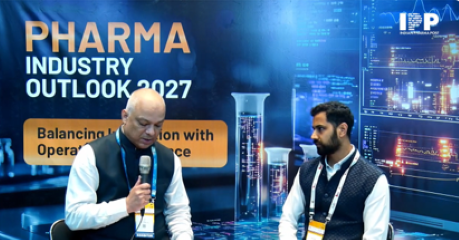
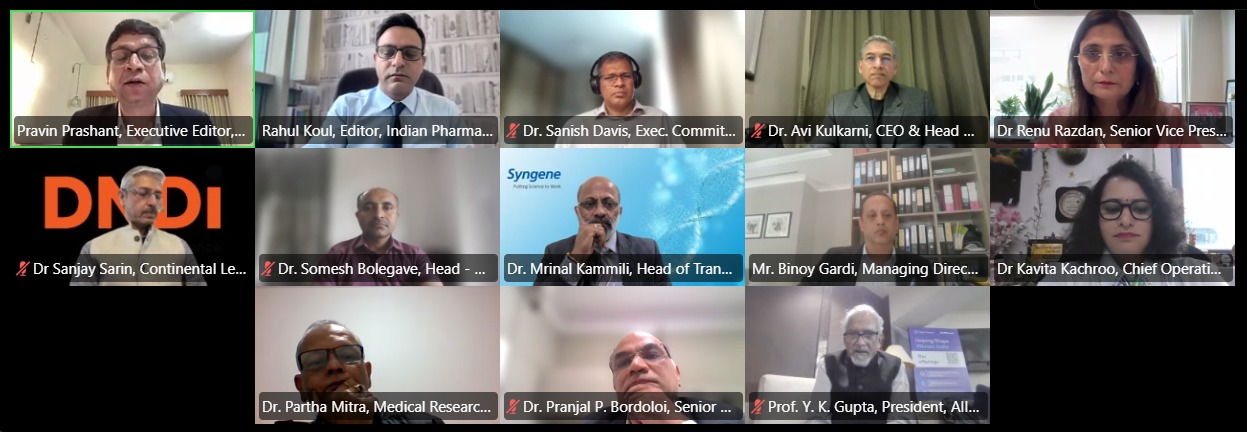
Against this backdrop, industry experts came together to discuss India's potential to become a global clinical trials hub organized by Indian Pharma Post on June 19, 2026
At the E-Conference titled, ‘The Future of Clinical Research in India: Can India Become a Global Trial Hub?’, the leading experts examined current market dynamics, benchmarking against global trends, and identifying actionable strategies to enhance competitiveness and accelerate growth.
Pravin Prashant, Executive Editor, Indian Pharma Post provided a peek into the market scenario. “CRO industry in India is merely an estimated $1.4 billion industry as compared to the biotech and pharma sectors, separately aiming to reach $300 billion target by 2030. It is surprising to see that despite a huge population, we hold merely 2-3 percent of global share,” said Prashant.
The session was moderated by Rahul Koul, Editor, Indian Pharma Post who set the tone of the discussion. ”While regulatory reforms have created a strong foundation, becoming a global clinical trials hub will require equal focus on infrastructure, digital innovation, skilled talent, and public trust. This discussion aims to identify the practical steps needed to unlock India's full potential in global clinical research,” outlined Koul.
Expressing optimism about the Government of India's initiative to establish 1,000 accredited clinical trial sites, Prof. Y. K. Gupta, President, AIIMS, Kalyani opined: “One of the biggest advantages of this initiative is that it will improve the diversity of clinical trial participation. Today, nearly 80% of clinical trial sites are concentrated in just 2–3 metropolitan cities. By expanding accredited sites, we can improve patient diversity, enhance the global visibility of India's clinical research capabilities, and potentially increase.”
“The challenge, however, lies in execution. Developing 1,000 clinical trial sites requires adequately trained investigators, robust data management systems, skilled biostatisticians, data analysis centres, and proper archival infrastructure. Rather than expecting every site to conduct all types of studies, we should categorize them based on their capabilities,” added Prof. Gupta.
Dr. Mrinal Kammili, Head of Translational and Clinical Research, Syngene International commented, “One of the biggest challenges has been the lack of adequate clinical trial infrastructure, particularly sites capable of conducting global early-phase and Phase I studies. Global sponsors typically seek end-to-end development capabilities, and this has historically been a gap. Another important factor has been concerns around the quality and perception of data generated in India, along with intellectual property protection.”
"However, I believe the situation is changing rapidly. The implementation of the Digital Personal Data Protection (DPDP) framework has also helped address concerns around data security and intellectual property, We are also witnessing greater adoption of AI-enabled technologies, electronic data capture platforms, and digital systems that improve data integrity and operational efficiency,” added Dr. Kammili.
Binoy Gardi, Managing Director and Group CEO, Veeda Lifesciences remarked, “The introduction of the New Drugs and Clinical Trials (NDCT) Rules, 2019, has been a landmark reform that has brought India much closer to global regulatory standards. Although our approval timelines are still longer than those in the US or Europe, we have made significant progress compared to where we were a decade ago.”
"That said, regulation alone cannot make India a global clinical trial hub. Several other factors contribute to competitiveness, and one area that still requires attention is the consistency and predictability of regulatory timelines. While the framework exists, sponsors continue to seek greater confidence that timelines will be adhered to consistently. This is one of the most common questions we receive from global pharma companies evaluating India as a clinical research destination,” he added.
Dr. Sanish Davis, Exec. Committee Member, Indian Society for Clinical Research (ISCR) said, “One common factor across Australia, South Korea, Singapore, and China is their strong focus on early clinical development. Australia, for example, combines attractive financial incentives for clinical research with highly predictable regulatory timelines and world-class institutions. Similarly, South Korea has built an integrated ecosystem through strong government support, coordinated infrastructure, and leading medical centres.”
“While predictable approval timelines are important, they represent only one part of the overall clinical research ecosystem. We also need institutions that can execute global clinical trials with the same level of commitment and competitiveness as their own academic research. Building centres of excellence with experienced investigators, robust infrastructure, and international-quality execution is equally critical,” added Dr. Davis.
Dr. Sanjay Sarin, Continental Lead Asia and South Asia Director, Drugs for Neglected Diseases initiative (DNDi) said, “The scientific knowledge exists and disease burden is well understood, but the gap between discovery and patient access remains significant. At DNDi, we have tried to bridge this gap through an alternative R&D model that prioritizes patient needs over commercial returns. We bring together academia, research institutions, industry, regulators, clinicians, and patients into a coordinated collaborative framework.”
“India has world-class research institutions, a vibrant pharma industry, and strong clinical capabilities. However, collaboration among these stakeholders is often fragmented and limited to individual projects. What India needs is a more structured institutional framework that promotes long-term public-private partnerships, shared biobanks, open-access data platforms, and joint investigator training programmes,” Dr Sarin added further.
Dr. Renu Razdan, Senior Vice President, JSS Medical Research India opined: “India’s clinical research sector has experienced difficult phases in the past because concerns raised by the public, whether fully justified or not, were not addressed effectively. If we want to build a globally competitive clinical research ecosystem, we must proactively strengthen both public awareness and transparency.”
“The first priority should be educating people about what clinical trials are and why they are essential for developing innovative medicines as well as generic therapies. Transparency is equally important. We already have the Clinical Trials Registry–India (CTRI), which is a strong platform. Going forward, I believe regulatory approvals should be seamlessly linked to the registry so that the public can easily verify approved studies,” added Dr. Razdan.
Dr. Kavita Kachroo, COO, Kalam Institute of Health Technology said, “As a technology policy institute, KIHT goes beyond conducting trials. As a DHR Resource Hub for Health Technology Assessment and a WHO Collaborating Centre for Health Innovation, we support innovators through evidence generation, prototype development, preclinical studies, regulatory pathways, clinical validation, commercialization, mass manufacturing, and ultimately health system adoption,” said Dr. Kachroo.
"Our strength lies in bringing together every component of the innovation continuum under one roof. We combine clinical research, health technology assessment, policy translation, innovation support, and capacity building to generate scientifically rigorous and clinically meaningful evidence that supports healthcare decision-making and faster adoption of innovations,” added Dr. Kachroo.
Dr. Pranjal P. Bordoloi, Senior Vice President - Late Phase Operations, Lambda Therapeutic Research Limited is super confident about India emerging as a global clinical trial hub. “We have already proven our capabilities through healthy volunteer BA/BE studies. India has built world-class expertise in this segment and today contributes an estimated 20–30% of global healthy volunteer studies. The first priority now is regulatory alignment. Approvals must be time-bound, consistent and harmonized with global standards."
"Integrating hospital systems, clinical trial platforms and regulatory systems will enable real-time data, faster decision-making, better analytics and more patient-centric decentralized trials, while maintaining strong data privacy and security. If we can standardize infrastructure, strengthen talent and fully leverage digitalization, India can deliver global-quality clinical trials,” added Dr. Bordoloi.
Dr. Avi Kulkarni, CEO & Head of CRO, InoRx Limited (part of SRM Group) calls for private financing to boost the industry’s chances to emerge as a global hub. “The investments cannot come from government alone. While policy support is essential, private industry must play an equally significant role in developing research infrastructure, technology platforms, and clinical trial capabilities.”
“Investments must focus on electronic health records, globally accredited laboratories, advanced imaging facilities, integrated clinical trial platforms, AI-enabled technologies, robust cybersecurity, and data privacy compliance. Patient recruitment remains one of India's greatest strengths but challenges such as delayed site activation, regulatory bottlenecks, patient retention, and fragmented medical records must be addressed,” added Dr. Kulkarni.
Dr. Somesh Bolegave, Head - Biometrics, Regulatory and Medical Services, SIRO Clintech said, “India’s clinical research ecosystem is increasingly prepared to support next-generation therapies such as cell and gene therapies, mRNA-based medicines, precision medicine, and digital therapeutics. From an infrastructure perspective, we are largely at par with global standards.”
“While global sponsors recognize India's strengths in areas such as data management, biostatistics, and backend clinical research operations, they continue to question whether our operational execution and standards of care consistently match global expectations. The encouraging part is that India possesses a significant technology advantage. With strong digital infrastructure, widespread connectivity, and AI capabilities,, we have all the ingredients needed to support advanced clinical research,” added Dr. Bolegave.
“One of the biggest lessons India can learn from Australia is the importance of building a dedicated clinical trial governance framework, said Dr. Partha Mitra, Medical Research Scientist, Flinders Cancer Innovation Centre, Govt. Of South Australia. “Clinical research requires a specialized regulatory system with clearly defined rules, operational standards, and accountability mechanisms that are followed uniformly across every trial site. Australia has built this through the Therapeutic Goods Administration (TGA), which provides comprehensive guidance for conducting clinical trials,.”
“In Australia, patients are educated about the purpose, benefits, risks, and rights associated with clinical trials before they decide to participate. Building structured patient awareness and education into the clinical research ecosystem will improve recruitment while strengthening public confidence in research,” added Dr. Mitra.

Subscribe To Our Newsletter & Stay Updated