Recognition highlights the hospital network’s decade-long investment in analytics and AI-driven healthcare, supporting improved outcomes, efficiency, and affordability.
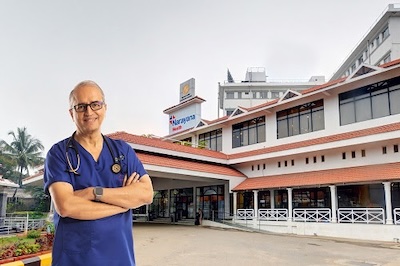
Narayana Health has achieved Stage 6 validation under the HIMSS Analytics Maturity Assessment Model (AMAM), becoming the first hospital network in the Indian Subcontinent.
The hospital group has also become only second healthcare organisation in the Asia-Pacific region to reach this level under the framework's updated assessment criteria.
The milestone highlights the growing role of analytics, artificial intelligence, and data-driven decision-making in healthcare delivery.
Developed by HIMSS, the AMAM framework evaluates how effectively healthcare organisations integrate data, analytics, and AI into clinical and operational decision-making. Stages 6 and 7 represent the highest levels of maturity, where predictive and near real-time intelligence are embedded into everyday workflows.
The recognition reflects Narayana Health’s decade-long investment in building an enterprise-wide analytics ecosystem that supports decision-making across clinical care, hospital operations, and resource management.
The organisation noted that these capabilities have been developed within the cost-sensitive realities of India’s healthcare environment.
Dr. Devi Shetty, Founder and Chairman of Narayana Health, said, “We gave senior doctors visibility into metrics such as length of stay, procedure material costs, blood transfusions, re-exploration after surgery, mortality, morbidity and infection rates.”
“Over time, this discipline has helped us steadily reduce mortality and morbidity, while improving productivity and keeping care within reach of our patients,” added Dr. Shetty.
Dr. Emmanuel Rupert, Managing Director and Group CEO of Narayana Health, said, “Achieving this level of validation reflects years of focused effort across teams, and reinforces our belief that world-class innovation can be built within India, for India.”
Vivek Rajagopal, Group Chief Analytics & AI Officer, said, “Our focus has been to make analytics practical, accessible and deeply embedded into everyday healthcare delivery rather than treating it as a standalone technology layer.”

Subscribe To Our Newsletter & Stay Updated