Country’s deep scientific talent pool and its growing role as a clinical trial destination makes it central to how Parexel serves sponsors
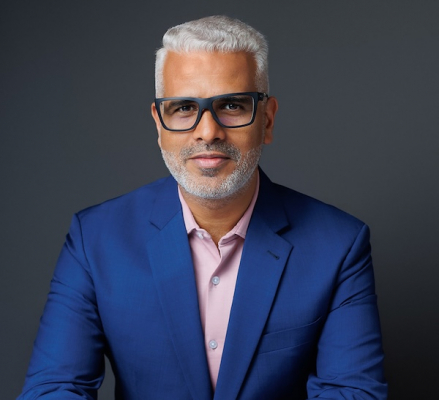
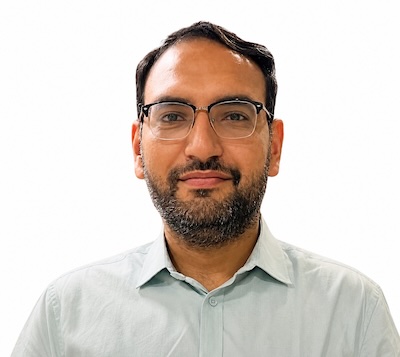
Sanjay Vyas, President and Managing Director, Parexel India And Global SBU Head- Safety services & Logistics, Parexel International
Parexel International, a leading global clinical research organization (CRO), has strengthened its technology and patient safety capabilities in 2026 through the acquisition of Vitrana, a provider of AI-powered end-to-end pharmacovigilance (PV) solutions. The company strives to enhance operational excellence across the global biopharmaceutical ecosystem.
In this exclusive interview with Rahul Koul, Editor, Indian Pharma Post, Mr. Sanjay Vyas, President And Managing Director, Parexel India and Global SBU Head- Safety services & Logistics, Parexel International takes us through the company’s strategic move behind acquiring Vitrana, its latest initiatives in India, impact of geopolitical situation, top priorities and much more.
What strategic gaps does the Vitrana acquisition address, and how will it enhance patient safety operations globally?
The acquisition closes a significant gap. Historically, sponsors have had to assemble pharmacovigilance (PV) technology from one vendor and PV services from another, then carry the integration risk themselves. With Vitrana, we can now act as a single partner for both PV technology and services.
Regulatory volume and case complexity are rising faster. Vitrana's platform is AI-enabled, end-to-end and system-agnostic and integrates with any existing safety database, so customers can adopt automation without removing their existing systems.
On the global patient-safety front, Vitrana’s platform is designed to deliver first-time quality, shorten cycle times and strengthen compliance across a product's lifecycle, from clinical trials through the post-marketing setting. By automating routine case intake and processing, our safety experts can spend their time on the work that genuinely protects patients i.e. signal detection and complex benefit-risk assessment, rather than manual data handling.
What impact will the Vitrana integration have on operational efficiency, adverse event reporting, and clinical trial workflows?
There are three concrete benefits we can point to.
Operational efficiency. Vitrana's technology has, in deployments to date, shown a 60% reduction in case processing time and a 75% reduction in manual reconciliation tasks, across a base of more than 30 customers. the differentiator here is genuinely end-to-end automation from intake through to reporting and ongoing signal management.
Adverse event reporting. Patients gain intuitive, digital channels to report adverse events directly, which should improve both the volume and the accuracy of patient-reported safety data, a long-standing weak point in PV.
Clinical trial workflows. For investigative sites, tighter integration between Electronic Data Capture (EDC) systems and safety databases reduces duplicate manual entry and streamlines Serious Adverse Event (SAE) reconciliation, which is one of the most error-prone, time-consuming steps in a trial. For sponsors, a single-partner model means improved pricing flexibility, faster issue resolution, simpler vendor management and a unified innovation roadmap-.
What key factors are driving India's emergence as a global clinical research hub, and how is Parexel expanding its India operations?
India offers a large, diverse patient population, a deep base of skilled investigators and clinical talent, and a materially lower cost of trial execution. The India clinical trials market was valued at roughly $1.42 billion in 2024 and is forecast to grow at around 8% a year through 2030 (Grand View Research). Regulatory reforms have also served as catalysts. The New Drugs and Clinical Trials Rules, 2019 eliminated much of the earlier uncertainty, rebuilding sponsor confidence, and contributed to shortened approval timelines
India is one of Parexel’s most important global markets and talent hubs, with over 6,000 employees across the country over 12 functions spanning core clinical, pharmacovigilance and regulatory work through to our Global Capability Centre.
How is Parexel leveraging India's ecosystem to support innovation hubs, decentralized trials, and global study execution?
India increasingly functions for us as more than a delivery location — it is becoming a centre of innovation and global execution. Our Global Capability Centre here supports a broad span of functions for trials run worldwide, which means India teams are embedded in studies far beyond the domestic market. India’s deep scientific talent pool and its growing role as a clinical trial destination make the country central to how Parexel serves sponsors worldwide.
The case for situating innovation capacity in India is partly economic. Moreover, the cost of failure in India is significantly lower than in many other markets, providing a strategic advantage, to build and test new operating models, including decentralized and hybrid trial designs tailored to suit the country's unique mix of urban and rural populations.
How does completing CDSCO registration under G.S.R 581(E) strengthen Parexel's regulatory and operational positioning in India?
The registration confirms our authorisation to run the full range of Phase I–IV clinical trials in India under the country's formalised oversight regime. The G.S.R 581(E) regulation, gazetted on 19 September 2024, made registration with the Central Drugs Standard Control Organisation (CDSCO) mandatory for all CROs operating in India from 1 April 2025, submitted through the SUGAM portal and valid for five years.
Parexel was the first CRO in India to complete and receive CDSCO registration under the new regulatory framework, reflecting our strong compliance standards. We completed our registration in 2025, which matters in two ways. First, it gives sponsors regulatory certainty: confirmation that their India work partners with a registered, compliant partner in an increasingly formalised landscape. Second, it reinforces operational continuity, enabling us to support customers in bringing treatments to patients safely and efficiently without interruption tied to the new mandate.
What are the biggest opportunities and regulatory challenges for scaling early-stage and Phase I clinical trials in India?
Phase I is the fastest-growing segment of the India market, and the New Drugs and Clinical Trials Rules, 2019 reset the narrative around early-phase research, encouraging both international and domestic confidence. The combination of rapid patient enrolment, lower cost of conducting trials, and growing early-phase infrastructure makes India a credible early-stage destination, particularly as sponsors look to diversify away from over-concentrated trial geographies.
However, India is not yet a default first choice for every sponsor. Areas requiring continued development include ensuring uniform standards across early-stage research settings, scaling a consistently certified investigator and coordinator base, and establishing predictable, well-understood approval timelines as volumes rise. These are addressable challenges, and recent regulatory reform is moving in the right direction.
With growing geopolitical uncertainty affecting global trial networks, how is Parexel building resilience and continuity into clinical trial operations?
Geopolitical disruption has impacted where decisions about where clinical trials are ran. For example, sponsors are simultaneously working to reduce dependence on any single market as an approach to diversify their risk Our response has been geographic diversification: building India's capacity precisely so it can serve as an alternative location for early-stage studies disrupted elsewhere.
Resilience comes from not being over-indexed on any one country, from technology that lets work be coordinated across borders, and from a global capability model that allows us to shift and balance delivery as conditions change.
What role will decentralized clinical trials, real-world evidence, and remote patient monitoring play in Parexel's future growth strategy?
These are central to where the industry and our investment is heading. The global decentralized clinical trials (DCT) market was valued at about $8.8 billion in 2024 and is projected to reach $18.8 billion by 2030 (BCC Research, ~13.7% CAGR), driven by digital tools, remote monitoring and local care networks. Regulatory clarity is following the technology the US FDA finalised its DCT guidance in September 2024, which is encouraging wider adoption of telehealth visits and remote monitoring.
DCTs, real-world evidence (RWE) and remote patient monitoring are mutually reinforcing: wearables, mobile apps and telehealth generate continuous, real-world data that both improves trial reach and feeds richer evidence on how treatments perform outside the controlled trial setting. Parexel maintains a dedicated Real World Research function at leadership level, reflecting that this is a strategic priority rather than an add-on.
What are your top priorities for strengthening Parexel's innovation, partnerships, and global delivery capabilities from India?
India is at an important inflection point in its evolution as a clinical research destination, and our priorities reflect that opportunity.
On innovation, we are focused on scaling AI-enabled delivery models across clinical development and patient safety. The recent addition of the Vitrana platform strengthens our ability to combine technology and services in pharmacovigilance, while broader investments in AI and advanced analytics will help improve efficiency, quality, and decision-making across the development lifecycle. We also see significant potential for India to further strengthen its role as an innovation hub, supporting the development, testing, and deployment of new technology-enabled solutions for global programs.
Partnerships will be equally important to sustaining growth. We are focused on deepening collaboration with academic institutions, investigators, clinical research sites, healthcare providers, technology partners, and industry stakeholders to strengthen research capabilities and expand access to clinical trials. Continued engagement with regulators and industry bodies will also be important as India further matures as a global clinical research destination.
From a global delivery perspective, we expect India's role within Parexel to continue expanding. India has become a strategic hub supporting global clinical development programs across a broad range of functions. We will continue investing in specialised capabilities across clinical operations, pharmacovigilance, regulatory affairs, data sciences, and technology-enabled services, while broadening the strategic mandate of our Global Capability Centre. Our objective is to further strengthen India's contribution to global studies, enabling teams here to drive innovation, scientific expertise, and operational excellence for customers worldwide.

Subscribe To Our Newsletter & Stay Updated
_256_275.jpeg)

.jpeg)