BPL's next phase of growth is anchored in expanding its portfolio beyond medical equipment to offer integrated digital healthcare solutions
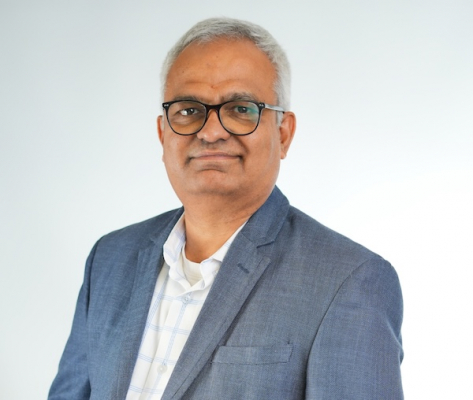
Guruswamy Krishnamoorthy, CEO, BPL Medical Technologies
In an exclusive interview, with Rahul Koul, Editor, Indian Pharma Post, Guruswamy Krishnamoorthy, CEO, BPL Medical Technologies shared his perspectives on the company’s priorities, partnerships, product launches, acquisitions and way forward.
BPL Medical Technologies has undergone a significant transformation in recent years. What are the key strategic priorities shaping the company's next phase of growth?
BPL's next phase of growth is anchored in expanding its portfolio beyond medical equipment to offer integrated digital healthcare solutions. We are building a comprehensive ecosystem that combines devices, software, AI-enabled technologies, and clinical workflows to deliver greater value to healthcare providers. At the same time, our growth strategy is focused on addressing the distinct needs of different markets. While Tier 1 hospitals require advanced, technology-led solutions, Tier 2 and Tier 3 markets need high-quality, accessible, and cost-effective healthcare technologies. By curating market-specific portfolios rather than adopting a one-size-fits-all approach, BPL aims to strengthen its presence across India and make quality healthcare technology more widely accessible.
A key part of this strategy is expanding into clinical segments where earlier diagnosis and intervention can significantly influence patient outcomes. Our entry into pulmonary diagnostics reflects this approach. Respiratory diseases are a growing healthcare concern, and there is a clear need for advanced diagnostic technologies that can support timely and accurate clinical decision-making. By strengthening our portfolio across respiratory diagnostics, critical care, imaging, and digital health, we are creating a more connected healthcare ecosystem that supports clinicians across the continuum of care. Our objective is not simply to expand our portfolio, but to improve access to quality healthcare technologies that enable better outcomes for patients.
The company has entered into an exclusive partnership with Jaeger Medical for its respiratory diagnostics portfolio. What strategic opportunities does this collaboration create for BPL, and how do you see it strengthening your position in the pulmonary care segment?
Our partnership with Jaeger Medical plays a significant role in offering healthcare institutions and professionals an enhanced critical care and pulmonary care package. For us, this partnership is about addressing a critical healthcare need. Early and accurate diagnosis is often the foundation for effective respiratory care, and that is where Jaeger's globally respected diagnostic technologies bring significant value. By combining those capabilities with BPL's nationwide reach, clinical engagement, and service infrastructure, we can make advanced pulmonary diagnostics more accessible to healthcare providers across the country. This ultimately helps clinicians make more informed decisions, supports earlier intervention, and creates the potential for better patient outcomes, particularly for individuals living with chronic respiratory conditions. Strategically, it also strengthens BPL's position in the pulmonary care segment by enabling us to offer a more comprehensive respiratory care portfolio that spans diagnosis through critical care, allowing us to better support healthcare providers across the continuum of patient care.
The recently launched BPL Vent 300 marks another step in your critical care portfolio. What differentiates this ICU ventilator from other products in the market, and what has been the initial response from healthcare providers?
The ability of the BPL Vent 300 to provide variable respiratory support for adult, paediatric, and infant patients on a single platform offers significant clinical and operational advantages for hospitals.
As part of critical care, patients often move through different stages of respiratory support during their treatment journey. They may initially require oxygen supplementation and HFNC therapy for respiratory distress, progress to NIV when greater support is needed, and in more critical situations require invasive ventilation. As their condition improves, they are gradually weaned back through NIV and HFNC before breathing independently. The BPL Vent 300 is designed to support this entire continuum of care on a single platform, enabling clinicians to seamlessly adapt therapy as the patient's condition evolves without the need to switch equipment. This not only improves clinical efficiency but also ensures continuity of care and a better experience for both clinicians and patients. BPL Vent 300 provides Invasive Ventilation, Non-Invasive Ventilation (NIV), and High Flow Nasal Cannula (HFNC) therapy for adult, paediatric, and infant patients on a single platform.
What further differentiates the BPL Vent 300 is its relevance for healthcare providers across India. Many hospitals, particularly in Tier 2 and Tier 3 cities, are looking for solutions that combine advanced clinical functionality with cost-effective infrastructure planning. By integrating HFNC, NIV, and invasive ventilation in a single system, the Vent 300 helps healthcare institutions optimize investments while expanding access to quality critical care. Ultimately, it enables hospitals to deliver timely respiratory support closer to patients, strengthening critical care capabilities and helping improve patient outcomes when every minute matters.
The acquisition of South Korea-based Yozma BMTech marks BPL's entry into bone densitometry. How does this acquisition fit into your long-term growth and global expansion strategy?
With global healthcare needs increasingly shifting toward preventive care and patient-centric models, BPL’s strategy includes a keen focus on technologies that are connected to preventive diagnostics and chronic disease monitoring. The BMtech acquisition is a perfect fit for the wellness and prevention segment with monitoring bone health being a significant diagnostic technology for women’s health. As aging populations increase globally, demand for screening and preventive technologies is expected to rise significantly.
This acquisition is a significant step in addressing this growing need for preventive diagnostics driven by aging populations, rising osteoporosis prevalence, and increasing lifestyle-related risks.
Furthermore, the innovative tech and design play an important role in adapting to different markets. The newly introduced systems combine high-precision diagnostics with patient-friendly design. Considering BPL’s strong foothold in Tier 2 and Tier 3 market, the compact design of BMtech’s Bone Densitometry is an added advantage as it allows use in space-constrained clinical settings, improving accessibility for hospitals and diagnostic centres.
Digital health, cloud connectivity and AI are blurring the boundaries between devices and software. How is BPL preparing for this convergence?
BPL is evolving from being a medical equipment provider to becoming a healthcare solutions company, and this transition is ultimately driven by patient impact. Through BPL Cortex, our digital health platform, we are bringing together devices, clinical data, AI-enabled insights, and workflows into a connected ecosystem that supports more informed and proactive clinical decision-making.
At BPL, our transition from products to solutions is ultimately driven by patient impact. AI is helping us move beyond monitoring to enabling more informed and proactive clinical decision-making. By bringing together data from multiple devices and care settings, platforms such as BPL Cortex can help clinicians access relevant insights faster, reduce workflow inefficiencies, and support timely interventions. This is particularly important in high-acuity environments such as ICUs and operating rooms, where every decision can have a direct impact on patient outcomes. Our focus is to ensure that advanced technologies like AI are not only clinically robust but also practical, accessible, and capable of enhancing the quality of care delivered to patients across diverse healthcare settings.
As an Indian healthcare technology company, our ambition is to build solutions that meet global standards while remaining relevant to the realities of Indian healthcare delivery. That means combining advanced technologies such as cloud connectivity, AI-enabled decision support, and digital integration with a strong focus on accessibility and affordability. We believe innovation creates the greatest impact when it is available not only to large tertiary care institutions but also to hospitals and healthcare providers serving emerging markets. Our goal is to use technology to bridge gaps in care, improve clinical efficiency, and ultimately help more patients access quality healthcare regardless of location. The approach to AI is assistive, ethical, and clinically validated. All AI outputs are designed to be explainable and auditable, with continuous performance monitoring and governance frameworks in place.
India still imports a significant proportion of high-end medical equipment. Which product categories do you believe offer the biggest opportunity for indigenous innovation over the next five years?
The biggest opportunities lie in advanced imaging, critical care, patient monitoring, respiratory diagnostics, and connected digital health solutions. These are areas that are evolving rapidly as healthcare systems focus on earlier diagnosis, better clinical outcomes, and managing a growing burden of chronic and lifestyle-related diseases. Healthcare providers today are also looking for technologies that can improve efficiency, support faster clinical decision-making, and extend quality care beyond large tertiary hospitals.
The medical technology industry is moving beyond standalone devices toward integrated healthcare solutions. Earlier, innovation was largely centred around hardware performance. Today, value is increasingly being created through the integration of devices with AI, digital workflows, remote connectivity, data analytics, and clinical decision support. This shift creates a significant opportunity for Indian companies to innovate not only in products but also in software, service delivery, clinical training, and lifecycle support. Indigenous innovation has an important role to play in improving both accessibility and affordability. Solutions developed in India can be designed around local healthcare realities, whether it is infrastructure limitations, workforce requirements, or cost sensitivities. This enables providers to access advanced technologies at a lower total cost of ownership while ensuring that more patients benefit from timely diagnosis and treatment closer to where they live. At BPL, we see this as an opportunity to build solutions that combine technology, connectivity, and clinical relevance. Our focus is on creating healthcare solutions that are globally benchmarked yet aligned to the needs of Indian healthcare providers and patients, delivering quality care that is both accessible and affordable.
The future of Indian MedTech will not be defined by import substitution alone. It will be defined by our ability to create innovative, globally competitive solutions that improve patient outcomes while making healthcare more accessible and affordable. India has the talent, scale, and clinical expertise to lead this transformation, and I believe the next generation of healthcare innovation can be designed, developed, and delivered from India to the world.

Subscribe To Our Newsletter & Stay Updated