The country’s strength lies not just in technology availability but in adoption behaviour

Over the last few years, hospitalization costs across private healthcare networks have risen sharply. Procedures that were once financially manageable for middle-income households have become significantly more expensive, while insurance premiums and claim burdens continue increasing year after year.
At first glance, rising insurance penetration appears positive for the ecosystem. More people are financially protected, access to healthcare is improving, and treatment affordability has expanded. But underneath that progress lies a structural challenge that healthcare stakeholders—insurers, providers, employers, and policymakers—are beginning to acknowledge more seriously.
India is gradually entering a cycle where rising medical costs and rising insurance dependency continuously feed into each other.
As hospitalization expenses increase, insurers face larger claim payouts. To sustain those costs, premiums rise further. As consumers become more financially covered, their tolerance toward expensive treatments also increases. Hospitals, backed by growing demand and expanding private investments, continue recalibrating pricing upward. The result is a cycle of accelerating healthcare inflation.
This is not a criticism of insurance. Insurance remains essential to financial protection. But hospitalization-led healthcare systems alone cannot sustainably solve healthcare inflation over the long term.
The only meaningful way to disrupt this cycle is by reducing the need for hospitalization itself. That means healthcare systems must move upstream: towards prevention, early intervention, chronic condition management, continuous engagement, and proactive care delivery.
And this is where India has a unique opportunity. Unlike many developed healthcare economies burdened by legacy systems, India is building its healthcare infrastructure during a period of massive digital adoption. The country already possesses several foundational advantages that can help create one of the world’s most scalable preventive healthcare ecosystems.
Growing digital interface in healthcare
India has one of the world’s largest smartphone user bases, extremely affordable internet access, widespread adoption of UPI and digital payments, rapidly expanding diagnostics and pathology infrastructure, increasing telemedicine penetration, growing at-home healthcare capabilities, large-scale healthcare and consumer datasets, and a digitally aware and highly adaptive consumer base.
These factors matter because preventive healthcare succeeds only when healthcare becomes frictionless.
Historically, healthcare systems have largely remained reactive. Most people engage with healthcare only after symptoms worsen or conditions escalate. Routine consultations get postponed. Diagnostics are delayed. Chronic conditions remain unmanaged for years. Preventive screenings are treated as optional rather than essential.
The problem is not always awareness. Often, it is friction. Healthcare feels time-consuming, fragmented, expensive, or emotionally exhausting. People avoid action not because they do not value health, but because healthcare systems have not traditionally been designed around convenience, continuity, or behavioural support.
Technology is now changing that equation. Today, teleconsultations can happen within minutes. Diagnostics can be booked digitally. At-home sample collections are becoming mainstream. Wearables can monitor activity, sleep, and recovery patterns continuously. AI systems can help identify behavioural risk signals earlier and enable proactive health nudges at scale.
Importantly, technology is also reducing the cost of serving healthcare users. AI-driven workflows can streamline consultations, automate administrative layers, personalise care journeys, and improve continuity of care without proportionally increasing operational costs. This creates the possibility of delivering preventive healthcare at population scale in a far more efficient manner than traditional healthcare systems.
India’s strength lies not just in technology availability, but in adoption behaviour. UPI fundamentally changed how India transacts because it reduced friction dramatically. Consumers adapted rapidly because the experience became seamless, real-time, and accessible. Healthcare is beginning to enter a similar phase, where convenience and accessibility may influence health behaviour more than awareness campaigns alone ever could.
Changing healthcare behaviour
This evolution is also being supported by broader ecosystem shifts. Government initiatives such as Ayushman Bharat PM-JAY have significantly expanded healthcare access across large sections of the population. Simultaneously, workplace and labour-related conversations around employee wellbeing are becoming more prominent across corporate India.
Employers today are beginning to understand that healthcare cannot remain limited to hospitalization coverage alone. Chronic illnesses, stress, burnout, mental health concerns, and lifestyle disorders increasingly affect productivity, retention, absenteeism, and long-term workforce health. As a result, preventive healthcare is slowly moving from being viewed as a “wellness benefit” to becoming part of business infrastructure.
This does not mean OPD or preventive plans alone will solve healthcare inflation. But they play an important role in encouraging earlier engagement with healthcare systems.
A routine consultation done on time. A health screening that catches risk factors early. Consistent management of hypertension or diabetes. Access to nutrition, mental wellness, or lifestyle support before escalation. These are individually small interventions, but collectively they influence long-term healthcare outcomes significantly.
The larger opportunity is not just about financing healthcare differently. It is about changing healthcare behaviour itself.
India’s healthcare future cannot depend entirely on building larger hospitalization ecosystems while costs continue compounding indefinitely. The system eventually becomes financially unsustainable for insurers, employers, and households alike.
The long-term solution lies in creating healthcare ecosystems that keep people healthier for longer, through continuous engagement rather than episodic treatment. This is where India’s combination of AI capability, digital public infrastructure, healthcare data, low internet costs, and consumer tech adoption creates a genuine structural advantage.
Together, these factors can allow India to leapfrog traditional healthcare models and build a more preventive-first system over time.
The future of healthcare will not be defined only by hospitals, insurance claims, or treatment financing. It will increasingly be defined by whether healthcare systems can intervene earlier, reduce friction around care, and help consumers make healthier decisions consistently before medical escalation happens.
Because ultimately, the strongest healthcare economies are not the ones that respond best during medical emergencies. They are the ones that reduce the need for emergencies in the first place.
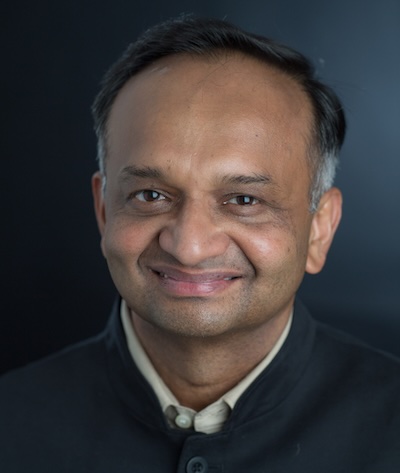
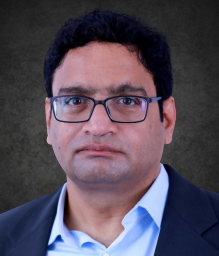
About Author: Shashank Avadhani is the CEO and Co-founder of Alyve Health. Before founding the company, Shashank held the position of Partner at Boston Consulting Group, where he was instrumental in driving transformative digital programs for leading insurers and banks in India.

Subscribe To Our Newsletter & Stay Updated