With 267 million tobacco users, improving access to evidence-based cessation tools is seen as critical
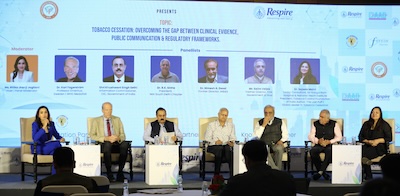
Leading public health experts commended the Government of India’s ongoing efforts in tobacco control and urged the Drug Technical Advisory Board (DTAB) for strengthening cessation pathways by ensuring 2 mg and 4 mg nicotine replacement therapies (NRTs) remain easily accessible as over-the-counter (OTC) products.
Speaking at Respire-2026, an event organized by Asian Coalition for Health Empowerment (ACHE), experts emphasised that improving access to evidence-based cessation tools is critical to addressing India’s persistent challenge of low quit success rates, currently below 5%.
The discussion comes at a time when recent policy discourse has been informed by insights from a report by the Economic Advisory Council to the Prime Minister (EAC-PM) titled “Rise in Tobacco Consumption and Policy Implication: An Analysis of Household Consumption Expenditure Survey.”
The report highlights the significant economic burden of tobacco use, particularly among low-income households, and underscores how reducing consumption can lead to measurable improvements in household welfare and economic mobility.
Experts at the forum highlighted that ensuring OTC access to 2 mg and 4 mg NRTs- such as gums and lozenges- can significantly expand reach beyond the limited clinical infrastructure currently available under the National Tobacco Control Programme.
Dr. R.K. Sinha, President, IMA South Delhi Chapter, said, “The government’s NRT framework has made an important contribution to public health. Strengthening access by keeping 2 mg and 4 mg therapies over-the-counter (OTC) ensures that support is available at the exact moment a person decides to quit. That is how policy translates into real-world impact.”
Dr. Karl Fagerström, PhD, Professor Emeritus and Deputy Editor of Nicotine & Tobacco Research, said, “India’s policy framework already recognizes that nicotine replacement is key to cessation. Decades of science show disease comes from combustion and toxicants, not nicotine itself. To be effective as a smoking cessation aid, nicotine needs to be delivered in sufficient dose to a smoker trying to quit. That is why the 2 mg and 4 mg doses of NRT are on the WHO list of essential medicines and the majority of OECD countries make the 2 and 4 mg dose available as OTC."
Dr. Nimesh G. Desai, Former Director, IHBAS, said, “Public health policy must be aligned with clinical realities. Individuals attempting to quit require timely and practical support. Expanding access to proven therapies strengthens, rather than weakens, the overall cessation framework.”
Salim Veljee, Former Director, FDA Goa, added, “Balanced regulation ensures both safety and accessibility. Making 2 mg and 4 mg NRTs widely available through OTC channels supports public health goals while maintaining regulatory oversight.”

Subscribe To Our Newsletter & Stay Updated
_256_275.jpeg)




.jpeg)