A major crackdown on counterfeit medicines in Haryana has led to the seizure of fake products sold under the Mounjaro brand, prompting Eli Lilly (India) to commend regulators and issue a fresh warning to patients.
The Haryana drug control authority recently uncovered and confiscated counterfeit tirzepatide products in Gurugram.
According to the company, the seized items were not manufactured by Lilly and did not come from its authorised supply chain. Following an investigation, officials have already recovered most of the fake stock.
Despite the incident, access to genuine medication remains unaffected. Authorities have directed that supplies of authentic Lilly products continue uninterrupted through authorised distributors and licensed pharmacies.
“We recognise the efforts of the Haryana regulatory authority in addressing counterfeit medicines and supporting measures aimed at protecting patient safety.” said Winselow Tucker, President and General Manager, Eli Lilly (India).
“Lilly takes any act of counterfeiting very seriously. Counterfeit products are not manufactured under approved quality controls and may pose significant risks to patient safety and public health.
"We will continue to take steps to protect patients from the risks of counterfeit and other unsafe products worldwide, including working with regulators and law enforcement. We urge patients to procure Lilly products only through authorised distributors or licensed pharmacies, and on a valid prescription.
"Further, we want to clarify that Lilly’s patented tirzepatide molecule is marketed in India under two brand names — Mounjaro and Yurpeak," he added.
Health experts warn that counterfeit drugs can closely mimic genuine products, making detection difficult. Patients, caregivers, and healthcare professionals are being urged to stay alert.
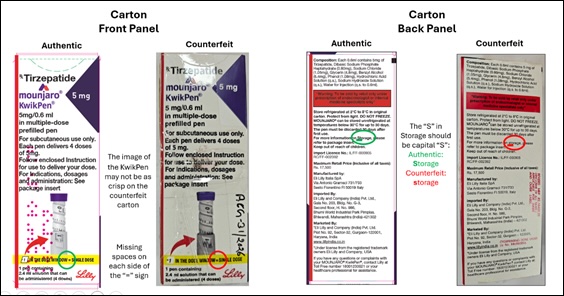
Red flags include medicines purchased from unlicensed sources, damaged or tampered packaging, and missing critical details such as batch numbers, expiry dates, or manufacturer information. Inconsistencies in packaging — including misspellings, unfamiliar logos, or altered labels — may also indicate a fake.