The two-day conference and exhibition features discussions on policy frameworks, AI-led drug discovery, next-generation technologies, and global competitiveness
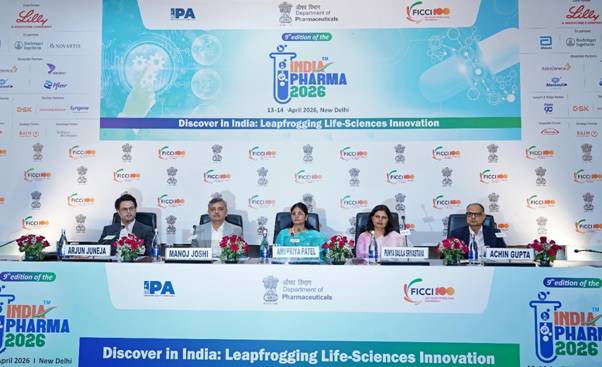
India is well positioned to transition from the 'pharmacy of the world' to a global leader in biosimilars, biologics, and specialty medicines, stated the Union Minister of Health & Family Welfare and Chemicals & Fertilizers, JP Nadda while inaugurating the India Pharma 2026 in New Delhi.
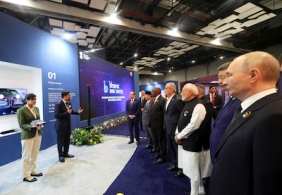
The 9th edition of India Pharma, organised by the Department of Pharmaceuticals (DoP), in collaboration with the Federation of Indian Chambers of Commerce and Industry (FICCI) and the Indian Pharmaceutical Alliance (IPA), has brought together global pharmaceutical, policy, and healthcare stakeholders for a two-day dialogue centred on innovation, self-reliance, and India’s global life sciences leadership ambitions.
Addressing the inaugural session virtually, Nadda said that while India’s global reputation has been built on its dominance in affordable generics, the pharmaceutical landscape is rapidly evolving toward biologics, biosimilars, and specialty medicines, creating a strategic opportunity for the country. “In this evolving environment, India is well positioned not only to adapt but to emerge as a global leader," he said.
Reaffirming the government’s commitment to strengthening innovation and research capabilities, he highlighted the recently launched Biopharma Shakti Initiative, backed by an outlay of Rs 10,000 crore, aimed at boosting India’s biopharmaceutical innovation ecosystem under the leadership of Prime Minister Narendra Modi.
Nadda also pointed to complementary initiatives such as the PRIP scheme to promote research in pharmaceuticals and medical technology, deepen industry-academia collaboration, and accelerate the development of next-generation therapies.
He said strengthening domestic manufacturing remains a parallel priority, supported by Production Linked Incentive (PLI) schemes and the creation of bulk drug parks, which are expected to improve self-reliance and build more resilient supply chains. He further reiterated the government’s commitment to affordable healthcare through the Pradhan Mantri Bharatiya Janaushadhi Pariyojana, which continues to expand access to quality medicines across India.
Echoing the innovation theme, Anupriya Patel said India is undergoing a major transition from a global generics powerhouse to an emerging biopharma innovation hub. She noted that India currently contributes nearly 20% of global generic medicines and meets around 70% of global vaccine demand, reflecting the country’s strong manufacturing base.
Highlighting the opportunity ahead, Patel said the global biosimilars market is projected to reach $75 billion by 2030, while innovative drugs now account for nearly 87% of global pharmaceutical market value, making it imperative for Indian companies to deepen focus on innovation-led segments.
She also emphasised the growing role of artificial intelligence in drug discovery and development, alongside the importance of strengthening talent pipelines through institutions such as National Institute of Pharmaceutical Education and Research (NIPERs) and the Indian Institutes of Technology (IITs).
Also speaking at the event, Manoj Joshi, Secretary, Department of Pharmaceuticals, stressed the need to accelerate innovation timelines, strengthen startup ecosystems, improve clinical research infrastructure, and create stronger funding mechanisms.
Punya Salila Srivastava, Secretary, Ministry of Health & Family Welfare, said the government is actively working to streamline regulatory pathways and improve the ease of doing research, with the broader aim of transforming India into an “innovator for the world.”
Industry leaders also highlighted the scale of India’s pharmaceutical ecosystem. Arjun Juneja, Chair, FICCI Pharma Committee and COO, Mankind Pharma, noted that India has more than 3,000 pharmaceutical companies and over 10,500 manufacturing facilities, including the highest number of USFDA-compliant plants outside the United States.
The two-day conference and exhibition will feature discussions on policy frameworks, AI-led drug discovery, next-generation technologies, and strategies to strengthen India’s global competitiveness in life sciences, reinforcing its role in shaping the sector’s future roadmap.

Subscribe To Our Newsletter & Stay Updated