Japanese CDMO Peptistar has begun trial production using a novel concentration system from Asahi Kasei, in a step forward in efforts to streamline the manufacture of next-generation active pharmaceutical ingredients (APIs).
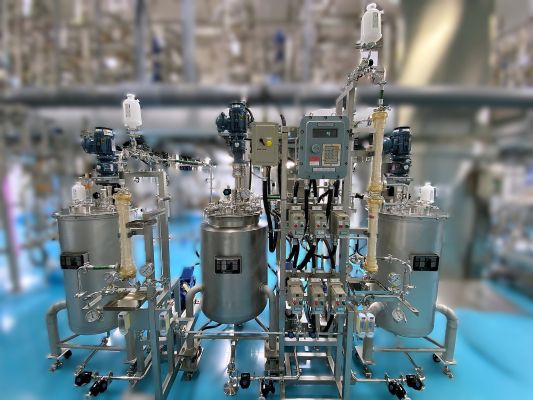
The facility has integrated Asahi Kasei’s forward osmosis–membrane distillation (FO–MD) system at manufacturing scale as part of its evaluation toward GMP (Good Manufacturing Practice) production.
The company first announced the technology in 2018 as a method for dehydrating and concentrating liquids without heat or pressure—aiming to reduce reliance on freeze-drying and shorten API production timelines.
Demand for APIs is rapidly shifting beyond traditional small molecules toward more complex modalities, including biologics, peptides, oligonucleotides, and viral vectors. These newer therapies are increasingly sensitive to heat, pushing manufacturers toward freeze-drying processes that preserve quality but are expensive, slow, and energy intensive.
“Some of the next-generation APIs such as peptides and oligonucleotides are heat sensitive. Their manufacturing processes have thus relied on the costly, time-consuming, and energy-intensive freeze-drying method, which can remove solvents without heating, to obtain APIs with high quality," the company has said.
While pre-concentration steps can shorten freeze-drying cycles, conventional methods such as vacuum distillation introduce risks of thermal degradation and unwanted precipitation as solvent composition shifts.
"Asahi Kasei’s system for forward osmosis (FO) and membrane distillation (MD) addresses such manufacturing challenges by concentrating the raw material solution for pharmaceutical applications without applying heat or pressure," the company has said.
The FO process uses osmotic pressure differences across a membrane to remove water under gentle conditions, while membrane distillation (MD) removes volatile components such as acetonitrile, alcohol, or ammonia at or below room temperature.
“FO utilizes an osmotic pressure difference across a membrane to remove water from liquids, achieving highly concentrated API solutions under very mild conditions. This is in contrast to the tangential flow filtration (TFF) that is commonly used in API manufacturing, which can be challenging at high API concentration, as fouling or leaks can affect concentration efficiency and recovery rates.”
MD leverages a vapor pressure difference across a membrane to remove volatile components such as acetonitrile, alcohol, or ammonia, at or below room temperature.
Together, FO and MD enable high-concentration formulations for freeze-drying while maintaining composition control and minimizing precipitation risks, ultimately reducing freeze-drying time and improving production efficiency and yield.
At Peptistar’s facility, the system is being run at up to 100-liter batch scale as part of its GMP-readiness evaluation. Asahi Kasei is now assessing its potential for commercialization as part of a broader strategy positioning Life Science as a growth area in its medium-term plan.
“The FO–MD system installed at Peptistar’s manufacturing facility is being operated at manufacturing scale as part of its evaluation toward GMP production. The system can be used with batches of up to 100 L, and is designed to be compatible with GMP-compliant operation.”