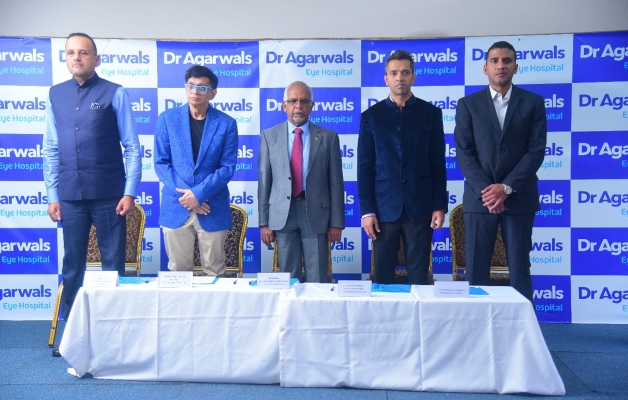
Dr Agarwals Eye Hospital, one of India’s leading eye-care groups, has launched a Specialised Corneal Transplant & Pinhole Pupilloplasty Centre in Ebene, Mauritius, marking a major milestone in India–Mauritius healthcare collaboration.
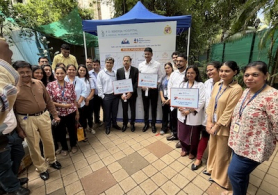
The facility was inaugurated by Dharambeer Gokhool, President of Mauritius.
The new centre brings advanced corneal procedures pioneered in India—including PDEK (Pre-Descemet’s Endothelial Keratoplasty), CAIRS (Corneal Allogenic Intrastromal Ring Segment), and Pinhole Pupilloplasty—closer to patients in Mauritius and neighbouring African nations. These techniques, developed by surgeons at Dr Agarwals Eye Hospital, highlight India’s growing role in global ophthalmic innovation.
“The launch of this specialised eye care centre reflects the growing collaboration between Mauritius and India in the healthcare sector. It will enhance access to advanced ophthalmic care for patients in Mauritius and the wider region,” said President Dharambeer Gokhool during the inauguration.
Amar Agarwal, Chairman of Dr Agarwals Group of Eye Hospitals, added, “This launch reinforces our long-standing vision to take India’s ophthalmic innovations to the world. Our presence in Mauritius is not just an expansion it is a commitment to collaborate, share knowledge, and make modern eye care accessible globally. We are deeply honoured that His Excellency, the President of Mauritius, inaugurated this facility, showing strong belief in innovation-led healthcare.”
Ashar Agarwal, Chief Business Officer, highlighted the strategic importance of the initiative: “Mauritius offers a strong ecosystem for advancing healthcare delivery. Through this specialised centre, we aim to build clinical capacity, enable skill transfer, and strengthen regional access to advanced ophthalmic care. This initiative aligns with our broader mission of addressing avoidable blindness globally.”
The Mauritius facility bolsters Dr Agarwals Eye Hospital’s international footprint. The group operates over 250 centres across India, Africa, and Southeast Asia, serving more than 2 million patients annually.