RIVANNA has secured a major regulatory breakthrough after the US FDA granted clearance for its Accuro XV Diagnostic Ultrasound System.
The regulatory nod clears the device for commercial use in musculoskeletal imaging across hospitals and clinics by trained healthcare professionals.
The clearance marks a pivotal step forward for the company as it pushes deeper into AI-driven diagnostics and expands its clinical footprint in point-of-care imaging.
“FDA clearance of the Accuro XV marks a major inflection point for RIVANNA,” said Will Mauldin, PhD, Co-founder and CEO.
“This clearance demonstrates the scalability of our core platform — shared AI architecture, imaging hardware, and regulatory pathway — across distinct clinical applications. With no targeted point-of-care solution in this space, we are positioned to define the standard of care for extremity injury triage.”
At the core of the Accuro XV is a 3D volumetric ultrasound system designed to automate large field-of-view imaging after initial patient positioning.
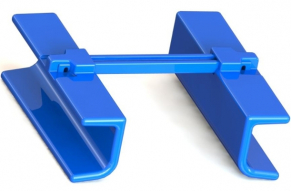
The device uses motorized linear translation to capture B-mode images across a 10 cm scan range, supported by a conformable polyurethane stand-off that improves acoustic coupling over irregular anatomy. Built as a mobile cart-based platform, it includes a touchscreen interface, onboard battery for portability, and DICOM-compatible image archiving for clinical workflows.
RIVANNA is already pushing the system further with AI enhancements in development.
These include BoneEnhance, an image segmentation tool aimed at improving bone visualization, and CADe/x, described as the first computer-aided detection algorithm for automated fracture identification using volumetric ultrasound data. Both technologies are currently undergoing validation in a multi-site clinical study spanning eight academic medical centers.
“With FDA clearance in hand, we can accelerate building the AI capabilities that will unlock the system's full diagnostic potential,” said Delphine Le Roux, Senior Director, Market Access and Strategic Partnerships at RIVANNA.
“The combination of an automated acquisition platform and AI-enabled fracture detection has the potential to democratize access to high-quality musculoskeletal imaging and reduce the burden on imaging resources in high-volume emergency settings.”