Celularity Inc. and Singapore-based MuseCell Innovations are teaming up to expand U.S. manufacturing of the Dezawa MuseCell platform, a deal the companies say could ultimately generate more than $300 million in purchases for Celularity over five years and support more than 200 high-tech jobs in New Jersey.
Under the initial collaboration, Celularity will establish U.S. production of MuseCell Innovations’ Dezawa MuseCells, or DMCs, at its 147,215-square-foot facility in Florham Park. The companies also plan to manufacture DMC-derived products, including Dezawa MuseExosomes and Dezawa MuseSecretome.
The initial effort will focus on establishing manufacturing capabilities for MCI-authenticated DMC preparations using qualified perinatal, bone marrow and adipose starting materials. Production will follow MCI’s licensed Dezawa Method and product specifications, with dedicated manufacturing processes, analytical testing and release criteria for each product.
If the initial project succeeds, the companies intend to expand the relationship to additional products and programs. MCI estimates that the broader collaboration could result in more than $300 million in aggregate purchases from Celularity over the next five years.
“Cellular medicine remains at the center of Celularity’s strategy, including our continued advancement of our proprietary placental-derived technologies,” said Robert J. Hariri, Founder, Chairman and Chief Executive Officer of Celularity.
“Our collaboration with MCI demonstrates how the manufacturing infrastructure and cellular expertise we have built can also support innovative third-party technologies. We look forward to expanding U.S. manufacturing for the Dezawa MuseCell platform and working with MCI to manufacture additional products derived from the platform.”
Peter H. Diamandis, Co-Founder and Director of Celularity, said the agreement underscores the importance of scalable manufacturing to the cellular-medicine industry.
“The ability to manufacture advanced cellular technologies reproducibly and at scale is fundamental to the future of medicine,” said Peter H. Diamandis, Co-Founder and Director of Celularity.
“Bob Hariri and Mari Dezawa are both pioneers in cell therapy, and this collaboration brings together their complementary scientific vision and expertise. Celularity has invested in the infrastructure and capabilities required to manufacture sophisticated cellular products, both to advance our own placental-derived technologies and to support innovators such as MCI. This collaboration demonstrates how pioneering science, paired with scalable manufacturing, can accelerate the continued advancement of cellular medicine.”
Celularity’s Florham Park operation includes a cGMP-ready manufacturing center with nine Grade C/ISO 7 and six Grade D/ISO 8 manufacturing suites. The company says the facility is designed for commercial production of cellular therapies and advanced biomaterials and includes capabilities spanning process development, chemistry, manufacturing and controls, cell manufacturing, analytical methods and quality systems.
The planned expansion could also have a significant employment impact in New Jersey. The companies anticipate that the broader manufacturing collaboration could generate more than 200 high-tech employment opportunities at the Florham Park site, including positions in biomanufacturing, quality control, engineering and support functions.
“By bringing a $300 million in business and more than 200 new jobs to New Jersey, Celularity and MuseCell Innovations are making it clear that our state is open for business. I first visited Celularity in 2022, and its trajectory from a homegrown startup here in New Jersey to a thriving public company is everything that drives my optimism about the potential of the New Jersey innovation economy.
"Advanced biomanufacturing continues to grow as a strong pillar of our economy, and investments like this are critical to driving job growth across our state. New Jersey is the medicine chest of the world, and my administration will keep working to make our government more accountable for businesses and position our state as the global leader in life sciences,” said New Jersey Governor Mikie Sherrill.
MuseCell Innovations’ platform is based on research by Professor Mari Dezawa, who discovered Muse cells as a naturally occurring, stress-enduring cell population.
The companies say Dezawa MuseCell biology and investigational applications have been described in more than 170 peer-reviewed publications and evaluated in multiple human clinical studies.
MCI says the platform combines qualified starting materials with the licensed Dezawa Method and specifications covering identity, purity, viability, potency, traceability and lot release. The framework is intended to maintain a defined DMC identity across qualified bone marrow, adipose and perinatal sources while accounting for source-specific biological characteristics.
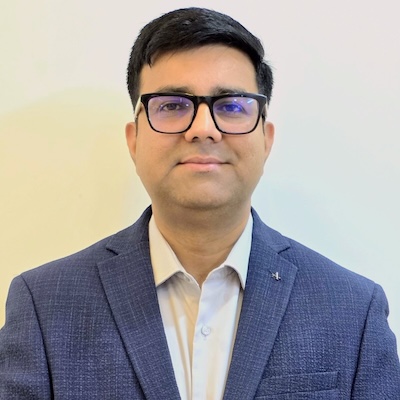
“Celularity brings the infrastructure and technical depth required to establish U.S. manufacturing across qualified bone marrow, adipose and perinatal sources,” said Dominik Duscher, Chief Executive Officer and President of MuseCell Innovations.
“The central scientific and quality principle is that Dezawa MuseCell identity is defined by manufacture under the licensed Dezawa Method and conformance to MCI’s product specifications—not by the anatomical source alone. That distinction allows the platform to expand without abandoning the methodology and standards that define the DMC phenomenon.”
Dezawa said scaling production will require maintaining consistency with the method and product characteristics underlying the platform.
“I discovered Dezawa MuseCells as a naturally occurring, stress-enduring cell population,” said Professor Mari Dezawa, Chair of MCI’s Scientific Advisory Board.
“As manufacturing expands across qualified tissues, reproducibility depends on preserving the Dezawa Method and the defining product characteristics on which the platform was developed. Celularity provides an important opportunity to scale that approach in the United States, adding another home to the DMC global production.”
The collaboration is also intended to expand MCI’s U.S. manufacturing network while maintaining source qualification, manufacturing authorization, lot-level testing and chain-of-custody controls.
MCI said the framework is designed to distinguish its authenticated DMC products from unverified SSEA-3-positive preparations produced outside the licensed Dezawa Method and MCI’s release system.