The Union Minister reviewed DST-supported SATHI-BHU facility
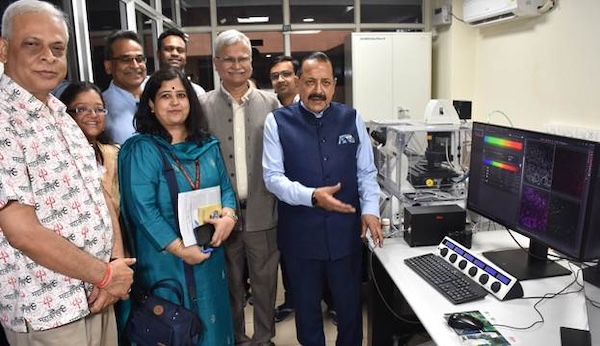
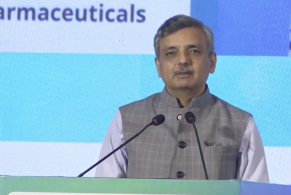
Dr. Jitendra Singh, Union Minister of State (Independent Charge) for Science & Technology, visited Banaras Hindu University (BHU) to review the Sophisticated Analytical & Technical Help Institute (SATHI), a national-level shared scientific infrastructure facility established with support from the Department of Science & Technology (DST).
During the visit, the Minister inspected the interdisciplinary SATHI facility and reviewed its infrastructure, advanced analytical capabilities, achievements, and future roadmap. He also interacted with scientists, faculty members, and officials associated with the centre.
Dr. Singh praised BHU Vice Chancellor A.K. Chaturvedi and the university’s faculty for building a successful model of scientific infrastructure that could serve as an example for other institutions.
Highlighting the government’s focus on democratising access to advanced scientific facilities, the Minister said DST is expanding research infrastructure and innovation support systems across universities and higher educational institutions to strengthen India’s research ecosystem.
He noted that initiatives such as SATHI, FIST, and ARRF-linked research support programmes are helping create opportunities for researchers, start-ups, MSMEs, and industry-academia collaborations.
Established with nearly Rs 72 crore support from DST, SATHI-BHU functions as a multidisciplinary analytical and research support centre operating through a Section 8 company model within the university ecosystem.
The facility provides access to advanced instrumentation, analytical services, and technical expertise for academia, industry, research institutions, start-ups, and MSMEs.
The centre houses advanced facilities including super-resolution confocal microscopy with live cell imaging, high-end NMR spectroscopy systems, high-resolution accurate mass spectrometry, clean room facilities, electrochemical workstations, chromatography platforms, and isotope analysis systems.
According to officials, the centre has served nearly 1,100 users, processed over 30,000 samples, and trained around 1,000 researchers and stakeholders since becoming operational. Around 60 short-term training programmes have also been conducted for skill development and capacity building.

Subscribe To Our Newsletter & Stay Updated