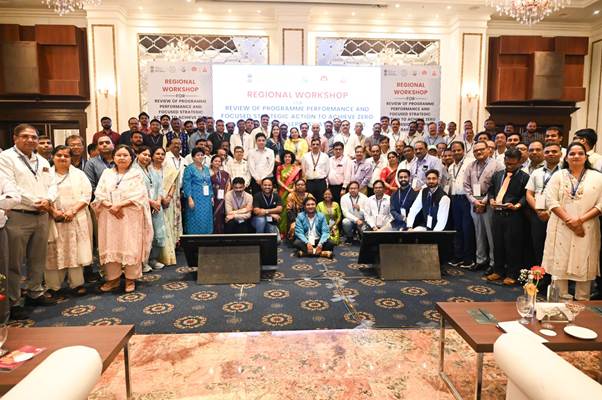
The Union Ministry of Health and Family Welfare has intensified its push toward a “Leprosy-Free India,” convening a two-day workshop in Nava Raipur, Chhattisgarh, to review programme performance and sharpen strategies aimed at achieving zero transmission in high-burden districts.
Reaffirming India’s progress in controlling the disease, Additional Health Secretary Aradhana Patnaik underscored both achievement and urgency, stating “India Has Made Remarkable Progress Against Leprosy, But Intensified Efforts Are Needed in Endemic Areas."
She noted that while India achieved elimination as a public health problem at the national level in 2005, transmission continues in several endemic districts, demanding more focused and sustained intervention.
Patnaik stressed early diagnosis, rapid treatment, and aggressive surveillance as the backbone of elimination efforts.
She called for periodic case detection drives and stronger contact tracing, alongside wider use of preventive therapy, stating “Periodic Case Detection Campaigns and Expanded SDR Coverage Vital to Breaking Leprosy Transmission: AS & MD”.
She emphasized that Post-Exposure Prophylaxis using Single-Dose Rifampicin (SDR) must be expanded, especially among vulnerable and hard-to-reach populations.
The Additional Secretary highlighted that the challenge now lies in closing the gap in remaining hotspots. She urged states to strengthen accountability systems, accelerate decision-making, and continuously track programme performance to eliminate bottlenecks.
She also pushed for better use of NHM resources, capacity building, and integrated awareness campaigns to improve outreach and reduce stigma.
Officials flagged that five states—Maharashtra, Chhattisgarh, Jharkhand, Odisha, and Madhya Pradesh—account for nearly half of India’s leprosy burden, with multiple districts still reporting prevalence above elimination thresholds.
While most States and Union Territories have reached elimination status, some continue to lag at sub-national levels, requiring targeted, district-specific action plans and stronger inter-state coordination.
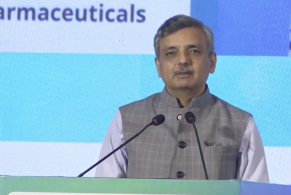
At the technical level, Sunil V. Gitte, Deputy Director General (Leprosy), reported 91,783 new cases detected in 2025–26, including 4.18% in children and 2.12% with Grade-2 disability at diagnosis.
He also detailed ongoing rehabilitation efforts, including reconstructive surgeries, distribution of assistive footwear, and self-care kits, alongside intensified surveillance and early detection drives.
The workshop concluded with state-specific roadmaps and renewed commitments from participating states and partners to accelerate progress. Officials emphasized that sustained, coordinated action across government, technical institutions, and communities will be critical to achieving a leprosy-free, disability-free, and transmission-free India.