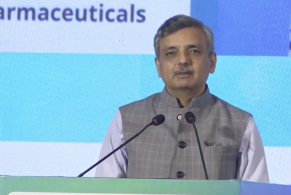
As per the Department of Pharmaceuticals, the sector has expanded its reach across the country while strengthening domestic production capabilities and innovation

According to the Department of Pharmaceuticals, Ministry of Chemicals and Fertilisers, India’s pharmaceutical sector has undergone a significant transformation over the past 12 years, driven by policy reforms, affordable healthcare initiatives, and manufacturing incentives aimed at enhancing self-reliance and global competitiveness.
The government’s Production Linked Incentive (PLI) Scheme for Pharmaceuticals has emerged as a major catalyst for domestic manufacturing. Since its launch in 2020-21, the scheme has attracted cumulative investments of Rs. 42,694.89 crore, generated sales worth Rs. 3.43 lakh crore and created employment opportunities for over 1.13 lakh people.
The initiative has encouraged the production of high-value pharmaceutical products, including biopharmaceuticals and complex generic medicines, reinforcing India’s status as the “Pharmacy of the World.”
As per the DoP, the most notable achievements has been the rapid expansion of the Pradhan Mantri Bhartiya Janaushadhi Pariyojana (PMBJP).
The number of Jan Aushadhi Kendras has grown from just 84 functional outlets in 2014 to more than 19,200 across India in 2026, improving access to affordable generic medicines for millions of citizens. The initiative has also made significant inroads into remote regions, particularly the North East, where the number of Kendras increased from one in 2014 to 417 in 2026.
Among the states, Uttar Pradesh leads with 4,042 Jan Aushadhi Kendras, followed by Kerala, Karnataka, Tamil Nadu, Bihar and West Bengal. The scheme has also recorded strong growth in New Delhi, Jammu & Kashmir, Punjab and Himachal Pradesh. By offering quality medicines at significantly lower prices, the programme has enabled citizens to save more than Rs. 40,000 crore on healthcare expenses.
The PLI Scheme for Medical Devices has also delivered substantial results. The programme has attracted investments of Rs. 1,136.23 crore and generated sales of Rs. 29,402.93 crore while creating 6,822 jobs. The scheme is helping accelerate domestic manufacturing of critical medical technologies and reducing dependence on imports.
To further strengthen pharmaceutical supply chains, the government is establishing Bulk Drug Parks in Andhra Pradesh, Gujarat and Himachal Pradesh. These parks are expected to provide world-class infrastructure and support the domestic production of key pharmaceutical ingredients.
In parallel, Medical Device Parks are being developed in Tamil Nadu, Uttar Pradesh and Madhya Pradesh to reduce manufacturing costs and improve competitiveness in the medical technology sector.
The Pharmaceutical & Medical Device Promotion and Development Scheme (PMPDS) has supported industry growth through stakeholder engagement and policy development. Under the scheme, 47 stakeholder events and 12 sectoral studies have been conducted to facilitate collaboration between industry and government and promote evidence-based policymaking.
A major recent initiative is Biopharma SHAKTI (Strategy for Healthcare Advancement through Knowledge, Technology, and Innovation), announced in the Union Budget 2025-26. With an allocation of Rs. 10,000 crore over five years, the programme aims to strengthen India’s biopharmaceutical sector and improve access to affordable biologics and biosimilars through the creation of a self-reliant innovation ecosystem.

Subscribe To Our Newsletter & Stay Updated